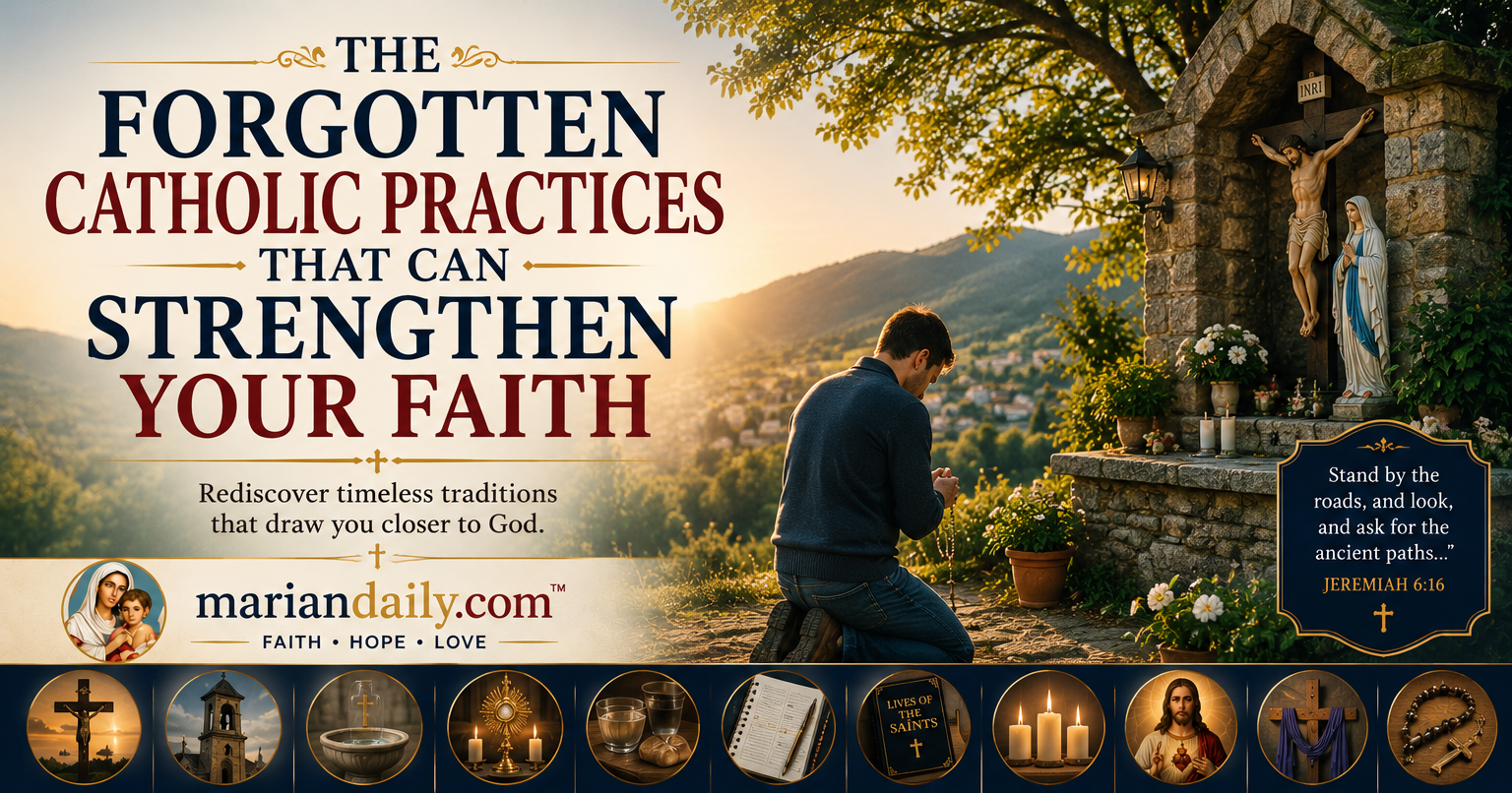
The Catholic Church possesses a rich spiritual heritage developed over centuries of prayer, worship, and faithful Christian living. While many Catholics regularly attend Mass, receive the sacraments, and pray familiar devotions such as the Rosary, numerous traditional practices that once played an important role in Catholic life have gradually faded from daily use.
These forgotten practices are not outdated traditions without purpose. Rather, they remain powerful spiritual tools that can help believers deepen their relationship with God, strengthen their faith, grow in holiness, and remain focused on eternal realities.
In an age marked by distractions, anxiety, and spiritual indifference, rediscovering these time-tested Catholic practices can bring renewed spiritual vitality and help Catholics live their faith more intentionally.
Scripture Foundation
“Stand by the roads, and look, and ask for the ancient paths, where the good way is; and walk in it, and find rest for your souls.” (Jeremiah 6:16)
This passage reminds believers that spiritual wisdom can often be found by returning to proven paths of faith and devotion.
Why Traditional Catholic Practices Matter
The Church’s spiritual traditions developed through the experience of countless saints, religious communities, and faithful Catholics.
These practices help believers:
- Remember God’s presence throughout the day.
- Develop spiritual discipline.
- Resist temptation.
- Grow in virtue.
- Deepen prayer.
- Strengthen faith during difficult times.
Many of these practices require little time yet can have a profound spiritual impact.
Making the Sign of the Cross with Reverence
Many Catholics make the Sign of the Cross several times each day.
Unfortunately, it is often done quickly and without reflection.
The Sign of the Cross is a powerful profession of faith.
It recalls:
- The Holy Trinity.
- Christ’s sacrifice.
- Baptism.
- Our identity as Christians.
Making the Sign of the Cross slowly and prayerfully can become a meaningful act of devotion that renews awareness of God’s presence.
Praying the Angelus
For centuries, Catholics paused three times daily to pray the Angelus.
Traditionally prayed at:
- 6:00 AM
- 12:00 PM
- 6:00 PM
The Angelus commemorates the Annunciation and the Incarnation of Jesus Christ.
This brief devotion helps believers remember that God entered human history through the obedience of the Blessed Virgin Mary.
Even praying the Angelus once a day can strengthen awareness of God’s presence throughout daily life.
Keeping Holy Water in the Home
Previous generations of Catholics frequently used holy water.
Many homes contained holy water fonts near entrances or prayer spaces.
Holy water reminds believers of Baptism and God’s protection.
Using holy water:
- Before leaving home.
- Before bedtime.
- During prayer.
- During illness or difficulty.
can help cultivate a stronger awareness of God’s grace.
Visiting Jesus in Eucharistic Adoration
Many Catholics know the importance of Mass but rarely spend time with Jesus in Eucharistic Adoration.
The Church teaches that Christ is truly present in the Blessed Sacrament.
Even a brief visit before the tabernacle or during Adoration can provide:
- Spiritual peace.
- Greater faith.
- Clarity during difficult decisions.
- Deeper intimacy with Christ.
Many saints considered Eucharistic Adoration one of the most powerful means of spiritual growth.
Fasting Beyond Lent
Fasting was once a more common part of Catholic life.
Today, many Catholics fast only when required by Church law.
Voluntary fasting remains a valuable spiritual practice.
Fasting helps believers:
- Practice self-discipline.
- Grow in detachment.
- Strengthen prayer.
- Offer sacrifices for intentions.
Even simple acts of fasting can help deepen one’s spiritual life.
Examining Your Conscience Daily
Many saints encouraged a brief examination of conscience every evening.
This practice involves reflecting on the day and asking:
- How did I respond to God’s grace?
- Where did I fail?
- What blessings did I receive?
- How can I grow tomorrow?
A daily examination helps believers recognize patterns of sin and become more attentive to God’s action in their lives.
Reading the Lives of the Saints
Previous generations frequently read biographies of the saints.
Today, many Catholics know little about the saints beyond their names.
The saints provide practical examples of Christian living.
Their stories offer:
- Inspiration.
- Encouragement.
- Wisdom.
- Hope during struggles.
Reading about the saints can strengthen faith and remind believers that holiness is possible in every age.
Praying for the Holy Souls in Purgatory
Praying for the faithful departed was once a common Catholic practice.
The Church encourages believers to pray for souls undergoing purification.
Simple prayers such as:
Eternal rest grant unto them, O Lord.
help express charity toward the departed and remind believers of eternal life.
This practice also strengthens awareness of the communion of saints.
Observing Friday Penance
Many Catholics are unaware that Friday remains a special day of penance.
Friday commemorates Christ’s Passion and death.
Beyond Lent, Catholics are encouraged to perform acts of penance, sacrifice, prayer, or charity on Fridays.
These practices help believers remain connected to Christ’s sacrifice and develop spiritual discipline.
Enthroning the Sacred Heart in the Home
The Enthronement of the Sacred Heart was once common in Catholic families.
This devotion involves placing an image of the Sacred Heart of Jesus in a prominent location and dedicating the household to Christ.
The practice reminds family members that Jesus should remain at the center of home life.
It also encourages regular family prayer and devotion.
Offering Up Daily Sufferings
Many older Catholics were taught to “offer it up.”
While sometimes misunderstood, this practice reflects an important spiritual truth.
Believers can unite their sufferings, inconveniences, and sacrifices with Christ’s Cross.
Examples include:
- Illness.
- Fatigue.
- Disappointments.
- Difficult relationships.
- Daily struggles.
Offering these experiences to God can transform ordinary difficulties into opportunities for grace.
Why These Practices Remain Relevant Today
Modern life often moves at a rapid pace.
Many people struggle with:
- Stress.
- Anxiety.
- Distractions.
- Spiritual dryness.
The forgotten practices of Catholic spirituality help slow the heart and refocus attention on God.
They encourage believers to live their faith not only during Mass but throughout every day.
These practices require little expense, no special equipment, and only a willingness to draw closer to God.
Reflection
The Catholic faith is rich with spiritual treasures that have nourished believers for centuries.
Many traditional practices that have faded from everyday use remain powerful means of spiritual growth.
Whether through praying the Angelus, visiting Jesus in Eucharistic Adoration, examining one’s conscience, reading the lives of the saints, or making more intentional use of sacramentals, Catholics can rediscover spiritual habits that strengthen faith and deepen their relationship with God.
Sometimes the path forward begins by returning to practices that generations of faithful Catholics found spiritually fruitful.
The wisdom of the Church’s traditions continues to guide believers toward holiness, peace, and a deeper union with Christ.
Closing Prayer
Heavenly Father,
Thank You for the rich spiritual traditions of the Catholic Church.
Help us rediscover the practices that draw us closer to You and strengthen our faith.
Teach us to pray with greater devotion, receive Your grace more fully, and live each day with deeper trust in Your providence.
Through the intercession of the Blessed Virgin Mary and all the saints, guide us along the path of holiness and keep our hearts fixed on Jesus Christ.
Amen.
Related Articles
 The Miraculous Medal Devotion: History, Meaning, and Spiritual Benefits
 7 Signs God May Be Calling You Closer to Him
 The Hidden Power of Daily Prayer: Small Habits That Change the Soul
 The Angelus Prayer Explained: Meaning, History and How to Pray It
 The Real Presence of Jesus in the Eucharist: What the Church Actually Teaches
 How to Pray the Rosary Step-by-Step (Complete Catholic Guide)