Introduction
The Battle of Lepanto and the Rosary remain among the most memorable stories in Catholic history. But could a simple string of prayer beads really have played a role in one of Europe’s most important naval battles?
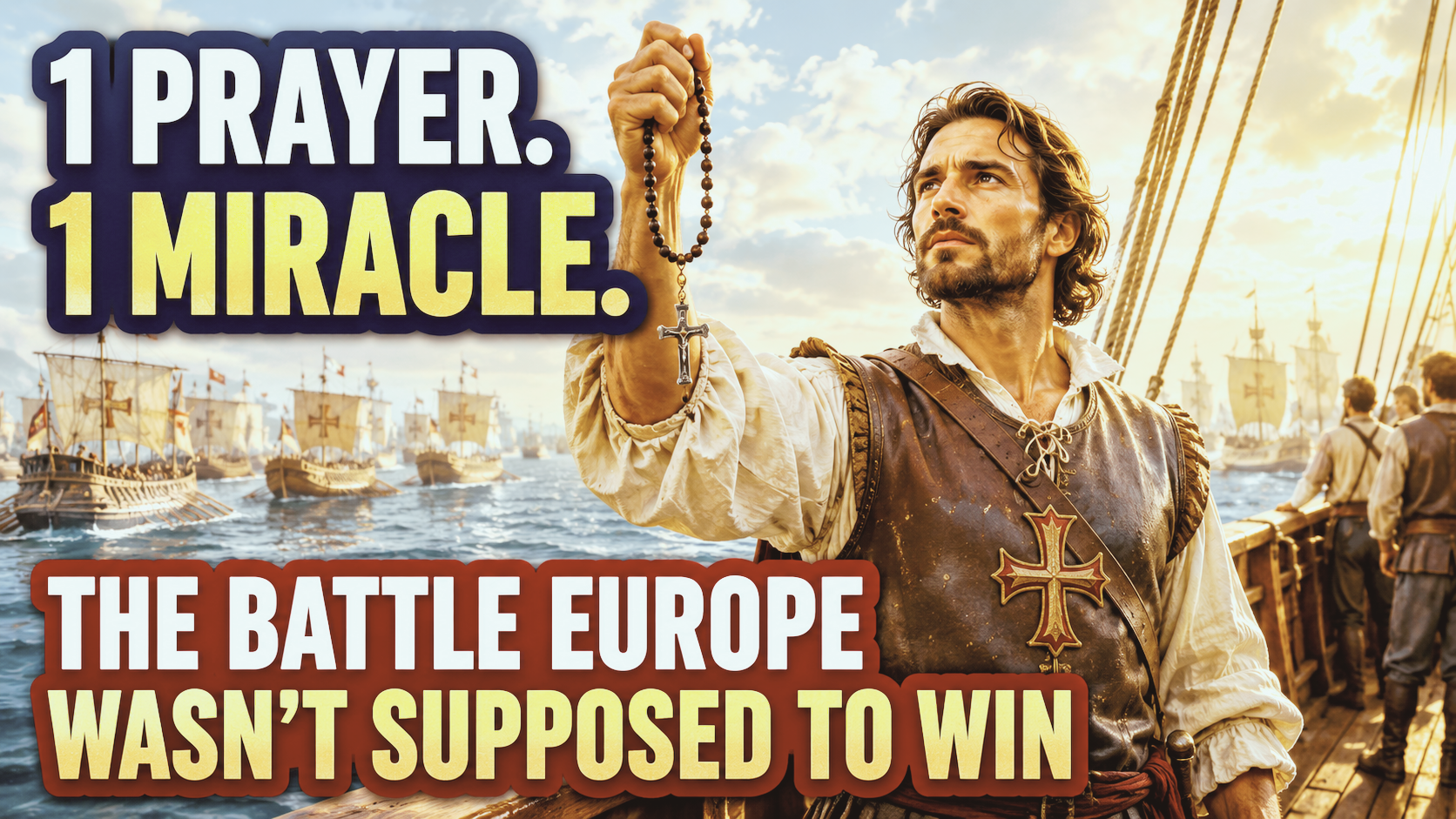
On October 7, 1571, the Holy League faced the powerful Ottoman fleet near Lepanto in the eastern Mediterranean. At the same time, Pope St. Pius V urged Catholics throughout Europe to pray the Rosary for the Christian forces.
The battle ended with a major victory for the Holy League. For Catholics, however, Lepanto became more than a military event. It became a lasting reminder of prayer, trust in God, and the intercession of the Blessed Virgin Mary.
So, what really happened at Lepanto? Why does the Catholic Church connect the battle with the Rosary? Moreover, what can Christians learn from this remarkable moment in history?
Let’s explore the history, Catholic tradition, biblical foundations, and spiritual lessons behind the Battle of Lepanto and the Rosary.
Europe Stood on the Edge of a Crisis
By the sixteenth century, the Ottoman Empire had become a major world power. Its territories stretched across parts of southeastern Europe, North Africa, and the Middle East.
At the same time, the Ottoman navy had become a powerful force in the Mediterranean. Consequently, many European leaders feared that further Ottoman expansion could threaten important Christian territories.
The situation created serious political and military tension. However, European rulers often disagreed with one another and struggled to form a united response.
Pope St. Pius V encouraged Catholic leaders to put aside their rivalries. As a result, several Catholic powers joined together in the Holy League.
The coalition included major forces from Spain, the Papal States, Venice, Genoa, and other Italian territories. Don John of Austria commanded the Christian fleet.
Even so, the Holy League faced a formidable opponent. The Ottoman fleet possessed significant experience and naval strength.
Therefore, the coming battle looked uncertain from a human perspective.
The Battle of Lepanto and the Rosary
The Battle of Lepanto and the Rosary became closely connected because Pope St. Pius V called Catholics to spiritual action.
The Pope understood that military preparation alone could not express the Church’s trust in God. Therefore, he encouraged Catholics to pray the Rosary for the Christian forces.
Across Europe, Catholics responded in different ways.
- Churches organized prayers and devotions.
- Rosary confraternities encouraged public prayer.
- Religious communities prayed for the fleet.
- Families gathered together in prayer.
- Ordinary Catholics offered their Rosaries for the battle.
Meanwhile, the soldiers and sailors prepared for combat. Many received the sacraments and carried religious symbols with them.
The Rosary did not replace military preparation. Instead, Catholics understood prayer and responsible action as working together.
This distinction remains important today. The Church does not teach that prayer excuses people from taking wise and responsible action.
Rather, prayer places human efforts within a deeper trust in God’s providence.
What Happened at the Battle of Lepanto?
On October 7, 1571, the Holy League fleet encountered the Ottoman fleet near the Gulf of Patras, close to Lepanto, in modern-day Greece.
The two sides brought hundreds of vessels into the confrontation. The battle quickly became intense and chaotic.
Cannons fired across the water. Ships collided. Soldiers fought at close range as crews attempted to board enemy vessels.
The battle continued for hours. Eventually, the Holy League achieved a decisive victory.
The Ottoman fleet suffered heavy losses in ships and personnel. The Holy League also experienced casualties, but its victory marked a major turning point in Mediterranean naval history.
Historians continue to examine the battle through military strategy, leadership, technology, geography, and political circumstances.
Catholics, however, also remember another dimension.
According to Catholic tradition, widespread prayer accompanied the battle. Many believers therefore interpreted the victory as an example of divine providence working through human history.
The Church does not require Catholics to believe that every detail surrounding Lepanto represents a supernatural miracle. Nevertheless, the battle remains deeply connected with the Church’s trust in God and the intercession of Mary.
Pope St. Pius V and the News of Victory
One of the most famous traditions surrounding Lepanto involves Pope St. Pius V.
According to longstanding Catholic tradition, the Pope suddenly interrupted his work in Rome and announced that the Christian fleet had won. Later, messengers arrived with confirmation of the victory.
The story has inspired Catholics for centuries. However, historical accounts differ regarding the exact details and timing of the event.
Therefore, Catholics should treat this account as a pious tradition rather than a required article of faith.
The broader historical fact remains clear. Pope St. Pius V strongly promoted prayer for the Holy League, and the Church later connected the victory with devotion to Our Lady of the Rosary.
That connection continues to shape Catholic memory of Lepanto.
Why October 7 Became the Feast of Our Lady of the Rosary
After the victory, Pope St. Pius V established a feast associated with Our Lady of Victory.
Later, Pope Gregory XIII changed the name to the Feast of the Holy Rosary. Today, Catholics celebrate the Feast of Our Lady of the Rosary on October 7.
The feast does not teach that Mary replaces Christ. Instead, Catholic devotion understands Mary’s role as one of intercession.
Mary always leads believers toward her Son.
In the Rosary, Catholics meditate on the mysteries of Christ’s life. These mysteries include His Incarnation, ministry, Passion, Death, Resurrection, and glory.
Therefore, the Rosary remains fundamentally Christ-centered.
The Battle of Lepanto and the Rosary are remembered together because Catholics see the event as a powerful example of prayer joined with trust in God’s providence.
What Does the Catholic Church Teach About the Rosary?
The Catholic Church does not teach that the Rosary works like magic. Nor does it promise that repeating specific prayers will automatically produce a desired result.
Instead, the Rosary helps Catholics meditate on Jesus Christ through the mysteries of His life.
The Catechism of the Catholic Church explains Mary’s continuing maternal intercession. In paragraph 969, it teaches that Mary’s role in heaven continues to bring believers closer to Christ.
Likewise, St. John Paul II described the Rosary as a “compendium of the Gospel.” This description highlights its central purpose: helping Christians contemplate Christ.
The Rosary can therefore strengthen several areas of spiritual life:
- It encourages meditation on Scripture.
- It helps believers remember Christ’s saving work.
- It invites Christians to practice perseverance.
- It encourages trust during difficult times.
- It deepens devotion to Mary while directing the heart toward Jesus.
Consequently, the Rosary remains one of the most widely practiced Catholic devotions.
Biblical Foundations for Prayer and Spiritual Warfare
The story of Lepanto also connects with several important biblical themes.
“The Prayer of a Righteous Person Is Powerful”
St. James writes that “the prayer of a righteous person is powerful and effective” (James 5:16).
This passage does not mean that prayer forces God to obey human wishes. Instead, it reminds Christians that faithful prayer matters.
The story of Lepanto reflects this Catholic understanding. Believers prayed together while placing the outcome in God’s hands.
“Our Struggle Is Not Against Flesh and Blood”
St. Paul writes in Ephesians 6:12 that Christian struggle involves spiritual realities beyond ordinary human conflict.
For Christians today, those battles may include:
- Temptation
- Fear
- Discouragement
- Sin
- Anger
- Despair
- Spiritual confusion
Therefore, Christians need more than human strength. St. Paul points believers toward faith, truth, righteousness, salvation, Scripture, and prayer.
The lesson remains relevant today. Although most Christians will never enter a naval battle, everyone faces spiritual struggles.
Why the Battle of Lepanto Still Matters Today
The Battle of Lepanto and the Rosary matter because the story speaks to people who face difficult circumstances.
Today, someone may struggle with illness. Another person may carry grief. Someone else may experience anxiety, loneliness, financial pressure, or a broken relationship.
In each case, human strength can reach its limits.
The story of Lepanto reminds believers that prayer does not require perfect circumstances. Instead, people can turn toward God in the middle of uncertainty.
Moreover, the story teaches that ordinary people can participate in a greater spiritual mission.
The Catholics who prayed for Lepanto did not stand on the battlefield. Yet they believed their prayers mattered.
Likewise, Christians today can pray for their families, communities, Church, and world.
Five Practical Lessons From Lepanto
The historical story becomes most valuable when it changes how we live.
Here are five practical lessons Catholics can apply today.
1. Pray One Decade at a Time
If a complete Rosary feels difficult, begin with one decade.
For example, pray one decade during your morning commute, lunch break, or evening quiet time.
Consistency often matters more than length.
2. Pray Before Major Decisions
Before making an important decision, pause and pray.
Ask God for wisdom, patience, and courage. Then combine prayer with careful thought and responsible action.
3. Make Prayer Part of Family Life
Families can pray together even when time feels limited.
A decade of the Rosary can become a simple family tradition. Over time, these moments may create lasting spiritual memories.
4. Unite Prayer With Action
The Holy League prepared for battle while Catholics prayed.
Likewise, Christians should not use prayer as an excuse for inaction. Instead, prayer should strengthen us to do what is right.
5. Entrust Your Battles to Mary
Bring your fears and intentions to the Blessed Virgin Mary.
Ask her to intercede for you and lead you closer to Jesus.
Above all, remember that Catholic devotion to Mary always points beyond Mary toward Christ.
Frequently Asked Questions About the Battle of Lepanto and the Rosary
Was the Battle of Lepanto a miracle?
Catholics often view the victory through the lens of divine providence and widespread prayer. However, the Church does not require Catholics to accept every supernatural interpretation of the battle as a matter of faith.
What is the connection between the Battle of Lepanto and the Rosary?
Pope St. Pius V encouraged Catholics to pray the Rosary for the Christian fleet. The Holy League then won a major naval victory on October 7, 1571. As a result, Catholic tradition closely associates the Battle of Lepanto and the Rosary.
Why is October 7 important to Catholics?
October 7 is the Feast of Our Lady of the Rosary. The date became associated with the victory at Lepanto and the Church’s devotion to Mary’s intercession.
Does the Rosary guarantee miracles?
No. The Catholic Church does not teach that the Rosary guarantees a particular outcome. Instead, prayer expresses trust in God’s will and opens the heart to His grace.
Why is the Rosary important in Catholic life?
The Rosary helps Catholics meditate on the mysteries of Jesus Christ. Through Mary’s intercession, believers reflect on the Gospel and grow in faith.
Did Pope St. Pius V really know about the victory before receiving official news?
A longstanding Catholic tradition says that the Pope announced the victory before messengers reached Rome. However, historians debate the details. Catholics may appreciate the tradition without treating it as a required belief.
Who fought in the Battle of Lepanto?
The Holy League, led primarily by Spain, Venice, the Papal States, Genoa, and other Italian forces, fought against the Ottoman fleet.
What can Catholics learn from Lepanto today?
The Battle of Lepanto and the Rosary remind Catholics to combine prayer with responsible action. The story also encourages perseverance, trust in God, family prayer, and confidence in divine providence.
Conclusion: The Lasting Lesson of Lepanto
The Battle of Lepanto and the Rosary remain deeply connected in Catholic memory.
The battle involved ships, weapons, military strategy, and courageous soldiers. Yet Catholics remember the prayers that surrounded the event just as strongly.
For believers, Lepanto became a reminder that God can work through ordinary people who place their trust in Him.
Our battles today may look very different. Nevertheless, fear, suffering, temptation, uncertainty, and grief still challenge every generation.
Therefore, the story of Lepanto encourages Christians to respond with faith rather than despair.
Prayer does not promise an easy life. Instead, it teaches us to face life’s struggles with God.
The Battle of Lepanto and the Rosary ultimately point us toward a deeper truth: Christians are called to pray, act faithfully, and trust God’s providence.
As St. James reminds us, “The prayer of a righteous person is powerful and effective” (James 5:16).
May the story of Lepanto inspire us to pray with greater faith, live with greater courage, and remain close to Christ.
A Short Prayer Inspired by Lepanto
Lord Jesus Christ,
strengthen us in every battle we face.
When fear surrounds us, give us courage.
When suffering overwhelms us, give us hope.
When we feel weak, remind us of Your presence.
Through the intercession of the Blessed Virgin Mary,
teach us to pray with faith and trust in Your divine providence.
Help us unite prayer with faithful action
and remain close to You in every circumstance.
Our Lady of the Rosary, pray for us.
St. Pius V, pray for us.
Lord Jesus, we trust in You.
Amen.
Call to Action
Has the story of the Battle of Lepanto and the Rosary strengthened your faith?
Take a moment today to pray one decade of the Rosary for a personal intention, your family, or peace in the world.
Then share this article with someone who may find encouragement in the power of prayer and Catholic history.
Leave a comment and tell us: What intention would you bring to prayer today?
Finally, continue exploring the rich history and spiritual treasures of the Catholic Church, and subscribe for more Catholic articles, prayers, saints, and stories of faith.
For research and further reading, consult reputable Catholic and historical sources, including:
- The Holy See (Vatican)
- Catechism of the Catholic Church — Vatican
- Vatican News
- United States Conference of Catholic Bishops (USCCB)
- New Advent — Catholic Encyclopedia
Related Articles
 Saint Jude Prayer for Impossible Situations
 Saint Carlo Acutis: The Teenager Who Became a Saint
 Eucharistic Miracles Scientists Could Not Explain
 This 1,200-Year-Old Miracle Science STILL Can’t Explain (The Lanciano Eucharistic Miracle)
 The Prayer That Defeats What You Can’t See
 Hidden Christians of Japan: Faith That Survived 250 Years