A Miracle That Continues to Inspire Faith
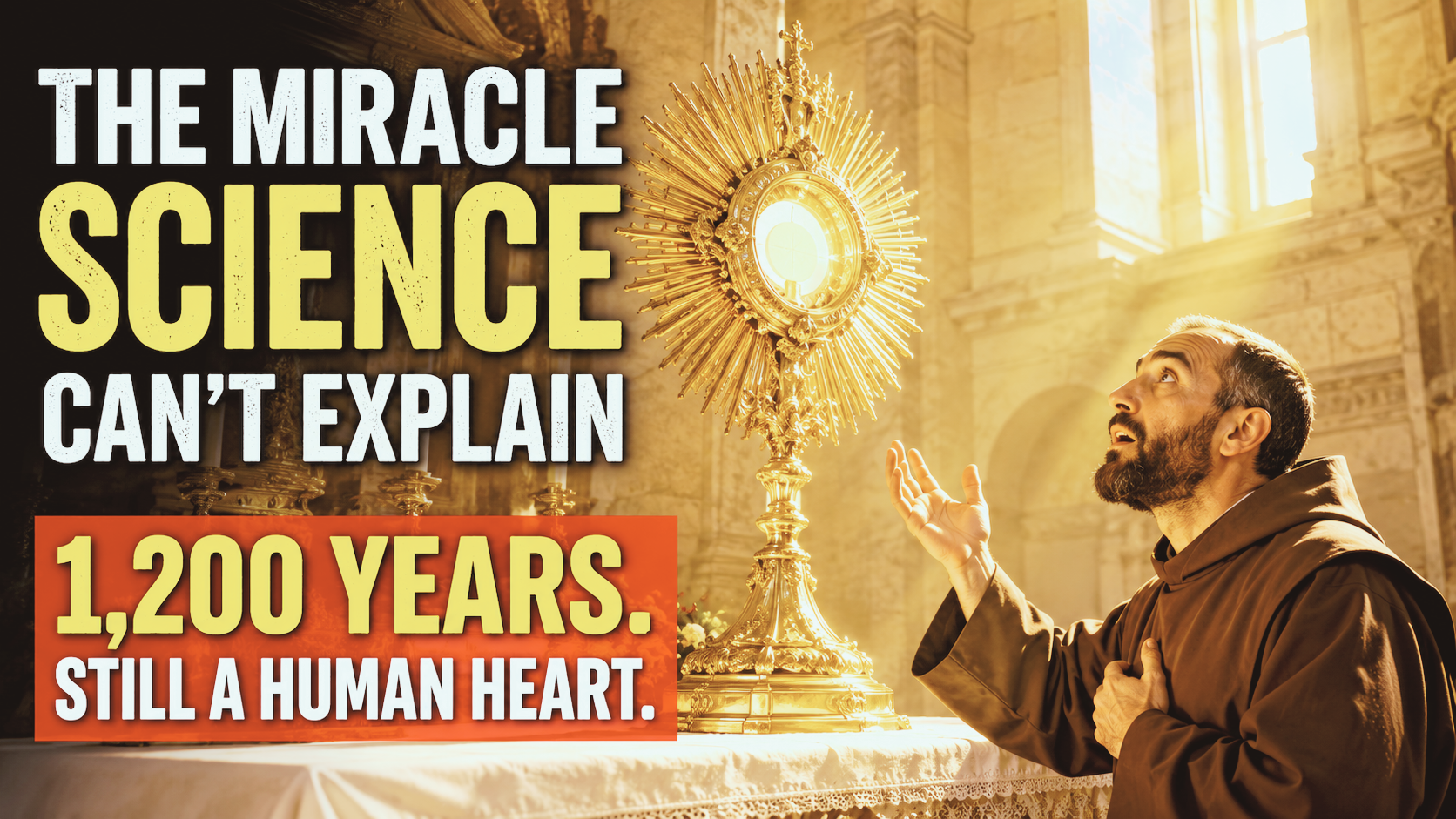
What if human flesh and blood had remained preserved on an altar in Italy for more than 1,200 years? It sounds impossible, yet the Lanciano Eucharistic Miracle has captivated believers, historians, and scientists alike for centuries. Far from being a legend or a symbolic story, this extraordinary event has been carefully preserved and studied using modern scientific methods.
In this article, you will discover what happened in the small Italian town of Lanciano during the eighth century, why the miracle remains one of the most famous Eucharistic miracles in Catholic history, what scientific investigations revealed, and why its message still speaks to believers today.
The Doubting Monk Who Changed History
Around the year 700, in a quiet Basilian monastery in Lanciano, Italy, a priest was celebrating the Holy Eucharist.
Although he faithfully offered Mass every day, he carried a painful struggle within his heart. He questioned whether the bread and wine truly became the Body and Blood of Jesus Christ during the consecration.
Like many people throughout history, he wrestled with doubt. He repeated the sacred words countless times, yet deep inside he wondered whether Christ was truly present.
Everything changed in a single moment.
As he pronounced the words of consecration, “This is My Body… This is My Blood,” the consecrated host visibly changed into human flesh before his eyes.
The wine inside the chalice also changed. It became visible blood and formed into five distinct clots.
The frightened monk immediately called those present to witness what had happened. The congregation saw the same astonishing reality. What moments earlier had appeared to be ordinary bread and wine now looked like human flesh and blood.
News of the miracle quickly spread throughout the region.
Preserved for More Than Twelve Centuries
Instead of disappearing into history, the miraculous flesh and blood were carefully preserved by the friars.
Generation after generation safeguarded these sacred relics with great reverence. Today they remain in the Church of San Francesco in Lanciano, Italy, where pilgrims from around the world continue to visit and pray before them.
The flesh is displayed inside an ornate monstrance, while the blood remains preserved in five separate coagulated globules.
For more than twelve centuries, these relics have remained one of the Catholic Church’s most well known Eucharistic miracles.
Scientific Investigation of the Lanciano Eucharistic Miracle
Centuries after the miracle, Church authorities permitted modern scientific examination.
In 1971, Archbishop Pacifico Perantoni authorized a detailed investigation led by Dr. Edoardo Linoli, a respected professor of anatomy, histology, pathological chemistry, and clinical microscopy.
Rather than relying on tradition alone, the Church invited scientific analysis using contemporary laboratory methods.
The findings surprised many.
What Scientists Discovered
Dr. Linoli concluded that the flesh was genuine human tissue.
More specifically, it was identified as myocardium, the muscular tissue of the human heart.
The blood was confirmed to be authentic human blood.
Researchers also identified the blood as type AB, a blood type that has also been reported in studies related to the Shroud of Turin.
Perhaps even more remarkable, scientists found no evidence of preservatives, embalming substances, or artificial treatments that would normally be necessary to preserve organic tissue over such an extraordinary period.
In 1981, additional review by experts associated with the World Health Organization further examined the findings.
Although science could identify the biological nature of the tissue, it could not fully explain how it had remained preserved for more than 1,200 years without ordinary signs of decay.
For many believers, these findings strengthened rather than replaced faith.
What the Miracle Says About the Eucharist
The significance of the Lanciano Eucharistic Miracle reaches beyond scientific curiosity.
Its deepest meaning points to the Catholic belief in the Real Presence of Jesus Christ in the Eucharist.
During the Last Supper, Jesus took bread and declared:
“Take, eat; this is My Body.” (Matthew 26:26)
He then took the cup and said:
“This is My Blood of the covenant.” (Matthew 26:28)
Later, Jesus spoke even more directly:
“For My flesh is true food, and My blood is true drink.” (John 6:55)
For centuries, many interpreted these words as symbolic.
The miracle of Lanciano has encouraged countless Catholics to reflect more deeply on Christ’s promise and the mystery of the Eucharist.
While miracles are never required for faith, they often serve as powerful reminders of truths already taught by the Church.
Why This Miracle Still Matters Today
The story of Lanciano is not only about a monk who struggled with doubt centuries ago.
It is also about us.
Many faithful Christians experience moments when prayer feels routine, worship feels ordinary, or God’s presence seems distant.
Questions arise naturally during life’s challenges.
Is God really here?
Does He truly hear my prayers?
Does the Eucharist really change anything?
The Lanciano Eucharistic Miracle gently invites believers to bring those questions to Christ.
Rather than condemning doubt, it reminds us that God often meets sincere seekers with patience and mercy.
For Catholics, every celebration of the Mass becomes an opportunity to remember that the Eucharist is not simply a symbol. It is a profound encounter with Jesus Christ, who continues to nourish His people through His Body and Blood.
A Prayer for Greater Faith
If this story has touched your heart, consider offering this simple prayer before receiving Holy Communion.
Lord Jesus, just as You revealed Yourself to the doubting monk in Lanciano, reveal Yourself to me. Strengthen my faith in Your true presence. Where I struggle with doubt, give me trust. Where I become distracted, give me reverence. Help me never to take Your Body and Blood for granted. Amen.
Conclusion
The Lanciano Eucharistic Miracle continues to stand as one of the most remarkable events in Catholic history.
For over twelve centuries, the preserved flesh and blood have inspired pilgrims, invited scientific study, and strengthened countless believers around the world.
Science has revealed that the relics consist of genuine human heart tissue and human blood. Yet the mystery of their preservation continues to inspire discussion and reflection.
Whether you approach this story through faith, history, or curiosity, the miracle ultimately points beyond itself to the central mystery of the Eucharist and Christ’s enduring promise to remain with His people.
The next time you attend Mass, pause before receiving Holy Communion. Remember the witness of Lanciano and quietly pray the words found in Mark 9:24:
“Lord, I believe. Help my unbelief.”
May that simple prayer deepen your faith and renew your appreciation for the extraordinary gift of the Eucharist.
Call to Action
If this article encouraged your faith, consider sharing it with a friend or family member who may need hope today. Leave a comment below and tell us how the Eucharist has strengthened your spiritual journey. Subscribe for more inspiring Catholic stories, Church history, and faith-building reflections that continue to encourage believers around the world.
Related Articles
 Common Mistakes Catholics Make During Mass and How to Avoid Them
 The Angelus Prayer Explained: Meaning, History and How to Pray It
 Jesus’ Secret Promise: Why This 1 Prayer Changes Everything
 What Does Purgatory Look Like According to the Saints?
 10 Things Every Catholic Should Know Before Receiving Holy Communion
 Catholic Church Investigation of Miracles Explained