Introduction
The St. Padre Pio stigmata remains one of the most extraordinary stories in modern Catholic history. What if a humble friar carried wounds that resembled the wounds of Jesus Christ? What if people also reported that he knew hidden struggles before they spoke about them?
Saint Padre Pio of Pietrelcina lived a life marked by prayer, suffering, spiritual gifts, and deep trust in God. For decades, the wounds on his hands, feet, and side drew worldwide attention. Yet he never treated them as a reason for personal glory.
Instead, Padre Pio saw his suffering through the mystery of Christ’s Cross. His life points to a deeper message about faith, humility, repentance, prayer, and God’s mercy.
In this article, we will explore the St. Padre Pio stigmata, the historical story behind his wounds, his reported spiritual gifts, his struggles with Church authorities, and the lessons Catholics can learn from his example today.
The St. Padre Pio Stigmata: What Happened in 1918?
The story of the St. Padre Pio stigmata reaches a dramatic moment in 1918.
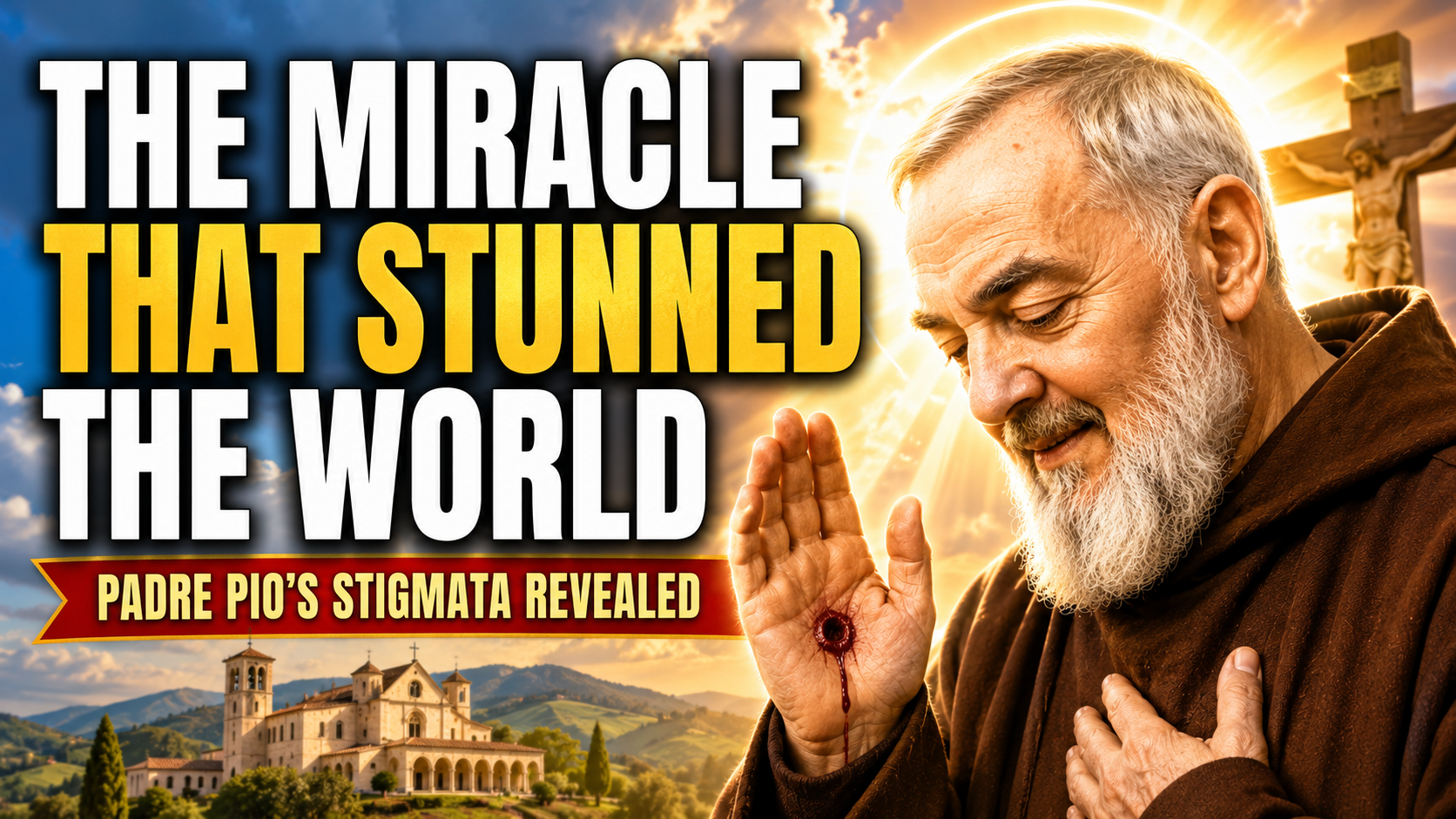
At that time, Padre Pio lived as a Capuchin friar in San Giovanni Rotondo, Italy. During prayer on September 20, 1918, he experienced a profound mystical event. According to accounts of his life, he saw a mysterious figure and then noticed wounds on his hands, feet, and side.
The wounds resembled the injuries that Jesus suffered during His Passion and crucifixion. Catholics call such wounds stigmata, a term used for bodily marks that resemble the wounds of Christ.
The event changed Padre Pio’s life. However, he did not seek public attention because of it. Instead, he carried the wounds with humility and continued his ministry of prayer, confession, and spiritual direction.
For approximately fifty years, the wounds remained associated with his life and ministry. Consequently, people around the world became interested in his story.
Nevertheless, the Catholic Church approached the phenomenon with caution. The Church does not require Catholics to believe in private mystical phenomena, even when the Church recognizes a person’s holiness.
What Does the St. Padre Pio Stigmata Mean?
The St. Padre Pio stigmata cannot be understood simply as a miraculous curiosity. For Padre Pio, the wounds pointed toward Jesus Christ and His sacrifice on the Cross.
Saint Paul wrote:
“I bear the marks of Jesus on my body.”
— Galatians 6:17
This verse offers an important spiritual perspective. Saint Paul referred to the sufferings he endured for the Gospel. Meanwhile, Catholics have also reflected on the connection between Christian suffering and participation in Christ’s Passion.
Padre Pio’s life reflects this spiritual reality. His suffering did not replace Christ’s sacrifice. Rather, he sought to unite his own trials with the suffering of Jesus.
That distinction matters.
The Catholic faith teaches that Jesus alone redeemed humanity through His death and Resurrection. Christians, however, can unite their own sufferings with Christ and offer them to God in faith.
Therefore, the story of Padre Pio invites believers to look beyond the wounds themselves. His example encourages Catholics to ask a more important question:
How can I remain faithful to Christ when life becomes painful?
The Cross and the Meaning of Christian Suffering
Padre Pio’s life offers a powerful reflection on the Christian meaning of suffering.
Everyone experiences pain in some form. For example, someone may face illness, grief, loneliness, family problems, financial hardship, or disappointment.
Yet suffering does not mean that God has abandoned us.
Jesus Himself entered fully into human suffering. Through His Passion, death, and Resurrection, Christ transformed the meaning of the Cross. Therefore, Christians can bring their own pain to Him with trust.
The St. Padre Pio stigmata reminds many Catholics of this spiritual truth. His wounds became a visible sign associated with a life centered on Christ’s Passion.
However, the real lesson lies deeper than the physical phenomenon.
Padre Pio’s example teaches that believers can:
- Pray during times of suffering.
- Offer personal struggles to God.
- Remain faithful during difficult seasons.
- Seek strength through the Sacraments.
- Trust God’s mercy even when answers seem delayed.
- Unite personal suffering with Christ’s Cross.
As a result, pain can become an opportunity for deeper prayer and spiritual growth.
St. Padre Pio’s Spiritual Gifts and Extraordinary Ministry
The St. Padre Pio stigmata represents only one part of his extraordinary life.
Many people who encountered Padre Pio described remarkable experiences. Accounts associated with his ministry include reports of bilocation, spiritual insight, and knowledge of hidden matters.
Catholic tradition particularly associates him with an extraordinary ability to understand the spiritual condition of people who came to confession.
Many penitents reportedly traveled long distances to meet him. According to accounts from his life, Padre Pio sometimes appeared to know details that people had not yet mentioned.
Nevertheless, his purpose was not to impress them.
Instead, he directed people toward repentance, confession, prayer, and God’s mercy.
Padre Pio and the Sacrament of Confession
Confession became one of the central parts of Padre Pio’s ministry.
He spent many hours hearing confessions. In doing so, he encouraged people to confront sin honestly and return to God’s mercy.
The Catholic Church teaches that the Sacrament of Reconciliation offers forgiveness to those who sincerely repent and receive the sacrament with the proper disposition.
For Padre Pio, confession represented much more than a religious routine. It offered a path back to God.
Therefore, his example remains especially relevant today. In a world where many people carry guilt, shame, and regret, his ministry reminds Catholics that God’s mercy always calls sinners home.
The St. Padre Pio Stigmata and His Years of Trial
Although millions admired Padre Pio, his life included serious difficulties.
Church authorities investigated aspects of his ministry and mystical experiences. At various times, officials imposed restrictions on his public ministry. These measures affected his ability to interact freely with the faithful and exercise certain priestly activities.
For Padre Pio, such restrictions created a painful spiritual trial.
Imagine carrying wounds associated with Christ’s Passion while also facing suspicion and criticism. Nevertheless, Padre Pio continued to emphasize obedience and prayer.
His response offers an important lesson.
Faith does not always mean receiving immediate recognition. Sometimes, faith means remaining patient when others misunderstand us.
Similarly, many Christians experience criticism, rejection, or long periods of waiting. Padre Pio’s example encourages them to remain faithful without allowing bitterness to take control.
Moreover, his story reminds Catholics that holiness requires humility. Extraordinary experiences do not remove the need for obedience, discernment, and spiritual discipline.
What the Catholic Church Teaches About the Stigmata
The Catholic Church recognizes that God can grant extraordinary graces. At the same time, the Church carefully examines claims involving miracles, apparitions, visions, and other mystical phenomena.
The Church does not teach that every reported supernatural experience comes directly from God.
Instead, Catholic discernment considers several factors. These include the person’s spiritual life, moral character, psychological condition, possible natural explanations, and the fruits associated with the experience.
The Catechism of the Catholic Church also teaches that private revelations do not belong to the deposit of faith. Even when the Church recognizes a private revelation, Catholics do not have to accept it in the same way they accept the truths of the Creed.
Therefore, the Church’s recognition of Padre Pio’s holiness does not mean that every story told about him automatically becomes official Church teaching.
This distinction helps Catholics approach the St. Padre Pio stigmata with both faith and prudence.
Padre Pio’s canonization provides the clearest focus. The Church officially recognizes him as a saint and presents his life as an example of Christian holiness.
Biblical Reflections on the Life of Padre Pio
Several passages from Sacred Scripture help Catholics understand the spiritual themes found in Padre Pio’s life.
“Take Up Your Cross”
Jesus said:
“Whoever wishes to come after me must deny himself, take up his cross, and follow me.”
— Matthew 16:24
This teaching lies at the heart of Christian discipleship.
The Christian life does not promise freedom from every difficulty. Instead, Jesus calls His followers to remain faithful through suffering and hope.
Padre Pio’s life reflects this call. His physical suffering, ministry, and personal trials all became part of his journey of discipleship.
“My Grace Is Sufficient for You”
Saint Paul also recorded God’s words:
“My grace is sufficient for you, for power is made perfect in weakness.”
— 2 Corinthians 12:9
This verse offers comfort to anyone facing hardship.
Padre Pio’s life shows how weakness can become an occasion for dependence on God. Rather than relying only on personal strength, Christians can turn toward divine grace.
“Come to Me”
Jesus gives another beautiful invitation:
“Come to me, all you who labor and are burdened, and I will give you rest.”
— Matthew 11:28
This verse connects deeply with Padre Pio’s ministry of prayer and confession.
People came to him carrying heavy burdens. Yet his message continually pointed them toward Christ, the true source of mercy and peace.
Five Lessons Catholics Can Learn From St. Padre Pio
The St. Padre Pio stigmata story offers many lessons for modern Christians. However, his greatest legacy goes beyond the wounds.
1. Offer Your Suffering to God
Pain can feel meaningless when we experience it alone. However, Christians can bring their suffering to Jesus in prayer.
Therefore, when you face hardship, try a simple prayer:
“Jesus, I offer You this suffering. Give me the grace to carry it with faith.”
This prayer does not deny pain. Instead, it places pain into God’s hands.
2. Make Prayer Part of Daily Life
Padre Pio maintained a strong devotion to prayer and the Rosary.
Likewise, Catholics today can develop a simple daily prayer routine. Even a few minutes of sincere prayer can help strengthen faith.
For example, you can:
- Pray the Rosary.
- Read a short Gospel passage.
- Attend Mass when possible.
- Spend time before the Blessed Sacrament.
- Pray for someone who is suffering.
- End each day by thanking God.
Small acts of faith can gradually shape an entire life.
3. Return to God’s Mercy
Padre Pio’s dedication to confession remains one of the strongest lessons from his ministry.
When we fall into sin, shame can tempt us to hide from God. However, Christ calls us back through His mercy.
Therefore, Catholics should not allow guilt to become a reason for avoiding God. Instead, sincere repentance opens the door to reconciliation.
4. Remain Faithful When Others Misunderstand You
Padre Pio experienced suspicion and restrictions.
Similarly, Christians may sometimes face criticism or misunderstanding. Even so, believers can respond with patience instead of anger.
Faithfulness matters especially when life feels unfair.
5. Let Your Life Point Toward Christ
The St. Padre Pio stigmata attracted attention, but Padre Pio consistently directed people toward Jesus.
That remains the central lesson.
Saints do not replace Christ. Instead, they point us toward Him.
Consequently, Catholics can honor Padre Pio best by following the faith he lived: prayer, repentance, humility, charity, obedience, and trust in God.
How Catholics Can Apply Padre Pio’s Example Today
Padre Pio lived in a different time, yet his spiritual lessons remain relevant.
In family life, his example encourages patience and forgiveness. When disagreements arise, prayer can help families choose peace over resentment.
Likewise, Catholics can practice perseverance at work and in daily responsibilities. Faith does not belong only inside a church building. Instead, Christians can live their faith through honesty, kindness, and service.
For evangelization, Padre Pio’s life offers another lesson. People often need hope before they can hear a deeper message about faith.
Therefore, Catholics can share the Gospel through both words and actions.
A simple act of kindness may open a door. A prayer for someone in pain may offer comfort. An invitation to Mass may change a person’s life.
In every case, the goal remains the same: to lead people closer to Jesus Christ.
The Final Years and Lasting Legacy of Padre Pio
Padre Pio died on September 23, 1968, after decades of priestly ministry.
According to accounts of his life, the visible signs associated with his stigmata were no longer present at the time of his death. This detail has contributed to the enduring fascination surrounding his life.
However, his spiritual legacy reaches far beyond the stigmata.
In 2002, Pope John Paul II canonized Padre Pio as a saint. Today, pilgrims continue to visit San Giovanni Rotondo, where his memory remains closely connected with prayer, confession, and devotion.
His story continues to inspire Catholics throughout the world.
Most importantly, the life of Padre Pio reminds believers that holiness does not mean escaping every trial. Instead, holiness means remaining close to God through every trial.
Frequently Asked Questions About the St. Padre Pio Stigmata
What is the St. Padre Pio stigmata?
The St. Padre Pio stigmata refers to the wounds associated with Padre Pio that resembled the wounds of Jesus Christ’s Passion. Accounts describe wounds on his hands, feet, and side that remained for many years.
When did Padre Pio receive the stigmata?
According to historical accounts of his life, Padre Pio experienced the stigmata on September 20, 1918, while praying at the friary in San Giovanni Rotondo, Italy.
How long did Padre Pio have the stigmata?
The St. Padre Pio stigmata remained associated with his life for approximately fifty years, from 1918 until his death in 1968.
Did the Catholic Church recognize Padre Pio as a saint?
Yes. Pope John Paul II canonized Padre Pio on June 16, 2002. The Church now honors him as Saint Pio of Pietrelcina.
Did Padre Pio really have supernatural gifts?
Many accounts attribute extraordinary spiritual gifts to Padre Pio, including bilocation and unusual insight into people’s spiritual lives. Catholics should distinguish these reported phenomena from official Church doctrine.
Why is Padre Pio famous for confession?
Padre Pio devoted many hours to hearing confessions. His ministry emphasized repentance, reconciliation, and God’s mercy.
What does the St. Padre Pio stigmata teach Catholics?
The St. Padre Pio stigmata can encourage Catholics to reflect on Christ’s Passion, Christian suffering, prayer, humility, and trust in God’s grace.
Can Catholics ask Padre Pio to pray for them?
Yes. Catholics may ask Saint Padre Pio to intercede for them. This practice does not replace prayer to God. Instead, it reflects the Catholic belief in the communion of saints and their intercession.
A Prayer Through the Intercession of St. Padre Pio
Lord Jesus Christ, through the intercession of Saint Padre Pio, help us carry our crosses with faith and courage.
Teach us to trust Your mercy when life becomes difficult. Help us offer our suffering to You and remain faithful through every trial.
Give us humble hearts that seek forgiveness and lives that reflect Your love.
Saint Padre Pio, pray for us. Help us draw closer to Jesus through prayer, repentance, and trust.
May we never lose hope, even in our darkest moments.
Amen.
Conclusion: The Lasting Message of the St. Padre Pio Stigmata
The St. Padre Pio stigmata story remains one of the most remarkable accounts in modern Catholic history. Nevertheless, the deeper message of Padre Pio’s life goes beyond extraordinary wounds or spiritual gifts.
His life points us toward Jesus Christ.
Through suffering, Padre Pio learned perseverance. Through confession, he served God’s mercy. Through prayer, he encouraged countless people to seek Christ.
Therefore, when we face illness, loneliness, grief, or uncertainty, his example offers a simple reminder: do not carry your burdens without God.
Bring them to Jesus.
Pray through them.
Offer them with faith.
The St. Padre Pio stigmata reminds us that the Christian journey may include suffering. However, the Cross never stands alone. Beyond the Cross comes the hope of the Resurrection.
That hope remains at the heart of the Catholic faith.
Call to Action
Did the story of the St. Padre Pio stigmata inspire you? Share your thoughts in the comments and tell us which lesson from Padre Pio speaks most strongly to your faith.
Please share this article with someone who needs hope and encouragement today. You can also explore our other Catholic articles about the lives of the saints, Catholic miracles, prayer, and the history of the Church.
Finally, subscribe to our future Catholic content for more inspiring stories of saints, faith, prayer, and God’s mercy.
May Saint Padre Pio pray for you and your loved ones. May God bless you and keep you always.
Related Articles
 Hidden Christians of Japan: Faith That Survived 250 Years
 The Hidden Power of Daily Prayer: Small Habits That Change the Soul
 Why the Vatican Still Won’t Explain This Shroud
 The Real Presence of Jesus in the Eucharist: What the Church Actually Teaches
 Battle of Lepanto and the Rosary: The Story of 1571
 Silence of God: When Prayer Seems Unanswered