
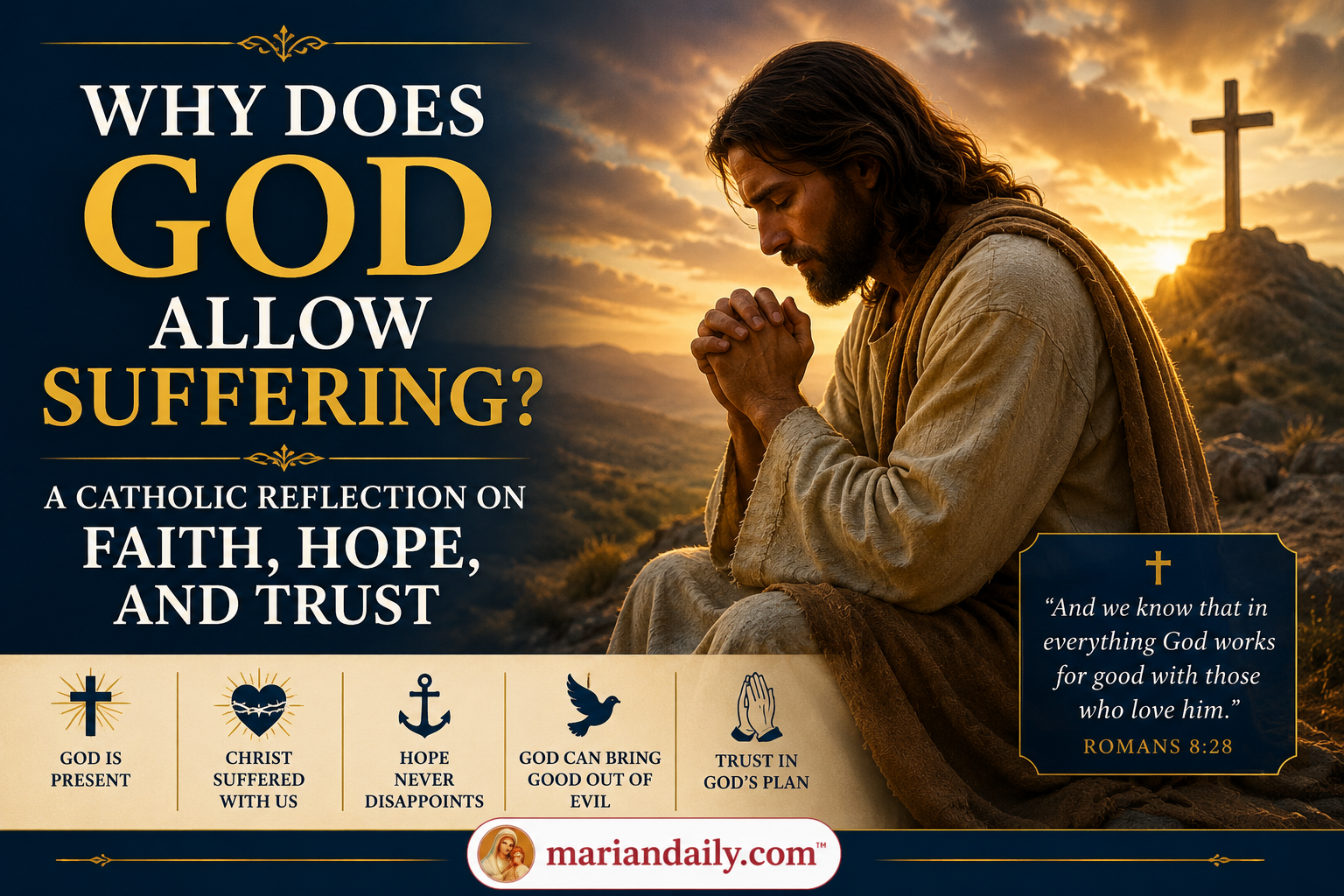
Suffering is one of the most difficult realities of human life. Every person, regardless of age, culture, wealth, or faith, will eventually experience pain, loss, disappointment, illness, grief, or hardship. When suffering enters our lives, it often raises a profound question:
Why does God allow suffering?
For many people, this question becomes even more challenging when suffering seems undeserved. Why do innocent children become sick? Why do faithful Christians experience tragedy? Why do prayers sometimes appear unanswered? Why does a loving God permit pain in the world?
The Catholic Church does not offer simplistic answers to these questions. Instead, it provides a deeper understanding rooted in Scripture, the life of Jesus Christ, and the hope of eternal life. While suffering remains a mystery, the Catholic faith teaches that God can bring good even from the darkest circumstances and that no suffering is ever meaningless when united with Christ.
Understanding this truth can help believers face life’s trials with faith, hope, and trust in God’s loving providence.
Scripture Foundation
“And we know that in everything God works for good with those who love him.” (Romans 8:28)
This verse does not say that everything is good. Rather, it teaches that God can bring good out of even the most painful situations for those who place their trust in Him.
God Did Not Create Humanity for Suffering
To understand suffering, we must first understand God’s original plan.
According to Sacred Scripture, God created the world good. Humanity was created in friendship with God and called to live in harmony with Him. God’s desire was not suffering, death, pain, or separation.
However, human freedom played a crucial role in God’s plan.
Because God created human beings with free will, people were given the ability to choose love, obedience, or rebellion. Through sin, disorder entered the world. As a result, suffering, death, conflict, and brokenness became part of human experience.
This does not mean every individual suffering is a direct punishment for personal sin. Rather, it means humanity now lives in a fallen world affected by the consequences of sin.
The reality of suffering reminds us that the world is not yet in its final state of perfection.
Jesus Christ Entered Into Human Suffering
One of the most remarkable aspects of Christianity is that God did not remain distant from human suffering.
In Jesus Christ, God entered human history and willingly embraced suffering.
Jesus experienced:
- Physical pain
- Rejection
- Betrayal
- Loneliness
- Humiliation
- Grief
- Injustice
- Death
The Son of God did not merely observe suffering from heaven. He experienced it personally.
When Christians suffer, they do not suffer alone. Christ understands every human pain because He has lived it.
This truth distinguishes Christianity from many other approaches to suffering. God is not an indifferent observer. He is a loving Savior who walks with His people through every trial.
Suffering Can Draw Us Closer to God
Although suffering is painful, it often has the unexpected ability to deepen faith.
Many people discover that periods of hardship become moments of profound spiritual growth.
When life is comfortable, it can be easy to rely primarily on ourselves. Difficulties remind us of our need for God.
Suffering can lead to:
- Deeper prayer
- Greater humility
- Increased compassion
- Stronger trust in God
- Spiritual maturity
Throughout history, many saints testified that their greatest spiritual growth occurred during periods of suffering.
This does not mean suffering is good in itself. Rather, God can use suffering as a means of drawing souls closer to Him.
God Can Bring Good Out of Evil
One of the central teachings of the Catholic faith is that God can bring good from even the worst situations.
The greatest example is the Cross.
From a human perspective, the Crucifixion appeared to be a tragedy. Jesus was betrayed, condemned, mocked, tortured, and executed.
Yet through that suffering came the salvation of the world.
The Resurrection revealed that God’s plan was greater than what people could see in the moment.
The same principle often applies in our lives. While we may not immediately understand our suffering, God can use difficult experiences to accomplish purposes beyond our understanding.
Many people later recognize blessings, growth, healing, or opportunities that emerged from painful circumstances they once wished to avoid.
Not All Answers Are Given Immediately
One of the most challenging realities of suffering is that we do not always receive immediate explanations.
The Book of Job illustrates this truth beautifully.
Job suffered greatly despite being a righteous man. He lost his possessions, his health, and his family. Throughout the story, Job repeatedly questioned why he was suffering.
Yet God never provided a detailed explanation.
Instead, God invited Job to trust His wisdom and providence.
The lesson remains relevant today. Sometimes faith means trusting God even when we do not understand His reasons.
Trust is not the absence of questions. Trust is choosing to believe that God remains good even when answers are not yet visible.
The Blessed Virgin Mary and the Mystery of Suffering
The Blessed Virgin Mary provides one of the greatest examples of faithful endurance.
Mary experienced tremendous sorrow throughout her life.
She witnessed:
- The rejection of Jesus.
- The suffering of her Son.
- His crucifixion.
- His death on the Cross.
No mother wishes to see her child suffer. Yet Mary remained faithful to God even during immense pain.
For this reason, Catholics often turn to Mary during difficult times.
She understands sorrow.
She understands loss.
She understands trust in God’s plan even when circumstances seem overwhelming.
Her example reminds believers that faith is often tested precisely when suffering becomes most intense.
Suffering Can Teach Compassion
People who have suffered often become more compassionate toward others.
Personal pain can create greater understanding, patience, and empathy.
A person who has experienced grief understands those who mourn.
A person who has experienced illness understands those who are sick.
A person who has experienced hardship understands those who struggle.
God can transform suffering into an opportunity to serve others with greater love and kindness.
Many ministries, charities, hospitals, and outreach programs were founded by people whose own suffering inspired them to help others.
In this way, suffering can become a source of grace for the wider community.
The Importance of Christian Hope
Without hope, suffering can appear meaningless.
The Catholic faith teaches that earthly life is not the end of the story.
Christ’s Resurrection assures believers that suffering and death do not have the final word.
Eternal life awaits those who remain faithful to God.
This hope does not remove present pain, but it gives suffering a larger context.
Christians believe that every tear, every sacrifice, every act of faith, and every trial can be united with Christ and ultimately transformed through God’s love.
Hope enables believers to persevere when circumstances are difficult.
It reminds us that God’s promises extend beyond the limitations of this world.
How Catholics Can Respond to Suffering
When suffering enters our lives, several spiritual practices can help us remain close to God:
Pray Honestly
God welcomes sincere prayer. Bring fears, questions, frustrations, and hopes to Him.
Receive the Sacraments
The Eucharist and Reconciliation provide grace, strength, and healing.
Read Sacred Scripture
God’s Word offers comfort and guidance during difficult times.
Seek Christian Community
Faith is strengthened through support from family, friends, and the Church.
Turn to the Blessed Virgin Mary
Mary’s example of faith and perseverance can provide comfort and encouragement.
Practice Trust
Even when answers are unclear, continue placing confidence in God’s goodness.
Reflection
The question of suffering is one of the deepest mysteries of human existence.
The Catholic faith does not claim that suffering is easy or desirable. Rather, it teaches that God remains present even in the darkest moments.
Jesus Christ entered into human suffering and transformed it through His death and Resurrection. Because of Him, suffering no longer has the final word.
Believers may not always understand why particular trials occur. Yet they can trust that God is working even when His plan is hidden.
Faith teaches us to trust.
Hope teaches us to persevere.
Love teaches us to remain close to God.
The Cross reminds us that even the greatest suffering can become a pathway to grace, redemption, and eternal life.
Closing Prayer
Heavenly Father,
In times of suffering, help us to trust in Your wisdom and love.
When we feel overwhelmed by pain, remind us that You are always near. Strengthen our faith when questions arise and fill our hearts with hope when the future seems uncertain.
Through the intercession of the Blessed Virgin Mary, grant us the grace to persevere with courage and confidence in Your plan.
Help us unite our struggles with the sufferings of Jesus Christ and trust that You can bring good from every difficulty.
May Your peace guide us, Your love sustain us, and Your promises give us hope.
Amen.
Related Articles
 Finding Peace in Uncertain Times: A Catholic Reflection on God’s Providence
 The Real Presence of Jesus in the Eucharist: What the Church Actually Teaches
 The Difference Between Happiness and Joy: A Christian Perspective
 Are You Listening to God? Recognizing His Voice in Everyday Life
 The Hidden Power of Daily Prayer: Small Habits That Change the Soul
 How the Blessed Virgin Mary Teaches Us to Trust God Completely