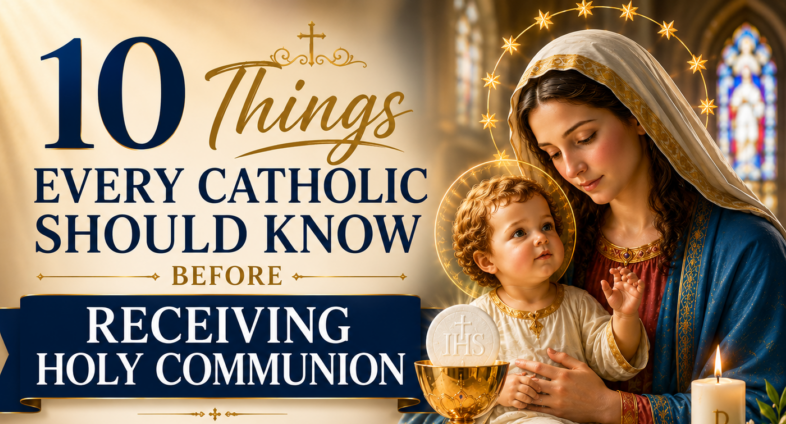
Receiving Holy Communion is one of the greatest privileges and blessings in the Catholic faith. At every Holy Mass, Catholics are invited to receive Jesus Christ Himself in the Holy Eucharist. The Church teaches that the Eucharist is not merely a symbol but the true Body, Blood, Soul, and Divinity of Our Lord Jesus Christ. Because this sacrament is so sacred, the faithful are called to approach Holy Communion with faith, reverence, and proper spiritual preparation.
Many Catholics receive Holy Communion regularly, yet it is easy to lose sight of the profound mystery taking place at the altar. Understanding the significance of the Eucharist helps us appreciate this priceless gift and receive it more fruitfully.
The Eucharist is often called the source and summit of the Christian life because all the Church’s spiritual treasures are centered upon Christ, who is truly present in this sacrament. Every Catholic should strive to deepen his or her understanding of Holy Communion and prepare carefully before approaching the altar.
Scripture Foundation
“Whoever eats my flesh and drinks my blood remains in me and I in him.” (John 6:56)
These words of Jesus reveal the intimate union He desires to share with His followers. Holy Communion is not simply a religious custom. It is a personal encounter with Christ Himself.
1. Holy Communion Is Truly Jesus Christ
The Catholic Church teaches that at the moment of consecration during Mass, the bread and wine become the Body and Blood of Jesus Christ.
Although the appearance, taste, and texture remain unchanged, their substance is transformed through the power of God. This teaching, known as Transubstantiation, has been believed and taught by the Church throughout the centuries.
When Catholics approach Holy Communion, they are receiving Jesus Himself. This truth should inspire awe, gratitude, and deep reverence.
The Eucharist is not merely a reminder of Christ. It is Christ truly present among His people.
2. We Should Be in a State of Grace
Before receiving Holy Communion, Catholics should examine their consciences honestly.
The Church teaches that anyone conscious of mortal sin should receive the Sacrament of Reconciliation before approaching Holy Communion. Mortal sin weakens our relationship with God and requires sacramental forgiveness.
Receiving Holy Communion while properly disposed allows us to experience more fully the graces God desires to give us.
Frequent confession and sincere repentance help prepare the soul for a worthy reception of the Eucharist.
3. Eucharistic Fasting Is an Important Preparation
Catholics are required to observe a Eucharistic fast of at least one hour before receiving Holy Communion.
Water and necessary medications do not break the fast.
This practice reminds us that Holy Communion is different from ordinary food. By fasting, we prepare our minds and hearts for the sacred encounter that awaits us.
Even though the required fast is relatively short, it remains a meaningful act of reverence and spiritual preparation.
4. Faith and Reverence Matter
The way we approach Holy Communion reflects what we truly believe.
A prayerful attitude before Mass, respectful silence in church, attentive participation in the liturgy, and reverent behavior all help prepare us spiritually.
The Eucharist deserves our full attention and devotion.
When Catholics approach the altar with faith and humility, they demonstrate their belief in Christ’s Real Presence and open themselves more fully to God’s grace.
5. Holy Communion Is Connected to the Sacrifice of the Mass
Holy Communion cannot be separated from the Holy Sacrifice of the Mass.
At every Mass, the Church participates in the memorial of Christ’s sacrifice on Calvary. The Eucharist makes present the saving work of Jesus in a sacramental manner.
By listening to Scripture, joining in the prayers of the Church, and participating attentively in the liturgy, Catholics prepare themselves to receive Holy Communion more fruitfully.
The Mass is not simply a gathering. It is an act of worship offered to God through Christ.
6. The Eucharist Strengthens the Soul
The Eucharist nourishes the spiritual life just as food nourishes the body.
Holy Communion strengthens believers against temptation, deepens union with Christ, increases sanctifying grace, and encourages growth in holiness.
The Christian journey is not always easy. We face struggles, temptations, worries, and challenges.
Jesus gives Himself to us in the Eucharist so that we may receive strength, encouragement, and spiritual nourishment for daily life.
Frequent and worthy reception of Holy Communion helps Catholics persevere in faith and grow closer to God.
7. Holy Communion Calls Us to Forgive Others
Jesus teaches His followers to love one another and forgive from the heart.
Before receiving Holy Communion, Catholics should examine their relationships and seek reconciliation whenever possible.
The Eucharist is the sacrament of unity. It calls believers to imitate Christ’s mercy and compassion.
Holding onto bitterness, hatred, or resentment can hinder spiritual growth.
Receiving Jesus should inspire us to become instruments of peace, forgiveness, and charity.
8. Proper Reception Reflects Proper Belief
The Church provides guidance regarding the proper reception of Holy Communion.
Whether received on the tongue or in the hand according to approved norms, Holy Communion should always be received reverently.
Catholics should approach with respect and avoid treating the Eucharist casually.
Every gesture should reflect belief in the sacred mystery being received.
The Eucharist deserves our highest reverence because it is Jesus Christ Himself.
9. Thanksgiving After Communion Is Essential
Many Catholics spend time preparing for Holy Communion but forget the importance of thanksgiving afterward.
The moments immediately following Holy Communion are especially precious because Christ is sacramentally present within us.
This is an ideal time for silent prayer, gratitude, praise, adoration, and personal conversation with the Lord.
A few minutes of prayer after Communion can become one of the most spiritually fruitful moments of the entire Mass.
Thanking God for His gift helps deepen our relationship with Him and strengthens our spiritual lives.
10. Holy Communion Should Transform Daily Life
Holy Communion is not meant to remain inside the church building.
The grace received through the Eucharist should influence every aspect of Christian living.
Catholics who receive Holy Communion are called to become more patient, charitable, forgiving, humble, and faithful.
The Eucharist strengthens believers to live the Gospel in their homes, workplaces, schools, and communities.
Receiving Jesus should inspire us to bring His love to others through our words and actions.
A life nourished by the Eucharist becomes a powerful witness to Christ in the world.
Reflection
The Holy Eucharist stands at the center of Catholic life.
Every Holy Mass gives believers the opportunity to encounter Jesus Christ in a profound and personal way. Through Holy Communion, Christ nourishes our souls, strengthens our faith, and invites us into deeper union with Him.
As Catholics prepare to receive Holy Communion, it is important to remember:
- Jesus is truly present in the Eucharist.
- A state of grace is essential.
- Eucharistic fasting prepares the heart.
- Reverence reflects faith.
- The Mass prepares us for Communion.
- The Eucharist strengthens the soul.
- Forgiveness and charity matter.
- Proper reception reflects proper belief.
- Thanksgiving after Communion is important.
- Holy Communion should transform daily life.
The more we understand the gift of the Eucharist, the more we can appreciate its beauty and power.
Closing Prayer
Lord Jesus Christ,
Thank You for the priceless gift of the Holy Eucharist.
Help us always to approach Holy Communion with faith, humility, reverence, and love. Purify our hearts, strengthen our souls, and draw us ever closer to You.
May every reception of Holy Communion deepen our relationship with You and inspire us to live as faithful disciples in our daily lives.
Teach us to love as You love, forgive as You forgive, and serve as You serve.
May the grace we receive through the Eucharist transform our hearts and help us grow in holiness.
Amen.
Related Articles
 The Angelus Prayer Explained: Meaning, History and How to Pray It
 Common Mistakes Catholics Make During Mass and How to Avoid Them
 What Every Catholic Family Should Have in Their Home for Spiritual Growth
 The Real Presence of Jesus in the Eucharist: What the Church Actually Teaches
 The Divine Mercy Chaplet Explained: Origins, Promises, and How to Pray It
 The Hidden Power of Daily Prayer: Small Habits That Change the Soul