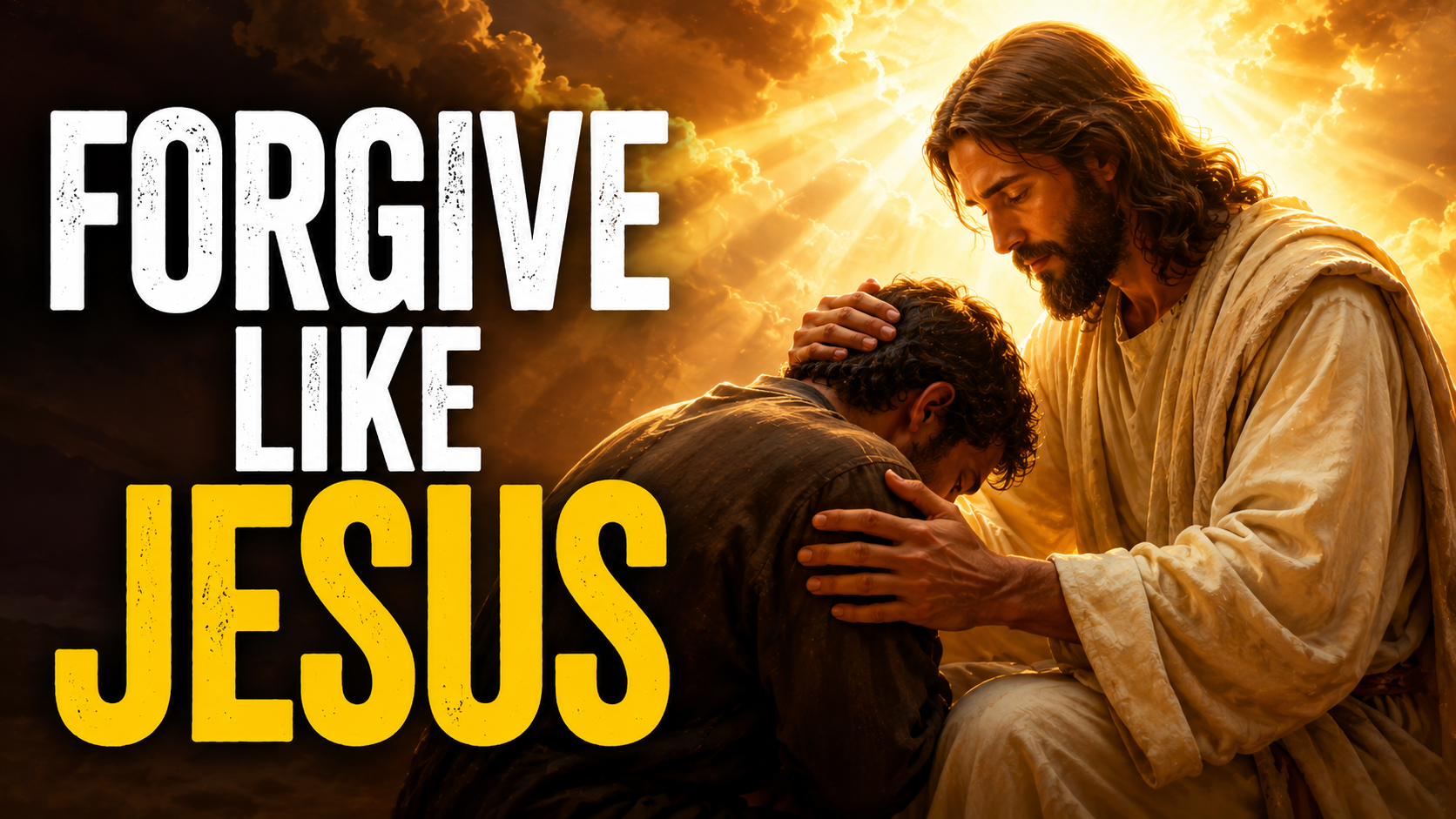
What does forgiveness in Christianity really mean when someone has deeply hurt you?
Forgiveness is one of Jesus’ most powerful teachings. Yet, it can also become one of the hardest commands to follow. In a world filled with anger, resentment, betrayal, and division, Jesus calls His followers toward something higher: mercy, healing, peace, and love.
In this article, we will explore what Jesus taught about forgiveness. We will also examine Scripture, Catholic teaching, and practical ways to forgive. Most importantly, we will discover why forgiveness does not excuse evil or erase pain. Instead, it helps us place our wounds into God’s hands.
For anyone carrying a painful memory today, this message offers a path toward hope.
Why Forgiveness in Christianity Matters So Much
The Christian understanding of forgiveness begins with God’s mercy.
Throughout Scripture, God repeatedly reveals Himself as compassionate and ready to forgive. Therefore, Christians do not view forgiveness as a simple act of kindness. Instead, they see it as a response to the mercy they have first received from God.
Jesus made this connection clear in the Lord’s Prayer. He taught His disciples to pray:
“Forgive us our trespasses, as we forgive those who trespass against us.”
This prayer appears in the Catholic tradition as part of the Our Father. The words remind us that God’s forgiveness should transform how we treat others.
However, Jesus does not suggest that forgiveness feels easy. He knows that human beings experience real pain. Betrayal can leave deep wounds, and injustice can create lasting sorrow.
Even so, Jesus invites us to surrender resentment rather than allowing it to control our hearts.
Forgiveness, therefore, does not deny suffering. Instead, it acknowledges the pain while choosing a different response.
Jesus Taught Forgiveness as a Way of Life
Jesus did more than speak about forgiveness. He made mercy central to His ministry.
For example, when Peter asked how often he should forgive someone who sinned against him, Jesus responded with a teaching that challenged ordinary human expectations. In Matthew 18, Christ emphasized the need for continual forgiveness.
Jesus also told the Parable of the Unforgiving Servant. Through this story, He showed the danger of receiving mercy while refusing to extend mercy to others.
The message remains powerful today.
When we hold tightly to resentment, we may believe that we protect ourselves. Yet, bitterness can slowly affect our peace, relationships, and spiritual life.
By contrast, forgiveness can begin to loosen the grip of anger.
The Lord’s Prayer and the Call to Forgive
The Lord’s Prayer places forgiveness within the daily life of every Christian.
When Catholics pray the Our Father, they ask God to forgive their sins while also committing themselves to forgive others. This connection reveals an important truth about forgiveness in Christianity.
God’s mercy does not remain something we simply receive. Instead, His mercy should flow through us and influence how we respond to others.
That does not mean we must approve of wrongdoing. Rather, it means we refuse to let hatred become the final word.
Jesus Forgave While Suffering on the Cross
Perhaps the most powerful example of forgiveness appears during the Passion of Christ.
As Jesus suffered on the cross, the Gospel of Luke records His prayer:
“Father, forgive them, for they know not what they do.”
These words reveal the extraordinary depth of Christ’s mercy.
Jesus did not offer forgiveness from a place of comfort. Instead, He prayed for mercy while experiencing rejection, humiliation, violence, and suffering.
Consequently, the Cross becomes the ultimate Christian example of sacrificial love.
Jesus forgave those who participated in His suffering. His prayer does not minimize the seriousness of their actions. Rather, it reveals that divine mercy reaches even into humanity’s darkest moments.
For Christians, this scene offers a profound spiritual lesson. If Christ could respond to suffering with mercy, then His followers can ask for the grace to choose mercy in their own difficult situations.
Of course, that process may take time.
Some wounds require prayer, wise counsel, and emotional healing. Nevertheless, Christians can begin by asking God for the grace to forgive.
What the Catholic Church Teaches About Forgiveness
Catholic teaching places forgiveness at the center of Christian discipleship.
The Catechism of the Catholic Church explains that forgiveness reflects God’s mercy. It also teaches that Christians must forgive others because they have received God’s forgiveness.
The Church connects this teaching directly to the Lord’s Prayer.
At the same time, Catholic teaching recognizes the seriousness of human suffering. Forgiveness does not mean that evil becomes acceptable. It does not remove the need for justice, accountability, or protection from further harm.
Instead, forgiveness changes the disposition of the heart.
A person can forgive while still setting healthy boundaries. Likewise, someone can release hatred without returning to an unsafe relationship.
Therefore, forgiveness in Christianity should never become an excuse for abuse or injustice.
In serious situations, a person may need to seek help from family members, trusted clergy, counselors, or appropriate authorities. Forgiveness and justice can exist together.
Forgiveness Does Not Mean Forgetting the Hurt
Many people struggle with forgiveness because they misunderstand what it requires.
Forgiveness does not necessarily mean:
- Forgetting what happened.
- Pretending that the offense was harmless.
- Saying that the wrong was acceptable.
- Trusting someone who remains dangerous.
- Restoring the relationship to its previous condition.
- Avoiding appropriate boundaries.
- Giving up the pursuit of legitimate justice.
Instead, forgiveness means choosing not to allow resentment to rule your heart.
You can remember what happened and still choose peace.
You can acknowledge the damage and still refuse revenge.
Likewise, you can forgive someone while recognizing that reconciliation may require genuine repentance and changed behavior.
This distinction matters greatly.
Forgiveness and reconciliation often belong together, but they are not always identical. Forgiveness may begin within one person’s heart. Reconciliation, however, usually requires both people to participate.
Why Unforgiveness Can Become a Heavy Burden
Holding onto anger can feel like holding a heavy weight.
At first, resentment may seem justified. After all, someone caused real pain. Yet, over time, unresolved anger can consume emotional and spiritual energy.
The person who hurt us may continue living their life. Meanwhile, we may remain trapped in the memory of what happened.
That is why Jesus calls us toward freedom.
When we forgive, we do not declare that the offense never mattered. Instead, we choose to stop allowing that offense to control our future.
We place the situation into God’s hands.
This process can take time. Some wounds heal gradually rather than instantly. Even so, every sincere step toward forgiveness can become an act of faith.
How to Practice Forgiveness in Daily Life
Forgiveness often begins with a simple prayer.
If someone has hurt you, consider taking these steps.
1. Bring Your Pain to Jesus
First, speak honestly with God.
Tell Him what happened. Tell Him how you feel. You do not need to hide your anger, sadness, confusion, or disappointment.
The Psalms show us that God’s people can bring their deepest emotions into prayer.
Therefore, begin with honesty.
2. Name the Wound
Next, acknowledge the specific hurt.
Ask yourself what caused the deepest pain. Was it betrayal, rejection, dishonesty, abandonment, or injustice?
Naming the wound can help you understand what you need to surrender.
3. Ask for the Grace to Forgive
You may not feel ready to forgive immediately.
That is understandable.
Instead, begin with a simple prayer:
“Jesus, I want to forgive, but I need Your help.”
God does not ask us to walk the path of forgiveness alone. His grace can strengthen us when our own strength feels insufficient.
4. Release the Desire for Revenge
Forgiveness means surrendering the desire to personally punish the person who hurt you.
This does not eliminate justice. Rather, it places ultimate judgment in God’s hands.
As Romans 12 teaches, Christians should not repay evil with evil. Instead, they should overcome evil with good.
5. Set Wise Boundaries
Finally, remember that forgiveness does not require unsafe behavior.
If someone continues to cause harm, you may need distance. You may also need professional or pastoral support.
Forgiveness can coexist with wisdom.
What Forgiveness in Christianity Looks Like Today
The need for forgiveness reaches far beyond individual relationships.
Families need forgiveness.
Marriages need forgiveness.
Friendships need forgiveness.
Church communities need forgiveness.
Even nations and societies need reconciliation.
Today, Christians can become witnesses of mercy in a deeply divided world. Instead of spreading anger, they can choose patience. Instead of encouraging hatred, they can promote truth and charity.
This does not mean ignoring injustice.
Rather, Christians can pursue justice without hatred. They can speak the truth without dehumanizing others. Moreover, they can defend what is right while keeping compassion in their hearts.
In this way, forgiveness in Christianity becomes more than a private spiritual practice. It becomes a powerful witness to the Gospel.
Bible Verses That Teach Us About Forgiveness
Scripture offers many passages that deepen our understanding of forgiveness.
Matthew 6:12 — The Lord’s Prayer
Jesus connects receiving God’s forgiveness with forgiving others. This passage reminds Christians that mercy should shape their daily relationships.
Matthew 18:21–22 — Forgiving Again and Again
Peter asks Jesus how often he should forgive. Christ’s response emphasizes that forgiveness should not become a limited calculation.
Luke 23:34 — Jesus on the Cross
Jesus prays for those responsible for His suffering. This moment reveals the extraordinary mercy at the heart of the Gospel.
Ephesians 4:32 — Kindness and Compassion
Paul encourages believers to forgive one another as God has forgiven them in Christ. Therefore, Christian forgiveness flows from gratitude for God’s mercy.
Colossians 3:13 — Bearing With One Another
This passage encourages Christians to remain patient with one another and forgive grievances. It connects forgiveness with Christian community and love.
Together, these passages show that forgiveness belongs at the heart of Christian life.
How Catholics Can Live Forgiveness at Home and in the Community
Forgiveness often begins in ordinary places.
It can begin at the dinner table.
It can begin between spouses.
It can begin when a parent and child disagree.
It can also begin within a parish community.
Here are several practical ways to live this teaching:
- Pray the Our Father slowly and reflect on its words.
- Go to Confession regularly and receive God’s mercy.
- Pray for people who have hurt you.
- Avoid gossip that keeps resentment alive.
- Ask forgiveness when you have caused harm.
- Practice patience during family disagreements.
- Seek reconciliation when it is safe and appropriate.
- Support people who are healing from serious wounds.
- Remember that forgiveness often happens gradually.
Most importantly, keep returning to Christ.
The Christian life does not require us to become perfect overnight. Instead, it invites us to grow in grace one step at a time.
Frequently Asked Questions About Forgiveness in Christianity
What is forgiveness in Christianity?
Forgiveness in Christianity means releasing resentment and surrendering the desire for revenge while trusting God with justice. It does not mean approving wrongdoing or ignoring serious harm.
Why does Jesus ask Christians to forgive others?
Jesus calls Christians to forgive because God has shown them mercy. Through forgiveness, believers reflect the mercy they have received from Christ.
Does forgiveness mean forgetting what happened?
No. Forgiveness in Christianity does not require a person to erase painful memories. Instead, forgiveness means refusing to let resentment control the heart.
Can I forgive someone without trusting them again?
Yes. Forgiveness and trust are different. Trust may require time, repentance, honesty, and changed behavior. Therefore, you can forgive someone while maintaining appropriate boundaries.
Does forgiveness mean I must reconcile with someone?
Not always. Reconciliation requires both people to participate. In some situations, especially when abuse or ongoing danger exists, distance may remain necessary.
What if I cannot forgive someone yet?
Begin with prayer. Ask Jesus for the grace to desire forgiveness. Then bring your pain to Him honestly. Forgiveness can happen gradually, and God can guide you through the process.
What does the Catholic Church teach about forgiveness?
The Catholic Church teaches that Christians must forgive others because God forgives them. At the same time, the Church recognizes the importance of justice, repentance, healing, and reconciliation.
How can I pray for someone who hurt me?
Start simply. You might pray, “Jesus, have mercy on this person and heal my heart.” Over time, ask God to help you release anger and desire what is truly good.
Conclusion: Choosing Mercy Over Resentment
The heart of forgiveness in Christianity is not the denial of pain. Instead, it is the decision to place that pain into God’s hands.
Jesus never taught that our wounds are insignificant. He knew the reality of betrayal, rejection, injustice, and suffering. Yet, He still called His followers to choose mercy.
Forgiveness does not excuse evil. It does not erase memories. It does not always restore relationships.
Instead, forgiveness opens the heart to God’s healing.
When we forgive, we choose peace over bitterness. We choose healing over hatred. We choose God’s love over the weight of resentment.
Therefore, if you carry a painful wound today, bring it to Jesus.
Tell Him what happened.
Tell Him where it hurts.
Then ask Him for the grace to take the next step.
You may not be able to forgive everything at once. However, you can begin today.
Ultimately, forgiveness in Christianity points us toward the mercy of Christ. His grace can soften the hardest heart, strengthen the wounded soul, and lead us toward a peace that the world cannot give.
A Catholic Prayer for the Grace to Forgive
Lord Jesus Christ,
You know every wound I carry and every pain hidden within my heart.
You know the people who have hurt me and the memories I struggle to release.
Today, I place these burdens into Your loving hands.
Give me the grace to forgive as You have forgiven me.
Help me release anger without denying the truth.
Give me wisdom to set healthy boundaries and courage to seek justice with love.
Heal the places in my heart that still ache.
Where I feel bitterness, bring Your mercy.
Where I feel hatred, bring Your love.
Where I feel weakness, give me Your strength.
Teach me to follow Your example, especially when forgiveness feels difficult.
May Your peace rule in my heart, and may Your mercy guide my life.
Through the intercession of the Blessed Virgin Mary and all the saints, lead me closer to Your Sacred Heart.
In Your holy name, Jesus, I pray.
Amen.
Call to Action
Has forgiveness ever helped you find peace after a painful experience?
Share your thoughts in the comments. Your story may encourage someone who is struggling today.
If this article about forgiveness in Christianity touched your heart, share it with someone who may need a message of mercy and hope.
You can also explore more Catholic articles on prayer, God’s mercy, Scripture, and spiritual healing. Finally, subscribe to receive more faith-filled Catholic content that helps you grow closer to Jesus.
Catechism of the Catholic Church — VaticanThe Holy Bible — United States Conference of Catholic BishopsVatican NewsUnited States Conference of Catholic BishopsNew Advent — Catholic Encyclopedia
Related Articles
 Prayer to Saint Thérèse of Lisieux for Trust and Hope
 Battle of Lepanto and the Rosary: The Story of 1571
 How the Blessed Virgin Mary Teaches Us to Trust God Completely
 The Difference Between Happiness and Joy: A Christian Perspective
 SSPX Excommunication 2026: Vatican Decision Explained
 Hidden Christians of Japan: Faith That Survived 250 Years