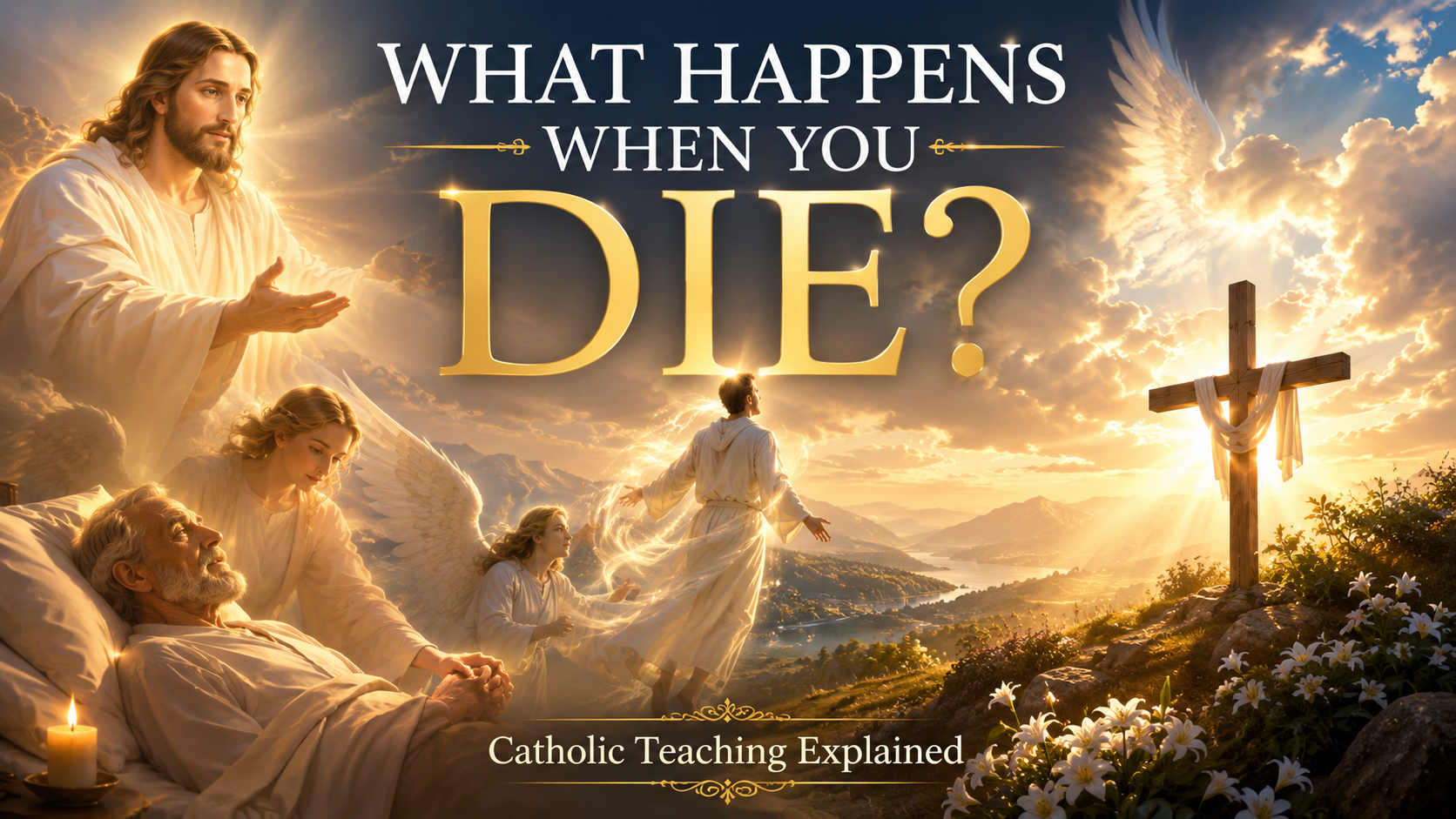
What happens when you die according to Catholic teaching? It is a question that almost everyone asks at some point. Yet few people stop to consider what the Catholic Church has taught about death, judgment, and eternal life for centuries.
Right now, somewhere in the world, a person is taking their final breath. In that quiet moment, something profound takes place. Before the funeral, before the eulogy, and before loved ones gather to say goodbye, the soul begins its journey into eternity.
So, what actually happens when you die?
Movies and popular culture offer many different answers. However, Catholic teaching offers a clear vision rooted in Sacred Scripture and the Church’s faith.
The Catholic understanding of death is not meant to leave us hopeless. Instead, it calls us to live with greater purpose, trust God’s mercy, and prepare our hearts for eternity.
So, let us explore what happens when you die according to Catholic teaching and why this truth can actually fill Christians with hope.
What Happens When You Die According to Catholic Teaching?
According to Catholic teaching, death involves the separation of the soul from the body.
The human body eventually returns to the earth. However, the soul does not simply disappear. The Catholic Church teaches that each human person has an immortal soul. Therefore, physical death does not mark the end of our existence.
The Catechism of the Catholic Church explains that death ends our earthly pilgrimage. At the same time, death begins the next stage of our eternal destiny.
Scripture reminds us:
“It is appointed for men to die once, and after that comes judgment.”
— Hebrews 9:27
This verse may sound frightening at first. Nevertheless, it also reveals something deeply important.
Your life matters.
Every choice matters. Every act of kindness matters. Every sacrifice made out of love matters. Even the quiet acts that nobody notices have meaning before God.
Therefore, the Catholic answer to what happens when you die begins with a simple truth: death does not erase your life or your relationship with God.
Instead, it brings your earthly journey to its conclusion.
The Moment of Death and the Separation of the Soul
The Catholic Church teaches that the human person is a unity of body and soul.
During earthly life, the body and soul exist together. At death, however, the soul separates from the body.
This separation is temporary in the larger plan of God’s salvation.
Catholic faith does not teach that the body is worthless. On the contrary, Christians believe in the resurrection of the body. At the end of time, God will raise the dead, and the body and soul will be reunited.
Therefore, Christian hope looks beyond the grave.
Death remains a painful reality. Jesus Himself wept at the death of Lazarus. Even so, Christ’s Resurrection changed the meaning of death forever.
Because Jesus conquered death, Christians can face death with hope rather than despair.
As Saint Paul writes:
“For to me, to live is Christ, and to die is gain.”
— Philippians 1:21
Saint Paul’s words do not mean that Christians should seek death. Instead, they express complete confidence in Christ. For those who live in faith, death cannot have the final word.
The Particular Judgment After Death
What happens next?
Catholic teaching speaks of the Particular Judgment.
The Church teaches that, immediately after death, each person receives judgment from Christ. At that moment, the soul encounters the truth of its earthly life before God.
This judgment does not mean that God suddenly discovers something He did not know. God already knows every person completely.
Instead, the Particular Judgment reveals the eternal consequences of how we lived and responded to God’s grace.
The Catechism teaches that each person receives an eternal destiny immediately after death. That destiny depends on the person’s faith and relationship with God, including their response to His grace.
What Does the Particular Judgment Mean?
The Particular Judgment reminds us that our choices have eternal significance.
God sees what other people cannot see. He knows our intentions, our struggles, our failures, and our acts of love.
Therefore, judgment is not merely about outward appearances.
It concerns the whole truth of our relationship with God.
The story of the repentant thief illustrates this beautifully. As Jesus hung upon the cross, one criminal turned toward Him in faith and repentance.
Jesus answered:
“Today you will be with me in Paradise.”
— Luke 23:43
This moment reveals the heart of Christian hope.
The thief had no opportunity to repair his earthly life. Yet he turned toward Christ with humility and trust.
Jesus responded with mercy.
Therefore, it is never too late to turn toward God while we are still alive.
Heaven: Eternal Life With God
So, what happens when you die according to Catholic teaching if you die in God’s grace and are fully purified?
The Church teaches that the soul enters Heaven.
Heaven is not simply a beautiful place where people receive rewards. Instead, Heaven means perfect communion with God.
Every human heart longs for love, peace, truth, and happiness. However, nothing created can completely satisfy that longing.
Only God can.
In Heaven, the blessed see God “face to face.” They experience the fullness of life and happiness that God created them to receive.
Therefore, Heaven represents the ultimate fulfillment of human existence.
There is no sin, suffering, fear, or death in God’s eternal presence.
For Catholics, this hope changes how we live today. Instead of seeing life as a search for temporary success, we begin to understand it as a journey toward God.
Purgatory: God’s Mercy and Purification
What about people who die loving God but still need purification?
Catholic teaching answers this question through the doctrine of Purgatory.
The Church teaches that Purgatory is the final purification of those who die in God’s friendship but are not yet completely purified.
In other words, Purgatory prepares the soul for the perfect holiness required to enter Heaven.
Therefore, Purgatory should not be understood as a second chance after death. Instead, it is part of God’s saving mercy for those who already belong to Him.
The Church has always encouraged Christians to pray for the dead.
Scripture says:
“It is a holy and wholesome thought to pray for the dead.”
— 2 Maccabees 12:46
For this reason, Catholics offer Masses, prayers, Rosaries, and acts of charity for deceased loved ones.
These prayers express the communion that exists between the Church on earth and those who have gone before us.
Why Do Catholics Pray for the Dead?
Catholics pray for the dead because death does not destroy the bonds of love within the Body of Christ.
We entrust our deceased loved ones to God’s mercy.
For example, families may request a Mass intention for someone who has died. They may also pray the Rosary, visit a cemetery, or remember the person during personal prayer.
However, Catholics do not pray to the dead as though they were God. Instead, Catholics pray for the dead and ask the saints in Heaven to intercede for us.
Therefore, prayer remains an important expression of Christian love, even when someone has died.
Hell: The Tragedy of Rejecting God
The third possible eternal destiny is Hell.
Catholic teaching describes Hell as the eternal separation from God. It is the tragic consequence of freely and finally rejecting God’s love.
God does not create anyone for Hell.
Instead, God desires the salvation of every person. He continually offers grace and calls people toward Himself.
However, God also respects human freedom.
Therefore, Hell represents the ultimate consequence of a person freely and definitively refusing God’s mercy.
This teaching should never become an excuse for judging another person’s eternal destiny.
Only God knows the heart of each person.
Instead, the teaching about Hell should encourage us to examine our own lives. It should move us toward repentance, humility, prayer, and trust in God’s mercy.
You Are Not Alone at the Hour of Death
One of the most comforting aspects of Catholic spirituality concerns the hour of death.
Catholics often pray:
“Holy Mary, Mother of God, pray for us sinners, now and at the hour of our death.”
This prayer appears in the Hail Mary.
The Church also teaches about the protection and assistance of guardian angels. Catholic tradition encourages believers to trust in God’s care throughout life, including the final moments of earthly existence.
Above all, Christians can trust in Jesus Christ.
Jesus experienced human suffering and death Himself. He entered fully into the reality of human mortality, yet He conquered death through His Resurrection.
Therefore, a Christian never faces death alone.
Christ remains the source of hope.
The saints also remind us that death should not become an object of despair. Many saints spoke about death as the final passage toward eternal life with God.
That does not mean Christians should ignore grief or pretend that death does not hurt.
Instead, Christian hope allows us to mourn while still trusting God’s promises.
How Should Catholics Live in Light of Death?
Understanding what happens when you die according to Catholic teaching should change how you live today.
Death reminds us that our time on earth is limited. Therefore, we should use that time wisely.
Here are four practical ways Catholics can prepare for eternity.
- Live your faith every day.
Make choices that reflect love for God and neighbor. - Return to God’s mercy.
Receive the Sacrament of Reconciliation regularly. Do not allow shame or fear to keep you away from God’s mercy. - Pray for the deceased.
Remember your loved ones in prayer and consider requesting Mass intentions for them. - Prepare your heart for eternity.
Do not wait until a crisis to think about God. Develop a daily habit of prayer, Scripture reading, and participation in the sacramental life of the Church.
Furthermore, talk about death with wisdom and faith.
The Christian tradition has often used the expression “Sister Death” to describe death as part of the human journey toward God.
For those who belong to Christ, death is not the end of the story.
What Happens When You Die? The Christian Hope
So, what happens when you die according to Catholic teaching?
The Church teaches that the soul separates from the body. Then, the person faces the Particular Judgment before Christ.
From there, the soul enters Heaven, undergoes purification in Purgatory before Heaven, or experiences eternal separation from God in Hell.
Yet the Catholic message does not end with judgment.
It ends with hope.
Jesus Christ has already conquered death.
Therefore, Christians can look toward eternity with confidence in God’s mercy.
Death may still frighten us. Grief may still break our hearts. Nevertheless, Christ has transformed death from a final defeat into the doorway toward eternal life.
We were created for eternity.
The Christian life is a journey toward that eternal home.
Frequently Asked Questions
What happens when you die according to Catholic teaching?
According to Catholic teaching, death separates the soul from the body. Immediately afterward, the soul faces the Particular Judgment and receives its eternal destiny: Heaven, purification in Purgatory before Heaven, or Hell.
What is the Catholic belief about the soul after death?
Catholics believe that the soul continues to exist after physical death. The soul does not cease to exist. Instead, it awaits the resurrection of the body and experiences its eternal destiny according to God’s judgment.
What is the Particular Judgment?
The Particular Judgment occurs after death. The Church teaches that each person stands before Christ and receives judgment based on their relationship with God and their response to His grace.
Do Catholics believe in Heaven after death?
Yes. Catholics believe that those who die in God’s grace and are fully purified enter Heaven. Heaven is perfect communion with God and the fulfillment of human happiness.
What happens to the soul in Purgatory?
Catholic teaching describes Purgatory as a final purification for those who die in friendship with God but still need purification before entering Heaven. It is not a second chance for salvation.
Why do Catholics pray for the dead?
Catholics pray for the dead because they believe in the communion of saints. The Church encourages prayer for those undergoing purification and especially recommends offering Masses and prayers for deceased loved ones.
Do Catholics believe everyone goes to Heaven?
The Catholic Church teaches that God desires everyone to be saved. However, Catholics also believe that human freedom matters. The Church therefore teaches about Heaven, Purgatory, and Hell as possible eternal destinies.
How should Catholics prepare for death?
Catholics can prepare by living in God’s grace, receiving the Sacraments, practicing daily prayer, seeking forgiveness, loving others, and trusting in Jesus Christ. The Sacrament of Reconciliation also offers a powerful opportunity to return to God’s mercy.
A Catholic Prayer for the Hour of Death
Lord Jesus Christ,
You conquered sin and death through Your glorious Resurrection.
Prepare my heart for the day when I will stand before You.
Help me live each day with faith, humility, and love.
Forgive my sins and lead me back whenever I wander from You.
Have mercy on my deceased loved ones and welcome them into Your eternal peace.
Mary, Mother of God, pray for us now and at the hour of our death.
Saint Joseph, patron of a happy death, pray for us.
Jesus, I trust in You.
Amen.
Final Thoughts: Death and the Hope of Eternal Life
The question of what happens when you die according to Catholic teaching ultimately leads us back to Jesus Christ.
The Church does not deny the reality of death. Instead, it proclaims that death does not have the final victory.
Christ does.
Therefore, let us live with purpose.
Let us love more generously, forgive more quickly, pray more faithfully, and return to God whenever we fall.
Above all, let us remember that our earthly lives are moving toward eternity.
What happens when you die according to Catholic teaching is not simply a question about the future. It is also a question about how we choose to live today.
If we belong to Christ, we have a reason to hope.
A Final Question for You
How does your faith in eternal life change the way you live today?
Share your thoughts in the comments. Your words may encourage someone who is struggling with fear, grief, or uncertainty.
If this article helped you, share it with a friend or loved one who may need a message of Christian hope.
You can also explore more Catholic articles on prayer, the saints, Heaven, Purgatory, and the teachings of the Church. Subscribe to our future Catholic content for more faith-filled reflections and encouragement.
For trustworthy references, consider linking to:
- Catechism of the Catholic Church — Vatican
- United States Conference of Catholic Bishops (USCCB)
- Vatican News
- New Advent — Catholic Encyclopedia
Related Articles
 Why the Vatican Still Won’t Explain This Shroud
 Hidden Christians of Japan: Faith That Survived 250 Years
 What Does Purgatory Look Like According to the Saints?
 Holy House of Loreto: The Mystery of Mary’s Home
 SSPX Excommunication 2026: Vatican Decision Explained
 Incorrupt Saints: The Catholic Church’s Teaching Explained