Introduction: The Mystery of Incorrupt Saints
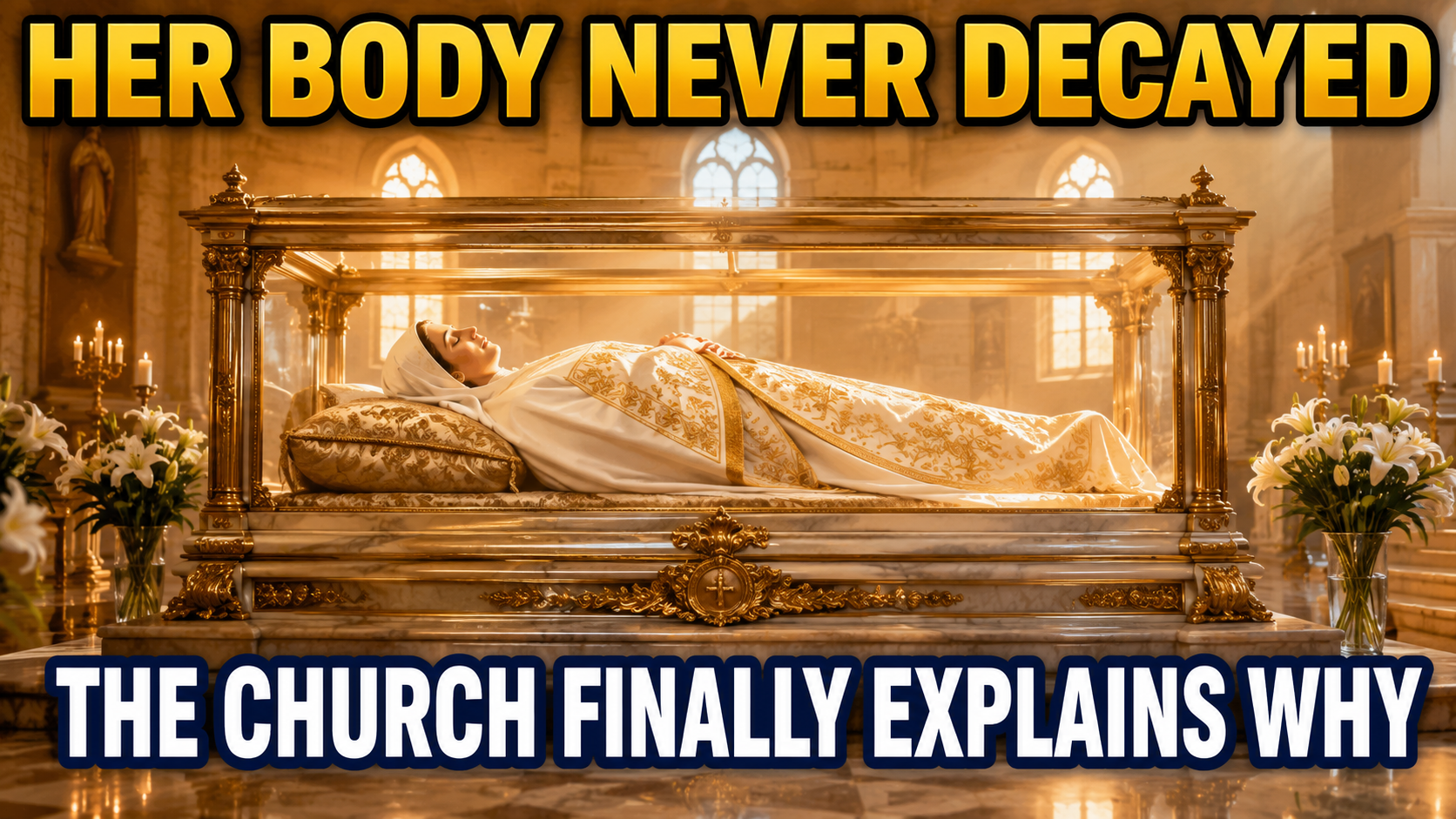
Incorrupt saints have fascinated Christians and historians for centuries. Their remarkably preserved bodies raise important questions about faith, science, and the Christian hope of resurrection.
Throughout Catholic history, several holy men and women have shown unusual signs of preservation after death. These extraordinary cases have inspired devotion among believers while also attracting interest from historians and researchers.
How can some bodies remain preserved for decades or even centuries without modern embalming methods?
Are these events miracles from God? Could natural explanations also play a role? What does the Catholic Church truly teach about incorrupt saints?
The Catholic Church approaches these questions with both faith and reason. It carefully examines every case before reaching conclusions. Therefore, the Church does not automatically declare that every preserved body represents a supernatural miracle.
Instead, Catholic teaching focuses on something much deeper.
The greatest sign of holiness is not the condition of a person’s body after death. Rather, true holiness appears through a life transformed by God’s grace, filled with love, humility, prayer, and devotion to Jesus Christ.
In this article, we will explore the history of incorrupt saints, examine famous examples such as Saint Bernadette Soubirous, understand the Church’s careful approach, and discover the spiritual message behind these mysterious events.
What Are Incorrupt Saints?
The term incorrupt saints refers to holy men and women whose bodies show unusual preservation after death.
In some cases, their remains appear remarkably preserved long after burial. As a result, these events have become an important part of Catholic history and devotional tradition.
However, the Catholic Church examines these situations carefully.
A preserved body does not automatically prove that a miracle has occurred.
Several natural factors can contribute to bodily preservation, including:
- Dry environmental conditions
- Low humidity
- Soil composition
- Temperature
- Burial circumstances
- Natural mummification
- Historical preservation methods
Therefore, investigators consider all possible explanations before reaching a conclusion.
Moreover, the Church does not recognize someone as a saint simply because their body remains preserved.
The canonization process focuses on a person’s:
- Love for God
- Heroic virtue
- Faith during suffering
- Charity toward others
- Commitment to following Christ
For this reason, incorruption remains only one possible sign among many.
The Catholic Church teaches that the true measure of holiness comes from the heart and the life a person lived before God.
Why Does the Church Study Incorrupt Saints?
The Church investigates these cases because truth matters.
Faith does not require believers to ignore evidence or reject scientific examination. Instead, Catholic tradition teaches that faith and reason work together.
For example, when experts examine the remains of a saint, they consider medical, historical, and environmental information.
At the same time, they also consider the spiritual importance of the person’s life.
Therefore, the Church maintains a balanced approach:
- It avoids rejecting unusual events too quickly.
- It avoids declaring miracles without careful investigation.
- It recognizes God’s power while respecting scientific knowledge.
Ultimately, the purpose of studying incorrupt saints is not curiosity alone.
These stories encourage believers to look beyond physical signs and discover the deeper message of faith.
Famous Incorrupt Saints in Catholic History
Throughout the centuries, many saints have become associated with remarkable bodily preservation.
However, the Church always reminds Catholics that the greatest testimony of a saint is not what happens after death.
Instead, the greatest witness is how that person lived.
Among the most famous examples are Saint Bernadette Soubirous, Saint Padre Pio, and Saint Catherine Labouré.
Their stories continue to inspire millions because their lives reflected deep faith, humility, and love for God.
Saint Bernadette Soubirous: The Lourdes Visionary
Saint Bernadette Soubirous remains one of the most recognized examples connected with incorrupt saints.
She was born in Lourdes, France, in 1844. Her family lived in poverty, and she experienced many hardships throughout her childhood.
Despite these difficulties, Bernadette remained faithful and humble.
In 1858, she experienced eighteen apparitions of the Blessed Virgin Mary at the grotto of Massabielle.
During these encounters, Mary revealed herself as the Immaculate Conception.
As a result, Lourdes became one of the world’s most important Marian pilgrimage destinations.
Nevertheless, Bernadette never searched for fame.
After the apparitions, she entered religious life with the Sisters of Charity of Nevers. There, she dedicated herself to prayer, service, and sacrifice.
Although she suffered from illness, she continued trusting in Christ.
Bernadette died on April 16, 1879.
Thirty years later, Church officials opened her tomb during the investigation process for her beatification.
Doctors examined her remains and observed an unusual level of preservation.
Her face and hands appeared remarkably preserved, which attracted attention from both believers and researchers.
However, the Church did not recognize Bernadette as a saint because of this preservation.
Instead, she became a saint because of her extraordinary faith, obedience, humility, and love for Christ.
Her preserved body serves as a reminder of her holiness, but it does not define her holiness.
Saint Bernadette and the Message of Lourdes
The story of Saint Bernadette carries a powerful spiritual message.
Today, millions of pilgrims visit Lourdes seeking prayer, healing, and renewal.
Furthermore, Lourdes reminds believers that God often works through ordinary people.
Bernadette had no wealth or influence.
She was a simple young woman from a poor family.
Yet God used her faithfulness to bring hope to millions around the world.
Because of her example, Christians remember an important truth:
God sees what the world often overlooks.
A hidden prayer matters.
A quiet sacrifice matters.
An act of love performed without recognition matters.
Saint Padre Pio: A Life of Prayer and Sacrifice
Saint Padre Pio is another well-known figure connected with the history of incorrupt saints.
He was born Francesco Forgione in Italy in 1887. From a young age, he showed a deep love for prayer and a strong desire to serve God.
Later, he joined the Capuchin Franciscan Order and became a priest known throughout the world for his devotion to the Eucharist, the Sacrament of Confession, and spiritual guidance.
Many Catholics remember Padre Pio because of the stigmata, the wounds resembling those of Christ’s Passion, which he reportedly carried for many years.
Furthermore, people traveled from many countries to seek his prayers, advice, and encouragement.
Despite his worldwide reputation, Padre Pio remained humble.
He spent many hours in prayer, accepted suffering with patience, and dedicated his life to helping souls come closer to Christ.
Padre Pio died in 1968.
After his death, experts examined his remains, and the condition of his body attracted worldwide attention.
However, the Church did not recognize Padre Pio as a saint because of bodily preservation.
Instead, his canonization focused on his heroic virtue, deep faith, charity, obedience, and complete dedication to Jesus Christ.
His life teaches an important lesson:
True holiness comes from a heart united with God.
Saint Catherine Labouré: A Hidden Life of Faith
Saint Catherine Labouré is another saint often mentioned when discussing incorrupt saints.
She was born in France in 1806 and became a Daughter of Charity devoted to prayer and service.
In 1830, Catherine experienced Marian apparitions that led to the creation of the Miraculous Medal.
Although millions of Catholics later learned about her connection to this devotion, Catherine herself lived a quiet and humble life.
She did not seek recognition.
Instead, she spent many years caring for the poor and faithfully serving God.
Saint Catherine died in 1876.
Years later, people examined her remains and found remarkable preservation.
Nevertheless, the Church did not base her sainthood on this unusual event.
She became a saint because of her humility, obedience, charity, and faithful love for Christ.
Her example reminds Christians that God often works through hidden lives.
A person does not need fame or worldly success to become holy.
Catholic Teaching About Incorrupt Saints
The Catholic Church approaches the mystery of incorrupt saints with careful judgment.
The Church recognizes that some preserved bodies may represent extraordinary signs. However, it does not automatically classify every case as a miracle.
Instead, Church authorities carefully investigate each situation.
They consider factors such as:
- Natural preservation processes
- Burial conditions
- Climate and environment
- Historical circumstances
- Possible preservation methods
This careful process demonstrates that Catholic faith welcomes truth from every area of knowledge.
Science and faith do not need to compete.
Rather, they can work together.
For example, scientific examination may explain how preservation occurred naturally. At the same time, believers may reflect on the deeper spiritual meaning behind the event.
Therefore, the Church avoids two extremes:
- Rejecting every unusual event immediately
- Accepting every unusual event without examination
Instead, Catholic tradition follows a balanced path of faith, wisdom, and careful investigation.
What Makes Someone a Saint?
The Catholic Church teaches that holiness depends on a person’s relationship with God.
A saint is not recognized because of extraordinary events after death alone.
Rather, the Church examines the complete witness of the person’s life.
Important signs of holiness include:
Love for God
Saints place God at the center of their lives.
Their prayers, choices, and sacrifices reveal their desire to follow His will.
Heroic Virtue
Saints demonstrate extraordinary faith, hope, and charity.
They remain faithful even when facing difficult circumstances.
Faithfulness During Suffering
Many saints experienced illness, rejection, poverty, or persecution.
However, they continued trusting in God.
Charity Toward Others
Holiness always produces love.
Saints serve others with compassion and generosity.
A Life Centered on Jesus Christ
Above all, saints point people toward Christ.
Their lives become examples of faith for future generations.
The Catholic Understanding of the Human Body
The mystery of incorrupt saints connects with the Catholic belief that the human body has great dignity.
Christianity does not teach that the body has no value after death.
Instead, Catholics believe that God created the entire human person, including both body and soul.
Saint Paul writes:
“Your body is a temple of the Holy Spirit within you.”
— 1 Corinthians 6:19
Because of this belief, Catholics treat the bodies and relics of saints with deep respect.
Relics remind believers of the faith and sacrifices of holy men and women.
However, the Church always emphasizes an important truth:
The ultimate Christian hope is not the preservation of the body.
The ultimate hope is the resurrection promised by Jesus Christ.
Biblical Meaning of Incorrupt Saints
The mystery of incorrupt saints connects deeply with the Bible’s message about death, life, and resurrection.
Christian faith teaches that death entered the world through sin, but God’s plan included the restoration of humanity through Jesus Christ.
Therefore, the preserved bodies of some saints do not represent the foundation of Christian belief.
Jesus Christ’s Resurrection remains the center of faith.
The saints simply point toward this greater truth.
The Promise of Resurrection in Scripture
The Bible contains many passages that speak about God’s victory over death.
One important verse appears in Psalm 16:
“You will not abandon my soul to the realm of the dead, nor will you let your faithful one see decay.”
— Psalm 16:10
Early Christians understood this passage as pointing especially toward Jesus Christ and His Resurrection.
Jesus conquered death completely.
Therefore, every Christian hope comes from Him.
The bodies of incorrupt saints do not replace this message.
Instead, they remind believers that God’s promises are greater than what human eyes can see.
Jesus also said:
“I am the resurrection and the life. Whoever believes in me, though he die, yet shall he live.”
— John 11:25
These words reveal the heart of Christian hope.
Death does not have the final victory.
Through Christ, believers receive the promise of eternal life.
Furthermore, the stories of incorrupt saints encourage Christians to remain faithful because God’s plan extends beyond this earthly life.
Why Does God Allow These Extraordinary Signs?
The Catholic Church does not claim to have a complete explanation for every case of bodily preservation.
However, many believers see these events as gentle reminders of important spiritual truths.
1. They Reveal the Dignity of the Human Body
First, these signs remind Christians that the body matters.
God created human beings as a unity of body and soul.
Therefore, the body deserves respect.
2. They Show That Holiness Leaves a Lasting Impact
Moreover, the greatest legacy of a saint is not physical preservation.
It is the love, faith, and sacrifice they offered during life.
Saint Bernadette’s humility.
Padre Pio’s compassion.
Saint Catherine Labouré’s obedience.
These virtues continue inspiring people because they reflect God’s grace.
3. They Point Toward Eternal Hope
Finally, incorrupt saints remind believers that earthly life is not the complete story.
The world focuses heavily on temporary achievements.
However, Christianity teaches that eternal life with God is the ultimate goal.
These extraordinary signs encourage believers to look beyond what they can see and trust in God’s promises.
Spiritual Lessons From Incorrupt Saints
The stories of incorrupt saints are not only historical mysteries.
They also provide powerful spiritual lessons for Christians today.
Although these extraordinary events attract attention, the deeper message focuses on faith, humility, love, and devotion to God.
The saints remind believers that holiness does not depend on fame, wealth, or recognition.
Instead, holiness grows through a faithful relationship with Jesus Christ.
1. Hidden Faithfulness Matters
Saint Bernadette lived a simple and humble life.
She did not seek popularity or public attention.
Instead, she quietly followed God’s call through prayer, obedience, and sacrifice.
Because of her faithfulness, her life became a source of inspiration for millions.
Many people today feel unnoticed.
However, the example of the saints reveals an important truth:
God sees every act of love.
A prayer offered in silence matters.
A sacrifice made for family matters.
A kindness shown without recognition matters.
Therefore, Christians should never underestimate small acts of faithfulness.
God values the heart behind every action.
2. Holiness Is Greater Than Recognition
Modern culture often measures success through achievements, wealth, influence, and popularity.
However, the lives of the saints reveal a different understanding of greatness.
True greatness comes from:
- Humility
- Faithfulness
- Love
- Service
- Trust in God
The mystery of incorrupt saints teaches that God often chooses people whom the world overlooks.
For example, Saint Bernadette was a poor young girl from a small village.
Saint Catherine Labouré lived quietly without seeking attention.
Padre Pio spent his life serving souls through prayer and sacrifice.
Yet their devotion continues touching hearts around the world.
Therefore, Christians can remember that God measures success differently from the world.
3. Suffering Can Become a Path to God
Many saints experienced suffering during their lives.
They faced illness, rejection, loneliness, misunderstanding, and hardship.
Nevertheless, they remained close to Christ.
Their examples show that suffering does not have to destroy faith.
Instead, God can transform suffering into an opportunity for deeper trust and spiritual growth.
For instance, Padre Pio accepted many physical and spiritual struggles while remaining devoted to prayer.
Similarly, Saint Bernadette endured illness and difficulties while maintaining her trust in God.
Therefore, believers can find hope during their own struggles.
God does not abandon His children during difficult moments.
How Catholics Can Apply the Lessons of Incorrupt Saints Today
The message of incorrupt saints is not only about events from the past.
It offers practical guidance for everyday Christian life.
Every believer is called to grow in holiness and become closer to God.
The following practices can help Christians follow the example of the saints.
Grow Through Prayer
Prayer creates a deeper relationship with God.
The saints understood that prayer was not simply a religious duty.
Instead, they saw prayer as a conversation with their Creator.
Even a few moments of sincere prayer each day can transform the heart.
Therefore, Christians can begin with simple prayers:
- Thanking God for His blessings
- Asking for guidance
- Seeking forgiveness
- Offering struggles to Him
A faithful prayer life creates strength during both peaceful and difficult seasons.
Receive the Sacraments
The Catholic Church teaches that the Sacraments are powerful sources of grace.
The Eucharist strengthens believers through the presence of Christ.
Confession restores the soul and brings forgiveness.
Furthermore, the saints often centered their lives around the Sacraments.
Because of this, Catholics can follow their example by remaining close to Christ through the Church’s spiritual gifts.
Practice Charity and Love
The saints became holy because they loved God and others.
They served the poor.
They forgave those who hurt them.
They showed compassion toward people who needed help.
Likewise, Christians today can grow in holiness through simple acts of love.
A kind word.
A helping hand.
A moment of patience.
A willingness to forgive.
These actions may appear small, but they carry great spiritual value.
Remain Faithful During Difficult Times
Life brings challenges for everyone.
However, the saints remind believers that difficulties do not mean God has abandoned them.
Instead, trials can become opportunities to grow stronger in faith.
When facing struggles, Christians can remember the example of the saints.
They endured hardship because they trusted in God’s plan.
Therefore, perseverance becomes a powerful witness of faith.
Conclusion: The True Meaning Behind Incorrupt Saints
The mystery of incorrupt saints continues to inspire people because it touches one of humanity’s deepest questions:
What happens after death?
The stories of Saint Bernadette Soubirous, Saint Padre Pio, Saint Catherine Labouré, and many other holy men and women remind Christians that God can provide extraordinary signs.
However, the Catholic Church teaches an essential truth:
A preserved body does not represent the greatest evidence of holiness.
A transformed life does.
The saints are remembered because they loved God.
They served others.
They remained faithful during suffering.
They followed Jesus Christ with complete devotion.
Therefore, the true message of incorrupt saints goes beyond physical preservation.
These stories point believers toward:
- The power of God’s grace
- The dignity of the human body
- The hope of resurrection
- The promise of eternal life
Most people will never experience extraordinary signs.
Most people will never become famous throughout history.
Nevertheless, every Christian receives the invitation to pursue holiness.
Every prayer matters.
Every act of love matters.
Every sacrifice offered to God matters.
Ultimately, the mystery of incorrupt saints points beyond the saints themselves.
It points to Jesus Christ.
It points to His victory over death.
It points to the beautiful Christian hope that eternal life awaits those who remain faithful to God.
Catholic Prayer Inspired by the Incorrupt Saints
Prayer for Holiness and Eternal Hope
Lord Jesus Christ,
You conquered death through Your glorious Resurrection and opened the path to eternal life.
Through the example of Your saints, teach us to live with humility, faith, and love.
Help us understand that true holiness does not come from earthly recognition or human praise.
Instead, it comes from a heart completely united with You.
Like Saint Bernadette, Saint Padre Pio, Saint Catherine Labouré, and all the holy men and women who followed You, help us remain faithful in prayer, patient during suffering, and generous in love.
Strengthen us when we face difficulties.
Guide us when we feel uncertain.
Help us remember that every act of love offered to You has eternal value.
May our daily lives reflect Your grace and mercy.
Through the prayers of Your saints, lead us closer to Your Sacred Heart.
Amen.
Final Call to Action
Have the stories of the incorrupt saints strengthened your faith?
Which saint’s journey inspired you the most?
Share your thoughts in the comments below.
If this article helped you discover the beauty of Catholic history and the hope of resurrection, share it with someone who may need encouragement.
Continue exploring more stories about Catholic saints, miracles, Scripture, and Church history.
Frequently Asked Questions About Incorrupt Saints
1. What are incorrupt saints?
Incorrupt saints are holy men and women whose bodies show unusual preservation after death.
The Catholic Church carefully studies these cases and does not automatically declare them miracles.
Natural factors may sometimes explain preservation, including environmental conditions, burial circumstances, and other influences.
2. Does incorruption prove someone is a saint?
No.
The Catholic Church does not recognize someone as a saint simply because their body remains preserved.
Instead, canonization focuses on heroic virtue, faith, charity, and confirmed miracles through the person’s intercession.
3. Why does the Catholic Church investigate incorrupt saints?
The Church investigates these cases because it seeks truth.
Officials examine possible natural explanations before considering whether an event has a deeper spiritual meaning.
Therefore, scientific investigation plays an important role in the process.
4. Who is the most famous incorrupt saint?
Saint Bernadette Soubirous is one of the most famous saints associated with incorruption.
She became known worldwide because of the Lourdes apparitions.
However, the Church recognized her holiness because of her faith, humility, and devotion to Christ.
5. Are all incorrupt saints completely preserved?
No.
The term does not always mean that a body remains unchanged.
Different saints show different levels of preservation, and each case has unique circumstances.
6. Are incorrupt saints considered miracles?
Not automatically.
The Catholic Church examines every case carefully.
A preserved body alone does not prove a miracle.
The Church considers the complete life, virtues, and spiritual witness of the person.
7. What is the spiritual meaning of incorrupt saints?
The spiritual meaning of incorrupt saints connects with Christian hope in resurrection.
They remind believers that the human body has dignity and that death does not have the final victory.
Through Jesus Christ, Christians believe that eternal life is possible.
8. What can Catholics learn from incorrupt saints?
Catholics can learn that holiness grows through:
- Prayer
- Humility
- Sacrifice
- Charity
- Faithfulness
The greatest testimony of a saint is not what happens to the body after death.
It is how that person lived for God.
9. Are incorrupt saints proof of heaven?
The Catholic Church does not present incorrupt saints as direct proof of heaven.
Instead, these extraordinary signs remind believers about God’s promise of resurrection.
Christian hope rests on Jesus Christ and His victory over death.
Related Articles
 Hidden Christians of Japan: Faith That Survived 250 Years
 Common Mistakes Catholics Make During Mass and How to Avoid Them
 Battle of Lepanto and the Rosary: The Story of 1571
 Why the Vatican Still Won’t Explain This Shroud
 SSPX Excommunication 2026: Vatican Decision Explained
 The Miraculous Medal Devotion: History, Meaning, and Spiritual Benefits