The Miraculous Medal is one of the most widely recognized and beloved sacramentals in the Catholic Church. Worn by millions of Catholics around the world, this simple medal serves as a powerful reminder of the Blessed Virgin Mary’s loving intercession, God’s grace, and the call to holiness.
For nearly two centuries, countless faithful have turned to the Miraculous Medal in times of prayer, difficulty, illness, temptation, and spiritual need. Many have testified to receiving special graces, conversions, protection, and spiritual encouragement through devotion to Our Lady as represented by this medal.
While the Miraculous Medal is not a magical object, it is a meaningful expression of faith that points believers toward Jesus Christ through the maternal care of the Blessed Virgin Mary.
Understanding the history, symbolism, and spiritual benefits of this devotion can help Catholics appreciate its enduring place within the life of the Church.
Scripture Foundation
“Do whatever he tells you.” (John 2:5)
These words of the Blessed Virgin Mary at the Wedding at Cana summarize the purpose of every authentic Marian devotion. Mary always leads people to her Son, Jesus Christ.
The Miraculous Medal continues this mission by encouraging trust in God, prayer, and faithful Christian living.
What Is the Miraculous Medal?
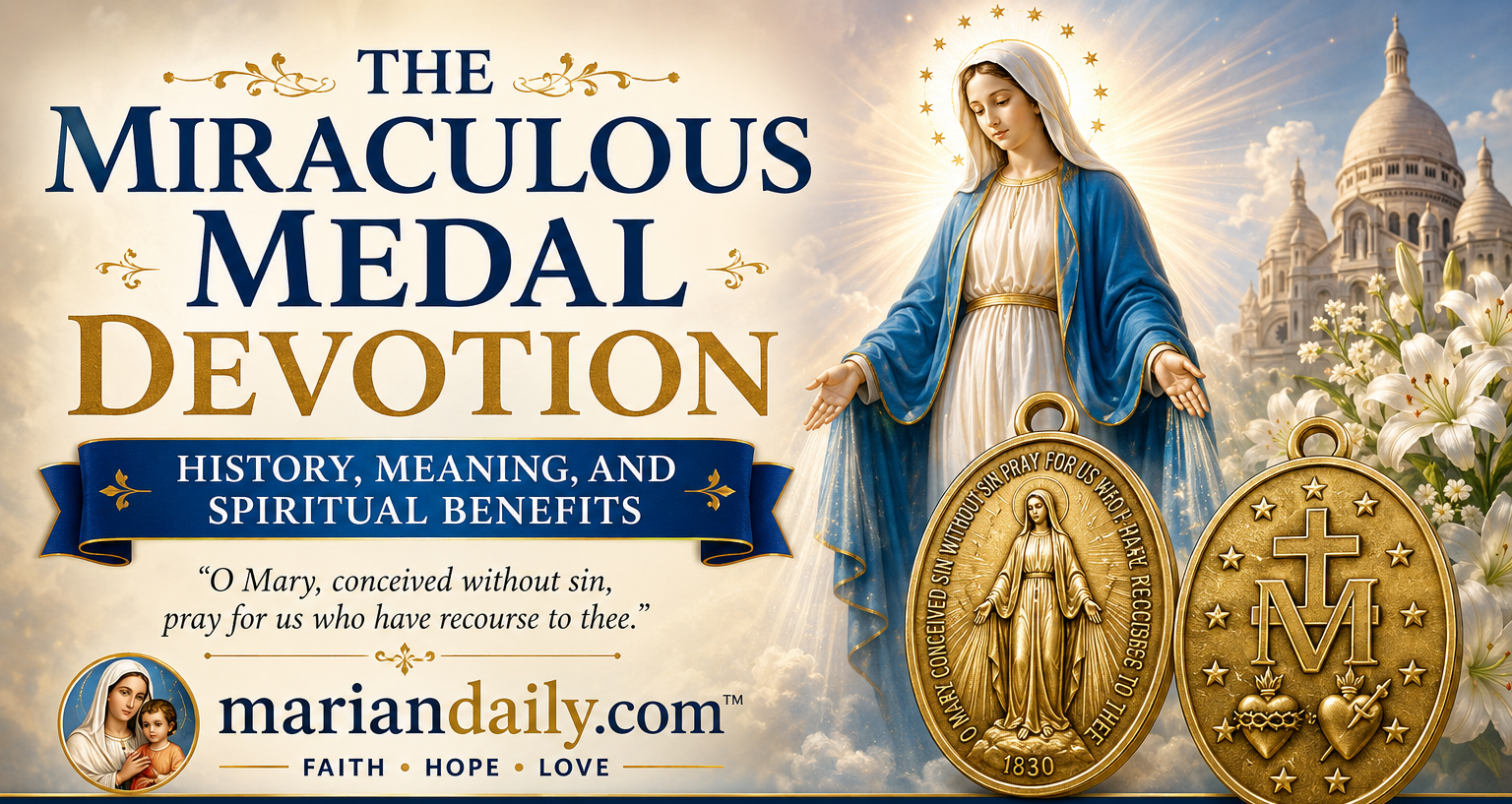
The Miraculous Medal is a Catholic sacramental inspired by apparitions of the Blessed Virgin Mary to Saint Catherine Labouré in Paris, France, in 1830.
The medal features rich symbolism that reflects important Catholic teachings concerning Mary, grace, redemption, and the mission of Christ.
Catholics wear the medal as a sign of devotion, faith, and confidence in Mary’s intercession.
The Church teaches that sacramentals help prepare believers to receive grace and dispose them to cooperate more fully with God’s will.
The power of the medal does not come from the metal itself but from faith in God and trust in Mary’s prayers.
The History of the Miraculous Medal
The devotion began in 1830 when a young novice of the Daughters of Charity, Saint Catherine Labouré, reported receiving several visions of the Blessed Virgin Mary.
During one of these apparitions, Mary appeared standing upon a globe with rays of light flowing from her hands.
Around her appeared the words:
“O Mary, conceived without sin, pray for us who have recourse to thee.”
Mary instructed Catherine to have a medal struck according to the image she had seen and promised that special graces would be given to those who wore it with faith and confidence.
After receiving approval from Church authorities, the medal was produced and distributed.
Remarkable reports of conversions, healings, and answered prayers quickly followed.
Because of the many extraordinary favors associated with it, the medal soon became popularly known as the “Miraculous Medal.”
Who Was Saint Catherine Labouré?
Saint Catherine Labouré was born in France in 1806.
She entered the Daughters of Charity and lived a humble life of service, prayer, and obedience.
Despite being chosen to receive extraordinary visions, Catherine remained hidden and quiet for most of her life.
Only after her death did the full story of the apparitions become widely known.
Her humility and fidelity continue to inspire Catholics throughout the world.
She was canonized by the Church in 1947.
The Meaning of the Front of the Medal
The front side of the Miraculous Medal contains several important symbols.
Mary Standing on the Globe
The globe represents the world.
Mary’s position symbolizes her role in God’s plan of salvation and her maternal concern for all people.
Rays of Light
The rays flowing from Mary’s hands represent the graces she obtains through her intercession.
According to Saint Catherine’s account, some rays appeared brighter than others.
Mary explained that these rays symbolize graces given to those who ask for them.
The Invocation
Surrounding the image are the words:
“O Mary, conceived without sin, pray for us who have recourse to thee.”
This prayer reflects Catholic belief in the Immaculate Conception and Mary’s powerful intercession.
The Meaning of the Reverse Side
The reverse side of the medal is equally rich in symbolism.
The Letter M
The large M represents Mary.
The Cross
The cross rising above the M symbolizes the inseparable connection between Mary and Christ’s redemptive sacrifice.
The Sacred Hearts
Two hearts appear beneath the cross.
One represents the Sacred Heart of Jesus crowned with thorns.
The other represents the Immaculate Heart of Mary pierced by a sword.
Together they express the love and suffering of Jesus and Mary for humanity.
Twelve Stars
The twelve stars surrounding the design recall the vision described in the Book of Revelation and symbolize Mary’s role in salvation history.
The Spiritual Benefits of the Miraculous Medal
The Church does not teach that wearing the Miraculous Medal automatically guarantees miracles or special privileges.
However, the devotion offers many spiritual benefits when practiced with faith.
A Reminder of God’s Grace
The medal encourages believers to remember God’s presence throughout daily life.
Confidence in Mary’s Intercession
Catholics are reminded that Mary continually prays for her spiritual children.
Encouragement Toward Holiness
The medal inspires faithful Christian living and deeper trust in God.
Strength During Difficult Times
Many Catholics find comfort in wearing the medal during periods of illness, suffering, temptation, or uncertainty.
A Call to Prayer
The inscription on the medal invites believers to pray regularly and seek Mary’s assistance.
Why Is It Called the Miraculous Medal?
The title developed because numerous reports of extraordinary favors accompanied the spread of the medal.
Many people experienced:
- Conversions.
- Renewed faith.
- Physical healings.
- Protection during difficult circumstances.
- Spiritual growth.
While the Church carefully evaluates claims of miracles, the widespread testimony of graces helped establish the devotion’s reputation.
The true miracle, however, is often the transformation of hearts through God’s grace.
The Miraculous Medal and the Immaculate Conception
One of the most significant aspects of the medal is its connection to the doctrine of the Immaculate Conception.
The inscription:
“O Mary, conceived without sin”
appeared years before Pope Pius IX formally defined the dogma in 1854.
Many Catholics see this as a remarkable confirmation of Mary’s unique role in salvation history.
The medal helped spread awareness and devotion related to the Immaculate Conception throughout the world.
How Catholics Can Practice This Devotion
The Miraculous Medal devotion is simple and accessible.
Catholics may:
Wear the Medal
Many faithful wear the medal daily as a sign of devotion.
Pray the Inscription
The prayer on the medal can be prayed throughout the day.
Pray the Rosary
The Rosary complements devotion to the Miraculous Medal.
Consecrate Oneself to Mary
Many Catholics combine the devotion with Marian consecration.
Live a Sacramental Life
The devotion should always lead believers toward the Eucharist, Reconciliation, and deeper union with Christ.
Reflection
The Miraculous Medal remains one of the most beloved Marian devotions because it presents a simple yet profound message.
Mary invites her children to trust God, seek His grace, and draw closer to Jesus Christ.
The medal serves as a visible reminder that believers are never alone. Through Mary’s maternal care and intercession, Catholics are encouraged to persevere in faith and remain confident in God’s mercy.
Its enduring popularity reflects the timeless desire of Christians to remain close to Christ through the loving guidance of His Mother.
When worn with faith and accompanied by prayer, the Miraculous Medal becomes a powerful reminder of God’s grace at work in daily life.
Closing Prayer
O Mary, conceived without sin,
Pray for us who have recourse to thee.
Blessed Mother, help us remain faithful to your Son and open our hearts to God’s grace.
Protect us in times of difficulty, strengthen us in moments of weakness, and guide us along the path of holiness.
May we always trust in your loving intercession and grow closer to Jesus through your example of faith and obedience.
Amen.
Related Articles
 Promises of Our Lady of Fatima: First Saturday Devotion Explained
 The Divine Mercy Chaplet Explained: Origins, Promises, and How to Pray It
 How to Pray the Rosary Step-by-Step (Complete Catholic Guide)
 What Every Catholic Family Should Have in Their Home for Spiritual Growth
 The Sacred Heart of Jesus Devotion: Meaning, Promises, and Catholic Tradition
 Common Mistakes Catholics Make During Mass and How to Avoid Them