Introduction
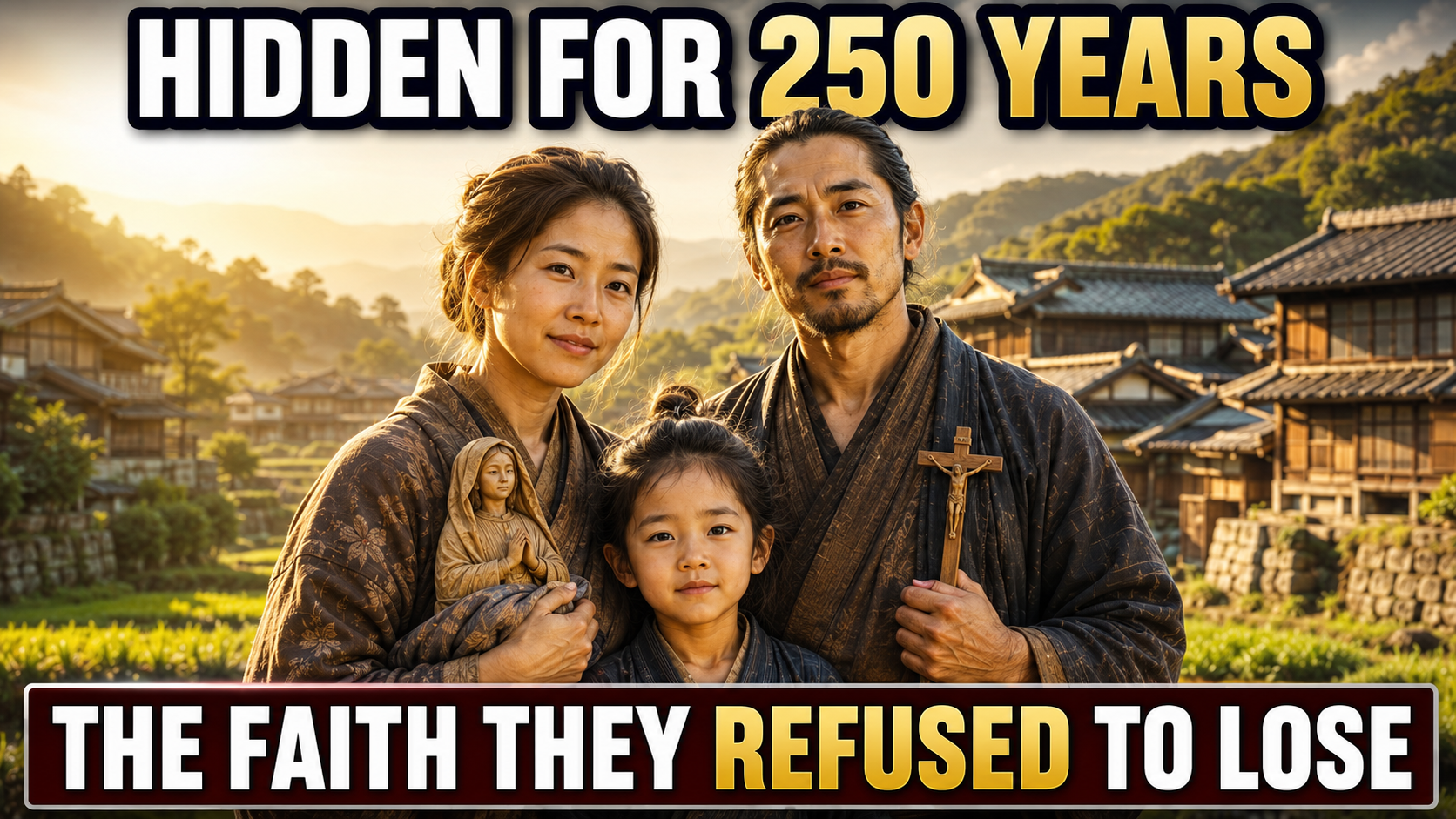
The Hidden Christians of Japan preserved their faith for more than 250 years without priests, churches, or public celebrations of the Eucharist. How could a Christian community survive when authorities tried to erase every visible sign of belief?
Their story reveals one of the most remarkable examples of faith and perseverance in Catholic history. Generation after generation, Japanese believers protected their devotion to Jesus through prayer, family traditions, and quiet courage.
During a time when Christianity could cost people their freedom or even their lives, these faithful men and women chose to remain close to Christ.
Their journey teaches an important lesson for Christians today: faith does not depend only on what the world can see. Instead, true faith grows through prayer, trust, and a heart completely devoted to God.
The Arrival of Christianity in Japan
The story of the Hidden Christians of Japan began during the 16th century when Catholic missionaries brought the Gospel to Japan.
In 1549, Francis Xavier arrived in Japan and began sharing the message of Jesus Christ. He became one of the first Jesuit missionaries to introduce Catholic Christianity to the Japanese people.
At that time, the Christian message spread quickly.
Missionaries established churches, schools, and communities. Many Japanese people accepted baptism and discovered the teachings of Christ. Furthermore, the coastal city of Nagasaki became an important center of Catholic life.
By the late 1500s, historians estimate that hundreds of thousands of Japanese people had embraced Christianity.
However, political leaders gradually became concerned about the growing influence of foreign missionaries.
They feared that Christianity could challenge their authority. Therefore, government attitudes changed from acceptance to suspicion.
Eventually, Japan’s rulers began a campaign to suppress Christianity.
The Rise of Christian Persecution in Japan
During the early 1600s, the Tokugawa shogunate introduced strict policies against Christianity.
The government officially banned the religion.
Authorities expelled missionaries from Japan and punished many Japanese Christians who refused to abandon their beliefs.
Meanwhile, believers faced difficult choices. They had to decide whether they would deny Christ or accept suffering because of their faith.
The persecution affected entire communities.
Families lost relatives. Churches disappeared. Public Christian worship became impossible.
Even so, many believers continued trusting God.
They remembered the words of Jesus:
“Whoever acknowledges me before others, I will also acknowledge before my Father in heaven.”
— Matthew 10:32
For these Christians, faith was not simply a tradition. Instead, it was a relationship with Jesus Christ that shaped every part of their lives.
The Martyrs of Nagasaki: Witnesses of Courage
One of the most powerful examples of Japanese Christian courage occurred in 1597.
Although the government had not yet completely banned Christianity, tensions had already increased.
Twenty-six Christians were arrested in Nagasaki.
The group included:
- Six Franciscan missionaries
- Three Jesuit brothers
- Seventeen Japanese lay Catholics
Among them were young believers who refused to reject Christ.
Authorities took them to a hill near Nagasaki and crucified them.
Today, Catholics remember them as the Twenty-Six Martyrs of Japan.
Their sacrifice became a powerful reminder that Christian faith can remain strong even during persecution.
Moreover, their witness inspired future generations of Japanese Catholics who continued following Christ in secret.
The Fumi-e Test: A Painful Trial of Loyalty
As persecution increased, Japanese authorities created new ways to identify Christians.
One of the most famous methods became known as fumi-e, which means “stepping on a picture.”
Officials placed bronze images of Jesus Christ or the Virgin Mary on the ground. Then, they ordered suspected Christians to step on them.
The government used this practice to force people to publicly reject Christianity.
Those who refused often faced:
- Imprisonment
- Torture
- Exile
- Death
For many believers, the moment created deep spiritual suffering.
Some stepped on the image outwardly while silently asking God for mercy. Others refused completely and accepted punishment.
Although historians continue discussing the personal struggles surrounding these events, the fumi-e tests clearly reveal the extreme pressure Japanese Christians experienced.
How the Hidden Christians of Japan Preserved Their Faith
After authorities removed priests and destroyed public churches, Japanese Catholics faced an impossible situation.
However, they did not allow their faith to disappear.
The Hidden Christians of Japan passed Christianity from parents to children and from grandparents to grandchildren.
Families became the center of religious life.
Parents taught prayers.
Older generations preserved traditions.
Communities gathered quietly in homes.
Because priests could not serve them, believers relied heavily on memory and family instruction.
They preserved their faith through:
- Secret prayers
- Baptism traditions
- Christian symbols
- Family teachings
- Religious objects hidden in homes
In addition, many families carefully protected their connection to Christ despite living under constant danger.
Their homes became places where faith continued to grow.
Symbols of Faith Hidden Beneath Ordinary Life
The creativity of the Hidden Christians of Japan helped them protect their beliefs during a dangerous period.
Because authorities banned Christian objects, believers found careful ways to preserve their connection with Christ.
For example, some families disguised images of the Virgin Mary as Buddhist figures called Maria Kannon. These statues looked like familiar religious images to outsiders, but Christians privately honored Mary through them.
Likewise, families hid crucifixes, rosaries, and other sacred items inside their homes.
Meanwhile, communities passed prayers from one generation to the next. Over time, some prayers changed because people no longer had priests or written materials to guide them.
Nevertheless, the central message remained: Jesus Christ was their Lord and Savior.
Their story shows that faith can survive even when external signs disappear.
The Hidden Christians did not preserve Christianity through power or influence. Instead, they protected it through humility, family commitment, and trust in God.
The Return of Christianity After Two Centuries
After more than 200 years of isolation, Japan slowly began opening to the outside world.
During the 19th century, the country changed many of its policies toward foreign nations and religions.
In 1865, a French missionary priest, Father Bernard Petitjean, opened Oura Church in Nagasaki.
Soon afterward, something extraordinary happened.
A small group of Japanese villagers approached the priest privately. They revealed that their families had preserved the Christian faith for generations.
They asked questions that showed they still remembered important Catholic beliefs, including devotion to the Virgin Mary and loyalty to the Pope.
According to historical accounts, they told the priest:
“Our hearts are the same as yours.”
This moment surprised Catholics around the world.
After nearly 250 years without regular contact with priests, these believers showed that their faith had survived.
When Pope Pius IX heard about the discovery, he recognized it as a remarkable event in the history of Christianity.
The return of these Catholics demonstrated a powerful truth: persecution can hide faith, but it cannot destroy faith rooted in God.
What the Catholic Church Teaches About the Hidden Christians of Japan
The story of the Hidden Christians of Japan helps Catholics understand the relationship between faith, the Church, and God’s grace.
The Catholic Church teaches that Christ established a visible Church with priests, sacraments, and apostolic leadership.
The Eucharist and Confession remain essential sources of spiritual strength for Catholics.
However, the Church also teaches that God’s grace is greater than human limitations.
In extraordinary situations, God can continue working in people’s hearts even when normal access to religious life becomes impossible.
The Hidden Christians lived through such an extraordinary situation.
They did not reject the Church. Instead, they waited faithfully for the return of priests and the restoration of sacramental life.
Their example highlights several important Catholic teachings:
- God remains close to those who seek Him.
- Families have a vital role in sharing faith.
- Prayer strengthens believers during suffering.
- Christian hope can survive difficult circumstances.
Therefore, their story does not replace the importance of the sacraments. Instead, it reveals the power of God’s grace during times of hardship.
The Family as the Domestic Church
One of the greatest lessons from the Hidden Christians of Japan is the importance of family faith.
Without churches and priests, families became the main place where Christianity continued.
Parents taught children prayers.
Grandparents shared stories of Jesus.
Communities protected their traditions.
As a result, Christianity survived through ordinary people living faithful lives.
This reflects the Catholic understanding of the family as the domestic church.
The home becomes a place where people encounter God through:
- Family prayer
- Scripture reading
- Forgiveness
- Charity
- Christian example
Today, many families face different challenges.
Busy schedules, distractions, and cultural pressures can make faith difficult to maintain.
However, the Hidden Christians remind modern families that small acts of devotion can create a lasting spiritual legacy.
A simple family prayer can influence future generations.
Biblical Lessons From the Hidden Christians of Japan
The experience of these Japanese Catholics connects deeply with Scripture.
The Bible repeatedly teaches that faith grows stronger through perseverance.
Faithfulness When Following Christ Becomes Difficult
Jesus said:
“Whoever acknowledges me before others, I also will acknowledge before my Father who is in heaven.”
— Matthew 10:32
The Hidden Christians understood this teaching deeply.
They knew that following Christ required courage.
Although they lived in fear, they continued honoring Jesus within their families and communities.
Their example shows that faith becomes visible through commitment, especially during difficult moments.
God Remains With His People During Suffering
Saint Paul experienced imprisonment and persecution throughout his ministry.
Yet he wrote:
“Nothing will be able to separate us from the love of God that is in Christ Jesus our Lord.”
— Romans 8:39
Likewise, the Hidden Christians experienced separation from churches and priests.
Even so, they trusted that God remained near.
Their story reminds believers that God’s presence does not disappear during trials.
Passing Faith to Future Generations
The Book of Deuteronomy teaches:
“Teach them to your children and to their children after them.”
— Deuteronomy 4:9
The Hidden Christians lived this command.
They taught prayers at home.
They protected Christian traditions.
They shared the Gospel with their children.
Consequently, their faith continued across many generations.
Lessons for Catholics Today
Most Christians today will never experience the persecution faced by the Hidden Christians of Japan.
However, their story still challenges every believer.
Faith requires daily choices.
For example:
- Will we pray when life becomes busy?
- Will we defend our beliefs with kindness?
- Will we teach our children about Christ?
- Will we remain faithful when society ignores religion?
The Hidden Christians ask an important question:
If faith required sacrifice, would we still choose Christ?
Practical Ways to Strengthen Your Faith
The example of the Hidden Christians gives Catholics several practical lessons.
1. Create a Strong Prayer Life
Prayer kept their relationship with God alive.
Today, Catholics can strengthen their spiritual life through:
- Morning prayers
- The Rosary
- Bible reading
- Eucharistic adoration
- Evening family prayer
Even a few quiet minutes with God can transform daily life.
2. Build a Catholic Home
Families can create a stronger faith environment by:
- Praying together
- Displaying sacred images
- Celebrating Catholic feast days
- Reading Scripture
- Teaching children Christian values
In this way, the home becomes a place where faith grows.
3. Remember the Witness of Past Christians
Learning Church history strengthens our own faith.
The Hidden Christians of Japan remind us that countless believers sacrificed greatly so Christianity could continue.
Therefore, their story should inspire gratitude and courage.
4. Share Christ Through Your Life
The Hidden Christians preserved their faith quietly.
Today, Catholics share Christ through:
- Love
- Mercy
- Service
- Forgiveness
- Compassion
A faithful life can become a powerful witness.
Frequently Asked Questions About the Hidden Christians of Japan
1. Who were the Hidden Christians of Japan?
The Hidden Christians of Japan were Japanese Catholics who secretly practiced Christianity after authorities banned the religion in the early 1600s. They preserved their beliefs for more than 250 years through prayer, family traditions, and careful transmission of faith.
2. Why did Japan persecute Christians?
Japanese rulers feared that Christianity could create foreign influence and challenge political authority. Therefore, the government banned Christianity, expelled missionaries, and punished many believers who refused to abandon their faith.
3. How did the Hidden Christians of Japan preserve their faith without priests?
The Hidden Christians of Japan preserved their faith through family instruction, secret prayers, baptism traditions, and religious objects. Although they lacked regular access to priests and the sacraments, they continued teaching Christianity to their children.
4. Did the Hidden Christians celebrate the Eucharist?
For approximately 250 years, many Hidden Christians lived without priests. As a result, they could not regularly celebrate the Eucharist or receive Confession. However, they continued praying and waiting for the return of the Church’s sacramental life.
5. What was the fumi-e test?
The fumi-e was a method Japanese authorities used to identify Christians. Officials placed images of Jesus or Mary on the ground and ordered people to step on them as a public rejection of Christianity.
6. What happened when Christianity returned to Japan?
In 1865, Japanese Christians approached Father Bernard Petitjean at Oura Church in Nagasaki. They revealed that their families had secretly preserved the Catholic faith for generations.
7. Are the Hidden Christians of Japan recognized by the Catholic Church?
Yes. The Catholic Church recognizes the courage of Japanese martyrs and honors the extraordinary perseverance of Christians who maintained their faith during persecution.
8. What can Catholics learn from the Hidden Christians of Japan?
Catholics can learn the importance of prayer, family faith, perseverance, and trust in God. Their story encourages believers to protect their relationship with Christ in every circumstance.
Conclusion: A Faith That Survived the Silence
The story of the Hidden Christians of Japan remains one of the most inspiring chapters in Catholic history.
For more than two centuries, these believers lived without public churches, regular access to priests, or the freedom to practice Christianity openly.
However, persecution did not destroy their faith.
Instead, families carried the Gospel from one generation to another. Parents taught prayers. Communities protected traditions. Believers trusted that God remained with them.
The Hidden Christians of Japan remind us that faith is not simply something we practice when life is easy.
True faith remains alive during challenges.
Their story also teaches modern Christians an important lesson: we must protect and share the faith we have received.
The world may change.
Circumstances may become difficult.
Nevertheless, a heart that remains united with Christ can continue shining with hope.
The words of Jesus remain true:
“I am with you always, until the end of the age.”
— Matthew 28:20
The Hidden Christians of Japan lived this promise.
Their witness continues to inspire believers around the world today.
Prayer Inspired by the Hidden Christians of Japan
Lord Jesus Christ,
Thank You for strengthening the Hidden Christians of Japan during years of suffering and uncertainty.
Help me remain faithful when my own journey becomes difficult.
Teach me to pray with sincerity, trust You completely, and share Your love through my daily actions.
Bless my family and help us become a true domestic church where Your presence remains alive.
Give me courage to follow You, even when no one is watching.
May my faith never grow weak, but always remain rooted in Your love.
Amen.
Call to Action
Did the story of the Hidden Christians of Japan inspire you?
Share your thoughts in the comments:
What part of your faith would you protect no matter the cost?
If this article encouraged you, share it with friends and family who love Catholic history and stories of Christian courage.
Subscribe for more inspiring stories about saints, Catholic traditions, miracles, and forgotten moments of faith.
Related Articles
 Battle of Lepanto and the Rosary: The Story of 1571
 The Miraculous Medal Devotion: History, Meaning, and Spiritual Benefits
 What Every Catholic Family Should Have in Their Home for Spiritual Growth
 Common Mistakes Catholics Make During Mass and How to Avoid Them
 The Real Presence of Jesus in the Eucharist: What the Church Actually Teaches
 This 1,200-Year-Old Miracle Science STILL Can’t Explain (The Lanciano Eucharistic Miracle)