Catholic Church Miracle Investigation Process: How the Vatican Examines Miracles Before Declaring Saints
Introduction
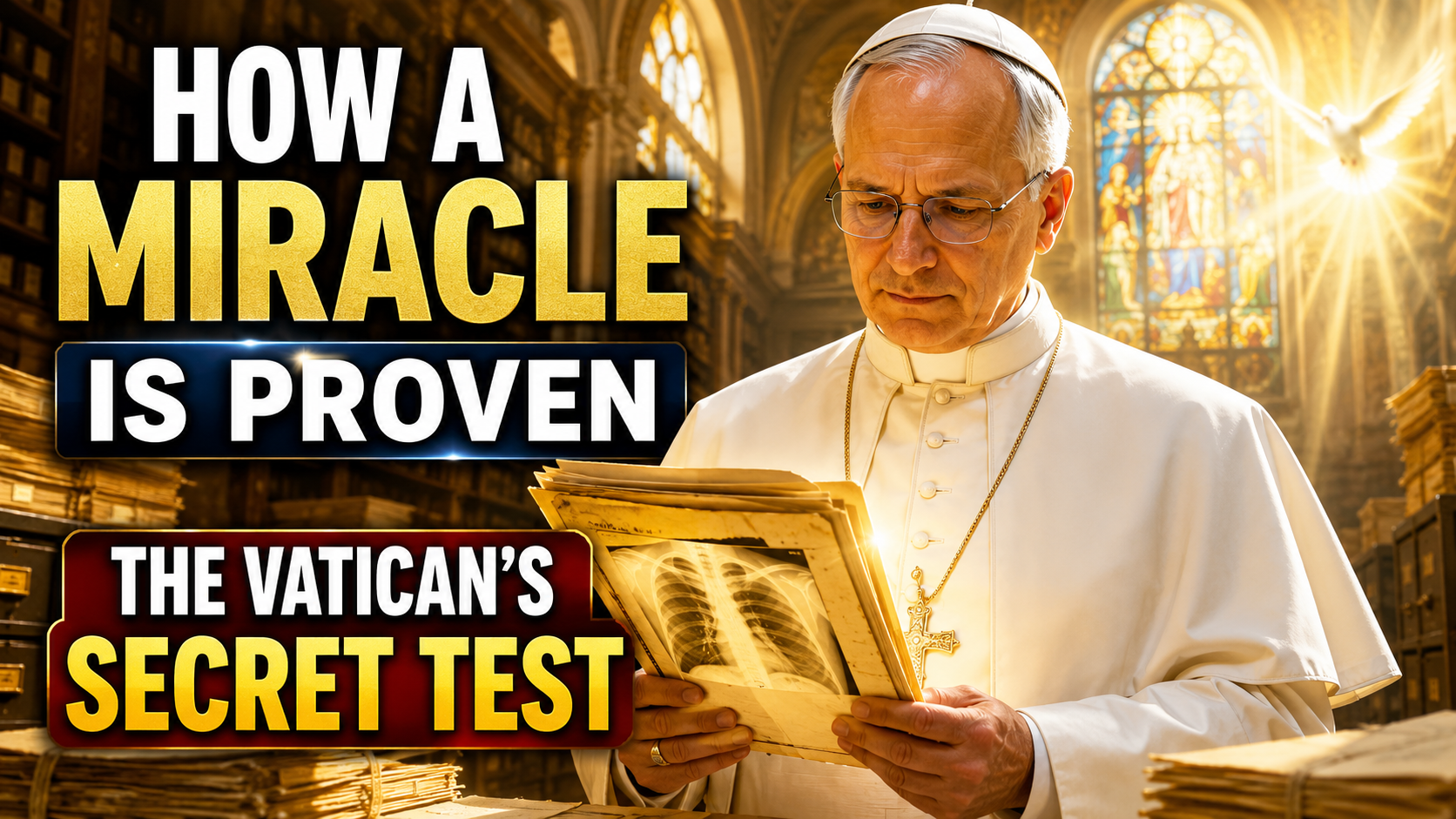
The Catholic Church miracle investigation process reveals one of the most careful examinations of faith and evidence in Christianity. Before the Church declares someone a saint, it does not simply accept stories of extraordinary events. Instead, it investigates miracles with doctors, scientists, theologians, and historians.
But how can anyone examine something that appears impossible? How does the Church determine whether a healing truly has no natural explanation?
Throughout history, the Vatican has developed a detailed process that combines faith, reason, and careful investigation. This process protects the truth of miracles while honoring the mystery of God’s work. In this article, we will explore how miracles are examined before canonization and why the Church takes this responsibility so seriously.
The Historical Development of the Catholic Church Miracle Investigation Process
In the earliest centuries of Christianity, the Church recognized saints in a much simpler way. The faithful often honored martyrs and holy men and women because of their witness, courage, and devotion to Christ.
For example, Christians gathered near the tombs of martyrs to pray and remember their sacrifices. Over time, these places became important centers of devotion.
However, as Christianity spread throughout the world, the Church recognized a need for greater examination. Not every claim about holiness or miracles could automatically be accepted.
Therefore, the Church gradually developed a formal process to study the lives of candidates for sainthood. This approach helped ensure that only individuals with genuine holiness and reliable evidence received public recognition.
By the seventeenth century, Pope Urban VIII introduced stricter regulations for canonization. These rules helped organize the process and prevented premature declarations.
Later, Pope John Paul II introduced significant reforms in the 1980s. His changes created the modern canonization process that Catholics recognize today. The Church continues to examine each case carefully through the Dicastery for the Causes of Saints.
Why Does the Catholic Church Investigate Miracles?
The Catholic Church does not investigate miracles because it doubts God’s power. Instead, the Church investigates because truth matters.
A miracle, according to Catholic understanding, is an extraordinary event that cannot be explained by natural causes and points toward God’s action.
Moreover, miracles connected to canonization serve a specific purpose. They do not prove that God exists. Rather, they confirm that a person lived in deep friendship with God and may be honored as a saint.
The Church follows the wisdom found in Scripture:
“Test everything; hold fast what is good.”
— 1 Thessalonians 5:21
This verse shows the importance of careful discernment. Faith does not reject reason. Instead, authentic faith welcomes honest investigation.
Likewise, Saint John reminds Christians:
“Do not believe every spirit, but test the spirits to see whether they are from God.”
— 1 John 4:1
Because of these biblical principles, the Church carefully studies every claimed miracle before approval.
The First Step: Investigating the Life of a Future Saint
Before examining miracles, the Church first studies the person’s life.
A candidate for sainthood must demonstrate heroic virtue. This means the person practiced Christian virtues in an extraordinary way.
Investigators examine areas such as:
- Faith and devotion to Christ
- Love for others
- Humility
- Charity toward the poor and suffering
- Perseverance during difficulties
- Commitment to prayer and holiness
A person does not become a saint simply because people admire them. Instead, the Church looks for clear evidence that the person followed Christ faithfully.
After this investigation, the Church may declare the person Venerable. If the candidate receives recognition for a miracle through their intercession, the Church may then move toward beatification.
How Doctors Examine Possible Miracles
One of the most fascinating parts of the Catholic Church miracle investigation process involves medical experts.
When a possible healing occurs, the Church does not immediately call it supernatural. Instead, doctors first search for a natural explanation.
A medical commission carefully reviews:
- Medical records
- Laboratory results
- Doctor reports
- The person’s previous condition
- The timing of the recovery
- Long-term health results
The medical experts usually include specialists who understand the illness involved. Some members may not even be Catholic, because the Church values objective scientific evaluation.
For a healing to qualify as a possible miracle, experts look for several important signs:
- The illness was serious or impossible to cure naturally.
- The recovery happened quickly and completely.
- The healing lasted permanently.
- No known medical treatment explains the recovery.
However, if doctors discover a reasonable medical explanation, the investigation stops.
Therefore, the Church does not ask science to prove faith. Instead, science helps determine whether a situation goes beyond normal human understanding.
The Vatican’s Search for the Truth
After medical experts complete their examination, theologians and Church officials continue the investigation.
They study whether the miracle occurred through the candidate’s intercession. Catholics believe that saints do not perform miracles through their own power. Instead, they pray for people, and God grants miracles according to His will.
For example, a person may pray through the intercession of a holy man or woman and experience an extraordinary healing. The Church then examines whether there is a clear connection between that prayer and the event.
Furthermore, investigators review testimonies from witnesses and examine historical details surrounding the case.
Every detail matters because the Church wants to avoid confusion between genuine miracles and events that may have another explanation.
The Role of the “Devil’s Advocate” in Miracle Investigations
One of the most famous parts of the Catholic Church miracle investigation process is the historical role of the Promoter of the Faith, commonly known as the “Devil’s Advocate.”
The title may sound unusual, but the purpose was simple: challenge the evidence.
The Devil’s Advocate did not oppose God or the Church. Instead, this official searched for weaknesses in a proposed canonization case. The role helped ensure that investigators did not accept claims without serious examination.
For example, the Promoter of the Faith could ask:
- Is there another possible explanation for the event?
- Are the witnesses reliable?
- Did the person truly live a holy life?
- Does the evidence support a genuine miracle?
Therefore, this position reflected the Church’s commitment to honesty. A miracle declaration carries great spiritual importance, so the Church wanted every claim tested carefully.
Although the formal role changed after reforms under Pope John Paul II, the Church continues this spirit of critical examination today. Experts still investigate every detail before recognizing a miracle.
How Many Miracles Are Required Before Someone Becomes a Saint?
The Catholic Church follows a specific process before declaring someone a saint.
Generally, the process includes these stages:
- Servant of God
The person’s cause for canonization begins, and the Church investigates their life. - Venerable
The Church recognizes that the person demonstrated heroic virtue. - Blessed (Beatification)
Usually, one confirmed miracle is required after the person’s death. - Saint (Canonization)
Usually, a second confirmed miracle is required after beatification.
These miracles must occur through the person’s intercession. In other words, people pray for the candidate’s help, and God grants a miracle through that heavenly intercession.
However, the Church can make exceptions in certain historical cases, especially for martyrs. For martyrs, the Church may recognize sainthood through their witness of faith rather than requiring the same miracle process.
Why Doctors and Scientists Are Part of the Process
Some people wonder why the Catholic Church involves medical experts in spiritual matters.
The answer is that the Church believes faith and reason work together.
Saint John Paul II often emphasized that truth cannot contradict truth. If God created human intelligence, then careful scientific investigation can help people understand extraordinary events.
For this reason, medical experts play an important role.
They do not declare something a miracle simply because they cannot explain it immediately. Instead, they carefully examine whether the healing meets strict criteria.
For example, doctors may investigate:
- Was the original diagnosis accurate?
- Was the disease truly severe?
- Did the recovery happen naturally?
- Did the person receive treatment?
- Has the healing remained complete?
Only after a detailed review can a medical commission conclude that a healing has no current scientific explanation.
Famous Examples of Approved Miracles
Throughout history, many canonization cases have included extraordinary healings.
One well-known example involves Saint John Paul II. His canonization included miracles involving people who experienced remarkable recoveries after praying for his intercession.
Another example is Saint Padre Pio, whose life included many reported spiritual gifts and extraordinary events that attracted worldwide attention.
The Church examines each case individually. A famous person does not automatically receive approval. Instead, every miracle must pass through the same careful investigation.
What the Catholic Church Teaches About Miracles
The Catechism of the Catholic Church teaches that miracles are signs of God’s kingdom and invitations to faith.
A miracle is not simply an amazing event. Instead, it points beyond itself toward God’s love and power.
The Church teaches that miracles:
- Confirm God’s presence in the world.
- Strengthen faith.
- Reveal God’s compassion.
- Point people toward salvation.
However, Catholics are also reminded that faith should not depend only on extraordinary signs.
Jesus Himself taught:
“Blessed are those who have not seen and yet have believed.”
— John 20:29
This passage reminds Christians that God’s love is present even in ordinary moments.
A miracle may be dramatic, but God also works quietly through prayer, forgiveness, kindness, and transformation of the heart.
Biblical Understanding of Testing and Discernment
The Catholic Church miracle investigation process reflects a biblical approach to discernment.
Scripture repeatedly encourages believers to seek truth carefully.
1. Testing What Is True
Saint Paul writes:
“Test everything; hold fast what is good.”
— 1 Thessalonians 5:21
This passage teaches Christians not to accept every claim immediately. Instead, believers should seek truth with wisdom.
The Church follows this principle when examining miracles.
2. Recognizing God’s Work
In the Gospel of John, Jesus performs signs that reveal God’s glory.
These signs are not meant to entertain people. Instead, they invite deeper faith and conversion.
Likewise, approved miracles connected to saints are meant to lead people closer to Christ.
3. Faith and Reason Working Together
The miracle investigation process shows that Christianity does not require people to abandon reason.
Instead, the Church uses careful study, evidence, and prayer together.
Spiritual Lessons From the Vatican Miracle Investigation Process
The investigation of miracles teaches important lessons for every Catholic.
1. God Values Truth
The Church’s careful approach reminds believers that truth deserves patience.
Quick conclusions can create confusion. Careful discernment protects faith.
2. Holiness Requires Daily Faithfulness
Saints are not recognized only because of miracles.
First, they are recognized because they loved God and served others.
Their lives remind us that holiness begins with ordinary acts of love.
3. God Still Works Today
The Vatican may investigate extraordinary miracles, but God also works through everyday blessings.
These may include:
- Peace during suffering
- Strength during hardship
- Healing relationships
- Guidance during difficult decisions
- A renewed desire to pray
Therefore, Catholics should remain open to God’s presence in both extraordinary and ordinary moments.
How Catholics Can Apply This Teaching Today
The miracle investigation process offers practical lessons for daily Christian life.
First, Catholics can strengthen their faith through prayer and Scripture.
Second, families can teach children that faith welcomes both devotion and thoughtful reflection.
Moreover, believers can share stories of saints as examples of courage, hope, and trust in God.
Finally, Christians can remember that every life can become a testimony of God’s grace.
A person does not need to experience a public miracle to reflect God’s love. Small acts of kindness, forgiveness, and faithfulness can reveal Christ to others.
Frequently Asked Questions About the Catholic Church Miracle Investigation Process
1. What is the Catholic Church miracle investigation process?
The Catholic Church miracle investigation process examines extraordinary events connected to possible saints. Doctors, theologians, and Church officials review evidence before approving a miracle.
2. Why does the Catholic Church investigate miracles?
The Church investigates miracles to protect the truth and ensure that only genuine signs of God’s action receive approval.
3. Do doctors approve Catholic miracles?
No. Doctors examine whether a healing has a natural explanation. Church authorities make the final judgment about whether it qualifies as a miracle.
4. How many miracles are needed to become a Catholic saint?
Usually, one miracle is required for beatification and another for canonization. However, exceptions exist, especially for martyrs.
5. Are miracles necessary for every saint?
Most canonization cases require miracles, but the Church may recognize martyrs differently because their sacrifice demonstrates extraordinary faith.
6. Can science prove a miracle?
Science cannot prove a miracle directly. However, scientific investigation can show when a healing has no known natural explanation.
7. Are miracles still happening today?
The Catholic Church believes God continues to work miracles today. However, each claimed miracle must undergo careful investigation.
Conclusion: The Mystery and Beauty of the Catholic Church Miracle Investigation Process
The Catholic Church miracle investigation process shows the beautiful relationship between faith, reason, and truth.
Before declaring someone a saint, the Church carefully examines their life, studies evidence, listens to experts, and investigates possible miracles.
This careful process does not weaken faith. Instead, it strengthens trust by showing that the Church approaches miracles with humility and responsibility.
Ultimately, miracles are not only about extraordinary events. They are reminders that God remains active in the world and continues to transform human lives.
The saints show us that holiness is possible. Their stories encourage us to follow Christ with greater love, patience, and faith.
Prayer for Trust in God’s Miracles
Lord Jesus,
thank You for the saints who showed us the path of faith.
Help us recognize Your presence in extraordinary moments and everyday blessings.
Give us wisdom to seek truth, courage to follow You, and hearts open to Your grace.
May our lives become living testimonies of Your love.
Amen.
Call to Action
Did a particular saint’s story inspire your faith?
Share the name of your favorite saint in the comments below.
If this article helped you understand the Catholic Church miracle investigation process, share it with someone who loves learning about Catholic history and faith.
Continue exploring more inspiring Catholic stories, miracles, and teachings through our related articles.
- Dicastery for the Causes of Saints – Vatican Official Website
- Catechism of the Catholic Church – Vatican Official Text
- Vatican Official Website
- United States Conference of Catholic Bishops (USCCB)
- New Advent Catholic Encyclopedia
Related Articles
 Incorrupt Saints: The Catholic Church’s Teaching Explained
 Hidden Christians of Japan: Faith That Survived 250 Years
 What Does Purgatory Look Like According to the Saints?
 Catholic Church Investigation of Miracles Explained
 Battle of Lepanto and the Rosary: The Story of 1571
 The Real Presence of Jesus in the Eucharist: What the Church Actually Teaches