What if the Catholic Church investigation of miracles began by trying to prove that a miracle did not happen?
That idea may sound surprising. Yet, in reality, the Catholic Church approaches extraordinary claims with remarkable caution. Before the Church recognizes an alleged miracle, investigators examine medical records, consult specialists, study alternative explanations, and ask whether natural causes could explain what happened.
The process can take years. Moreover, most reported healings never receive official recognition as miracles.
In this article, you will discover how the Catholic Church investigation of miracles works, why Lourdes plays such an important role, and what happened in the remarkable case of Italian soldier Vittorio Micheli. Most importantly, you will see why Catholic faith does not fear honest questions, careful science, or serious investigation.
The Catholic Church Investigation of Miracles Begins With Evidence
Many people assume that Catholics accept miracles simply because they believe in God. However, that is not how the Church officially approaches extraordinary claims.
Instead, the Catholic Church investigation of miracles begins with careful examination. Investigators do not simply search for evidence that supports a supernatural explanation. They also look for reasons why the event might have a natural explanation.
For example, a reported healing may involve several stages of review:
- Medical records are collected and examined.
- The original diagnosis is carefully evaluated.
- Specialists study the patient’s condition and recovery.
- Alternative medical explanations are considered.
- The permanence of the healing is assessed.
- The Church examines the spiritual circumstances surrounding the event.
Therefore, a person cannot simply claim a miracle and expect official recognition.
The Church also recognizes that medicine continues to develop. A condition that seems unexplained today might receive a scientific explanation tomorrow. For that reason, investigators must exercise patience and humility.
In addition, medical professionals may approach a case from different religious and philosophical backgrounds. Their task is to examine the evidence rather than defend a particular religious conclusion.
This approach reflects an important Catholic principle: faith and reason work together.
The Catholic Church does not teach that every unusual recovery represents supernatural intervention. Instead, the Church carefully distinguishes between an extraordinary event and a formally recognized miracle.
Lourdes and the Search for Medical Evidence
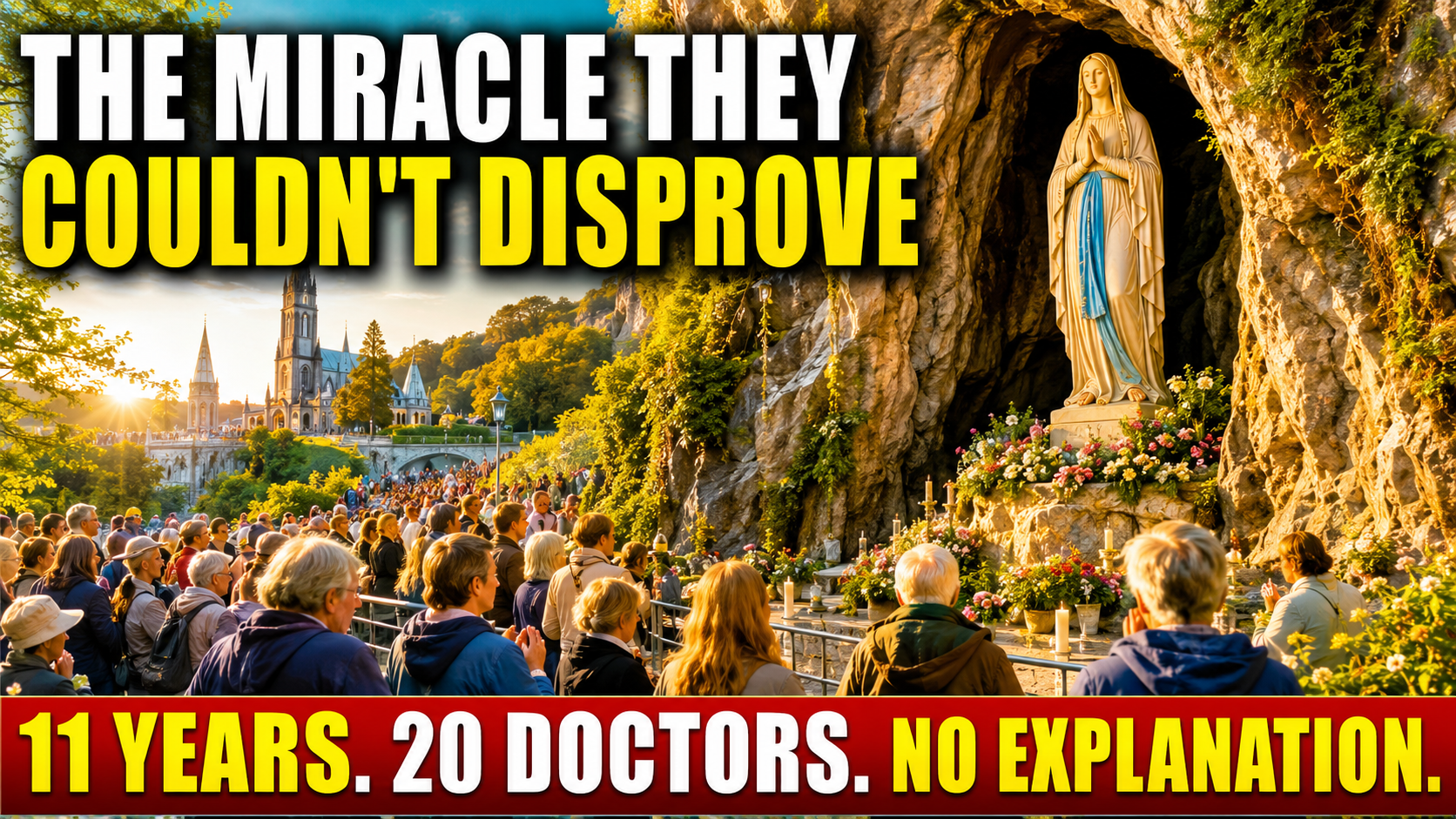
The French shrine of Lourdes has become one of the world’s best-known destinations for people seeking healing.
The story began in 1858, when Bernadette Soubirous reported a series of apparitions of the Virgin Mary at the grotto of Massabielle. Over time, Lourdes became a major Catholic pilgrimage destination.
As reports of extraordinary healings increased, the Church developed a structured medical process for examining them.
The Lourdes Medical Bureau, established in the late nineteenth century, provides a place where physicians can examine claims of unusual recovery. The bureau does not automatically declare a healing miraculous. Instead, it evaluates the medical evidence and determines whether the recovery appears medically unexplained.
According to information published by the Sanctuary of Lourdes, thousands of cases have been reported or examined over the decades. However, only a very small number have eventually received formal recognition as miracles by the Catholic Church.
That distinction matters.
A medically unexplained recovery is not automatically a Church-approved miracle. Instead, it must pass through further ecclesiastical discernment and evaluation.
Why Are So Few Healings Recognized?
The rarity of officially recognized miracles demonstrates the Church’s caution.
A healing must satisfy demanding criteria before it can move forward in the process. These criteria focus primarily on the medical facts.
Investigators generally look for evidence that the healing was:
- Clearly documented before and after the event.
- Complete rather than merely partial.
- Permanent or lasting over time.
- Not reasonably explained by known medical treatment.
- Not easily attributed to the natural course of the illness.
The process also requires time.
Consequently, a person may experience an extraordinary recovery without the Church ever declaring it a miracle. The Church prefers to leave a case unresolved rather than make a premature judgment.
That cautious approach helps protect both scientific integrity and the credibility of the Church’s claims.
The Extraordinary Healing of Vittorio Micheli
One of the most frequently discussed Lourdes cases involves Vittorio Micheli, an Italian soldier who traveled to the shrine in 1963.
Micheli suffered from a serious cancerous condition involving his pelvis. According to accounts of the case, the disease had severely damaged the left side of his pelvic bone and affected his ability to walk.
At the time, doctors faced an extremely serious medical situation.
Micheli traveled to Lourdes and participated in the pilgrimage there. He was immersed in the baths at the shrine and prayed for healing.
After returning home, doctors observed an unexpected improvement in his condition.
According to reports concerning his case, subsequent medical examinations showed significant recovery. The damaged bone appeared to regenerate, and Micheli eventually regained mobility.
The case attracted attention because of the extent of the reported bone reconstruction and the long-term nature of the recovery.
However, it is important to state the case carefully. The Catholic Church did not immediately announce a miracle. Instead, doctors and Church authorities continued to examine the evidence over an extended period.
Eventually, the case received recognition as a miraculous healing associated with Our Lady of Lourdes.
What Makes the Micheli Case Significant?
The case of Vittorio Micheli remains notable because it involved extensive medical documentation and a serious physical condition.
At the same time, Catholics should avoid claiming that science has absolutely “no possible explanation” for the case. Scientific knowledge changes, and medical conclusions must always respect the evidence available at the time.
Nevertheless, the case remains an important example of the kind of extraordinary recovery that has received careful medical and ecclesiastical attention.
Most importantly, the Church’s process did not depend on emotion alone.
Instead, investigators examined the medical history, the progression of the illness, and the patient’s recovery over time.
That lengthy process illustrates an important principle behind the Catholic Church investigation of miracles: extraordinary claims require serious examination.
How the Catholic Church Investigation of Miracles Works
The investigation of an alleged miracle does not follow one simple checklist in every circumstance. The process can vary depending on the type of miracle involved.
For reported healings, however, medical evidence plays a particularly important role.
The process may involve several stages:
- A person experiences an unusual recovery.
The individual or witnesses report the event and provide available medical documentation. - Medical experts examine the case.
Doctors review the diagnosis, treatment history, and subsequent recovery. - Alternative explanations are considered.
Investigators ask whether medicine, psychology, spontaneous remission, or other factors could explain the event. - The recovery is observed over time.
A temporary improvement does not necessarily qualify as a miraculous healing. - Medical findings are evaluated.
Experts determine whether the recovery remains medically unexplained. - Church authorities conduct further discernment.
The Church considers the case within its broader theological and spiritual framework. - A formal judgment may follow.
Only after the necessary examination can Church authorities recognize a healing as miraculous.
Therefore, the Church does not treat medical evidence and religious faith as enemies.
Instead, the investigation seeks to determine what can reasonably be established through human knowledge before considering a supernatural explanation.
What the Catholic Church Teaches About Miracles
The Catholic Church teaches that miracles are possible because God is the Creator and Lord of nature.
At the same time, the Church does not teach Catholics to chase miracles or demand supernatural signs.
The Catechism of the Catholic Church explains that miracles can be signs of God’s power and confirm the truth of the Gospel. Yet the Church also warns against an unhealthy fascination with extraordinary phenomena.
In other words, miracles point beyond themselves.
They are not spiritual entertainment. They are signs that can direct people toward God, strengthen faith, and draw attention to the message of Christ.
Jesus Himself performed miracles throughout the Gospels. However, His miracles were never merely displays of power.
Instead, they revealed God’s compassion and pointed toward the coming of God’s Kingdom.
For Catholics, that remains the central purpose of a miracle.
Miracles, Faith, and the Bible
The Bible contains many accounts of healing and miraculous events.
In Mark 5, Jesus heals a woman who had suffered for many years. Afterward, He tells her that her faith has saved her and sends her away in peace.
This passage reveals something important about Christian healing.
The miracle is not simply about physical recovery. It also involves a personal encounter with Christ.
Likewise, the Gospel of John describes Jesus’ miracles as “signs.” These signs reveal something about His identity and mission.
Therefore, Catholic teaching encourages believers to look beyond the extraordinary event itself.
A miraculous healing may bring physical restoration. However, the deeper purpose remains the revelation of God’s love and the call to trust Him.
The Apostle Paul also reminds Christians to bring their concerns before God.
Philippians 4:6 encourages believers to present their requests to God through prayer and thanksgiving.
This does not mean every prayer will receive the exact answer we expect.
Instead, Christian prayer places our lives into God’s hands. Sometimes the answer comes through physical healing. At other times, God gives strength, peace, wisdom, or the grace to endure suffering.
What Lourdes Can Teach Us Today
Most people will never experience a healing like the one associated with Vittorio Micheli.
However, that does not mean that Lourdes has nothing to teach us.
The message of Christian hope applies to ordinary struggles as well.
For example, people may pray for:
- Healing from illness.
- Reconciliation within a family.
- A struggling marriage.
- A child who has left the faith.
- Freedom from fear and anxiety.
- Strength during grief.
- Peace during a difficult season.
- Renewed faith after years of doubt.
These prayers matter.
Even when no extraordinary physical healing occurs, prayer can transform the way a person faces suffering.
Moreover, the Catholic tradition teaches that God remains close to those who suffer. The Church’s sacramental life, especially the Eucharist and Anointing of the Sick, offers Catholics concrete ways to encounter Christ during times of illness.
Therefore, Christians should never measure God’s love only by whether a physical miracle occurs.
Sometimes the miracle we seek is not the miracle God gives.
Yet God’s presence can still become real in unexpected ways.
How Catholics Can Respond to Stories of Miracles
Stories of miraculous healing can inspire faith. Nevertheless, Catholics should approach them with wisdom and discernment.
Here are five practical principles:
- Pray with faith.
Bring your needs honestly before God. - Seek appropriate medical care.
Faith does not require rejecting doctors or medical treatment. - Avoid sensational claims.
Not every unusual event is a miracle. - Remain patient.
The Church may take years to investigate extraordinary cases. - Keep Christ at the center.
The purpose of a miracle is ultimately to point people toward God.
This balanced approach also helps Catholics speak about miracles responsibly when sharing their faith with others.
Faith and Reason Are Not Enemies
The Catholic Church investigation of miracles offers an important lesson for today’s world.
Some people assume that faith requires abandoning reason. Others believe that science automatically rules out belief in God.
Catholic thought takes a different approach.
The Church recognizes science as a valuable way of understanding the natural world. At the same time, it believes that science cannot answer every question about meaning, purpose, or the existence of God.
Consequently, faith and reason can work together.
A medical investigation can establish that a recovery is unusual or unexplained. However, the question of whether God caused that event belongs to a broader process of theological discernment.
That distinction helps prevent both blind skepticism and careless credulity.
The goal is not to believe everything.
Instead, the goal is to seek truth honestly.
Frequently Asked Questions About the Catholic Church Investigation of Miracles
1. What is the Catholic Church investigation of miracles?
The Catholic Church investigation of miracles is a careful process used to examine extraordinary events, especially reported healings. Medical evidence, expert opinions, documentation, and theological discernment all play important roles.
2. Does the Catholic Church automatically believe every healing at Lourdes is a miracle?
No. The Catholic Church does not automatically recognize every healing reported at Lourdes. Instead, investigators examine each case carefully, and only a small number eventually receive official recognition.
3. What is the Lourdes Medical Bureau?
The Lourdes Medical Bureau is a medical organization associated with the Sanctuary of Lourdes. It provides a setting where doctors can examine reports of unusual or unexplained healings.
4. Who was Vittorio Micheli?
Vittorio Micheli was an Italian soldier who suffered from a serious pelvic cancer. After visiting Lourdes, he experienced an extraordinary recovery that underwent extensive medical examination before the Church recognized it as miraculous.
5. Does the Catholic Church reject modern medicine?
No. Catholic teaching respects medical science and encourages appropriate healthcare. In fact, medical evidence plays a major role in the investigation of reported miraculous healings.
6. Why does the Church take so long to investigate miracles?
The Church takes time because extraordinary claims require careful evidence. Investigators want to rule out natural explanations and determine whether the healing remains complete and lasting.
7. Does Catholic teaching require belief in every reported miracle?
No. Catholics are not required to accept every private claim of a miracle. The Church encourages discernment and exercises caution when evaluating extraordinary events.
8. What should Catholics do when they are praying for healing?
Catholics should pray with trust while also seeking appropriate medical care. They can ask God for healing while remaining open to His will and trusting that His presence remains with them during suffering.
Conclusion: What Miracle Are You Praying For?
The Catholic Church investigation of miracles reveals something remarkable: the Church does not rush to declare supernatural events.
Instead, it investigates.
Doctors examine medical records. Specialists study the evidence. Alternative explanations receive attention. Meanwhile, Church authorities exercise theological discernment.
As a result, only a small number of reported healings receive official recognition.
The story of Lourdes and the case of Vittorio Micheli invite us to think deeply about the relationship between faith, reason, science, and mystery. They also remind us that Christians do not need to understand everything before they can trust God.
Perhaps you are praying for a physical healing today.
Perhaps your prayer concerns a broken family, a difficult marriage, a child who has wandered away, or a burden that nobody else understands.
Whatever you carry, bring it honestly before the Lord.
God’s answer may come differently than you expect. Nevertheless, Christian hope rests on the conviction that God does not abandon His children.
The greatest miracle is not always the one we ask to see.
Sometimes, it is the grace to keep believing, keep praying, and keep walking with Christ.
A Prayer for Healing and Trust
Lord Jesus,
You know every wound we carry, both visible and hidden.
We place our bodies, our families, our fears, and our hopes into Your loving hands.
Where healing is needed, bring Your mercy. Where suffering remains, give us strength. Where doubt has grown, renew our faith.
Help us seek proper care, pray with confidence, and trust Your wisdom when we cannot understand Your ways.
Teach us to remember that You are near, even when we cannot see the answer.
Through the intercession of the Blessed Virgin Mary and all the saints, lead us closer to Your Sacred Heart.
May our lives always point toward You.
Amen.
Share Your Prayer Intention
What miracle are you praying for right now?
Share your prayer intention in the comments. You may also share this article with someone who needs hope today.
If this reflection encouraged your faith, explore another Catholic article on prayer, healing, Lourdes, or the lives of the saints. Finally, subscribe to receive more Catholic stories, prayers, and reflections that strengthen faith and point us toward Christ.
For research and further reading, consult these trustworthy sources:
- The Vatican — Official information on Catholic teaching, doctrine, and Church documents.
- Catechism of the Catholic Church — The Church’s authoritative summary of Catholic faith and doctrine.
- Sanctuaire Notre-Dame de Lourdes — Official information about Lourdes, its history, medical investigations, and recognized healings.
- Vatican News — Reporting and background on Catholic events, Church teaching, and major shrines.
- United States Conference of Catholic Bishops (USCCB) — Catholic resources on Scripture, doctrine, and Church teaching.
Related Articles
 Incorrupt Saints: The Catholic Church’s Teaching Explained
 Hidden Christians of Japan: Faith That Survived 250 Years
 Forgiveness in Christianity: Jesus’ Call to Mercy
 Holy House of Loreto: The Mystery of Mary’s Home
 Our Lady of Fatima: The Story and Message of 1917
 Marian Prayer for Guidance in Difficult Times