Have you ever wondered about Eucharistic miracles when you feel small, tired, or full of questions before God?
In moments of doubt, the Eucharist gives Christians a quiet but powerful answer: Jesus is with us. Throughout history, reports of extraordinary events involving the Eucharist have deeply moved believers. Some cases have also attracted scientific investigation, while others remain matters of historical debate or private devotion.
However, these stories require careful discernment. The Catholic Church does not teach that faith depends on extraordinary signs. Instead, the Church’s faith rests on Jesus Christ, Sacred Scripture, and the sacramental life of the Church.
In this article, we will explore the history and meaning of Eucharistic miracles. We will also examine what science can and cannot establish, what the Catholic Church teaches, and why these extraordinary stories continue to inspire believers today.
What Are Eucharistic Miracles?
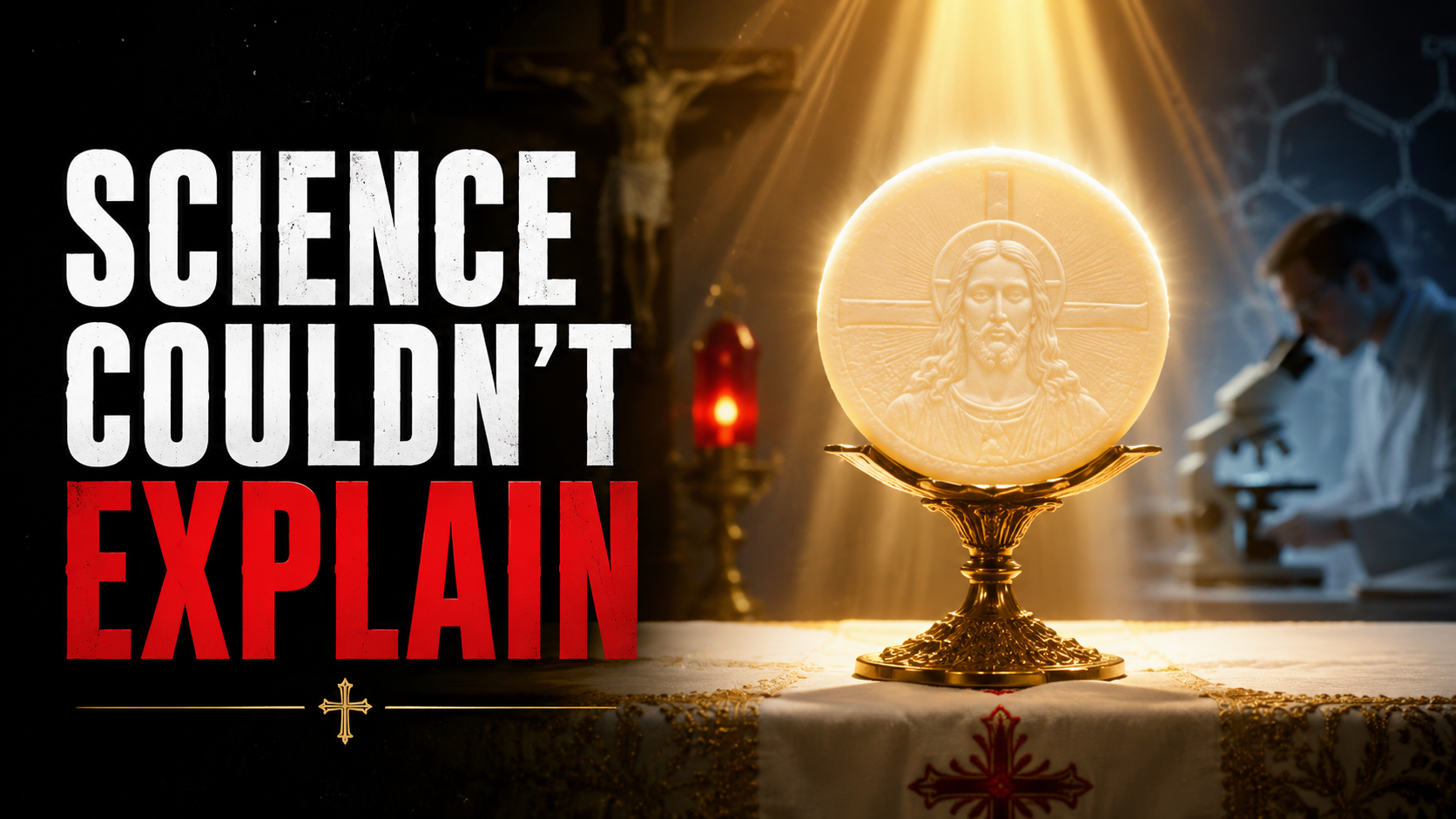
Eucharistic miracles are extraordinary events that people believe have occurred in connection with the Holy Eucharist.
Reports have appeared throughout Christian history. Some describe consecrated hosts that reportedly changed in appearance. Others involve unusual preservation, bleeding, or physical phenomena associated with the Eucharistic species.
Nevertheless, Catholics should approach such accounts with both faith and prudence.
A reported Eucharistic miracle is not automatically an officially recognized miracle. The Church investigates alleged supernatural phenomena carefully. In fact, the Vatican’s current norms emphasize discernment, scientific expertise when necessary, and protection of the faithful from sensationalism or deception.
Therefore, it is important to distinguish between three things:
- A historical report of an extraordinary event.
- A scientific investigation that may identify unusual findings.
- An official Church judgment regarding the event.
These categories do not always mean the same thing.
Moreover, scientific analysis can examine physical evidence. It cannot, by itself, prove the supernatural cause of an event. That distinction helps Catholics discuss Eucharistic miracles honestly and responsibly.
Why Eucharistic Miracles Matter to Catholics
The importance of Eucharistic miracles does not come from curiosity alone. Instead, these stories point believers toward a central truth of Catholic faith: Jesus Christ is truly present in the Eucharist.
When life becomes difficult, that truth can bring profound comfort.
Perhaps you feel exhausted by family problems. Maybe work pressure has drained your strength. You might even carry a private sorrow that nobody else understands.
In such moments, the Eucharist reminds us that God is not distant.
Jesus comes to us through the sacrament. He meets us in our weakness and invites us into deeper communion with Him.
Therefore, the real question is not simply, “Did a particular miracle happen?”
A deeper question is this:
Do I recognize Jesus when I receive Him in the Eucharist?
That question brings us back to the heart of Catholic faith.
The Biblical Foundation of the Eucharist
The foundation of Eucharistic faith begins with Jesus Himself.
At the Last Supper, Jesus took bread and gave it to His disciples. He said:
“This is my body, which is given for you; do this in remembrance of me.”
— Luke 22:19
Jesus also spoke with remarkable clarity in the Gospel of John:
“My flesh is true food, and my blood is true drink.”
— John 6:55
These passages form an essential part of Catholic Eucharistic theology.
The Eucharist is not merely a symbol that reminds Christians of Jesus. Rather, Catholic teaching holds that Christ is truly, really, and substantially present under the appearances of bread and wine.
Consequently, Eucharistic miracles should never replace the Gospel. Instead, they should direct our attention back to the words and promises of Christ.
The miracle of the Eucharist is already present at every valid Mass. During the consecration, the bread and wine become the Body and Blood of Christ through transubstantiation.
As the Catechism explains, Christ becomes present in a true, real, and substantial manner. The Church therefore worships the Eucharist not only during Mass but also outside Mass through Eucharistic adoration and other forms of devotion.
Eucharistic Miracles and the Search for Scientific Evidence
Stories of Eucharistic miracles often attract scientists because some reported events involve physical claims.
For example, investigators may examine:
- The composition of a sample.
- The presence of biological material.
- Possible contamination.
- The age and origin of the material.
- The reliability of historical documentation.
- Whether ordinary explanations can account for the findings.
Such investigations can provide valuable information. However, they also have limitations.
Science studies observable evidence through established methods. It can identify characteristics of a physical sample, but it cannot determine with certainty whether God caused a supernatural event.
Therefore, a scientific finding does not automatically equal a theological conclusion.
Likewise, the absence of a scientific explanation does not automatically prove a miracle.
This careful distinction protects both faith and reason.
The Catholic tradition does not require believers to reject science. Instead, Catholic thought recognizes that faith and reason can work together while answering different kinds of questions.
For this reason, Eucharistic miracles can invite reflection without becoming a substitute for the ordinary foundations of Christian faith.
Famous Eucharistic Miracle Accounts in Catholic Tradition
Several Eucharistic miracle accounts have become widely known among Catholics.
The Miracle of Lanciano
One of the most famous accounts comes from Lanciano, Italy. According to tradition, an eighth-century monk experienced a crisis of faith regarding the Real Presence. The story says that the consecrated host and wine underwent an extraordinary transformation.
The relics associated with the event have received scientific attention over the years. Reports have described findings involving human tissue and blood.
However, readers should approach claims about the exact scientific conclusions with care. Different sources sometimes present varying details, and popular retellings can simplify complex investigations.
The Catholic Church permits devotion connected with Lanciano, but Catholics should not treat every scientific claim circulating online as equally authoritative.
The broader spiritual message remains clear: the story has encouraged generations of believers to deepen their reverence for the Eucharist.
The Miracle of Buenos Aires
Another widely discussed account concerns an event reported in Buenos Aires, Argentina, in the 1990s.
According to accounts associated with the case, a consecrated host was discovered in unusual circumstances and later appeared to undergo physical changes. Scientific examinations were reportedly conducted, and some accounts have connected the sample with human tissue.
Again, however, popular presentations sometimes go beyond what the available documentation can firmly establish.
Therefore, responsible discussion should distinguish documented facts from later interpretations.
The case remains an important example of how alleged Eucharistic phenomena can attract both religious devotion and scientific curiosity. At the same time, it reminds us to avoid sensational claims that exceed the evidence.
The Miracle of Santarém
Another historic account comes from Santarém, Portugal.
According to tradition, a consecrated host was stolen in the thirteenth century. The story describes extraordinary events that followed, leading to the preservation of the host and the development of a long-standing Eucharistic devotion.
Like other historical miracle accounts, the story comes through a combination of tradition, historical records, and religious devotion.
Consequently, readers should examine each case within its historical context rather than assuming that every detail has the same level of documentation.
What Does the Catholic Church Teach About Eucharistic Miracles?
The Catholic Church teaches that the Eucharist is central to Christian life regardless of whether a person believes in any particular Eucharistic miracle.
This point is essential.
Catholics do not need Eucharistic miracles to believe in the Real Presence. The Church’s Eucharistic faith rests on Christ’s institution of the sacrament, Sacred Scripture, apostolic tradition, and the Church’s consistent teaching.
Furthermore, alleged supernatural phenomena require careful discernment.
The Vatican’s 2024 norms state that the Church examines alleged supernatural phenomena for several reasons. These include determining whether signs of divine action can be discerned, checking compatibility with faith and morals, evaluating spiritual fruits, and protecting the faithful from potential harm.
The same norms also emphasize that even a positive ecclesial judgment does not make an alleged supernatural phenomenon an object of faith that Catholics must believe.
Therefore, Catholics can appreciate Eucharistic miracle accounts while keeping their faith centered on Jesus Christ.
That balance is both faithful and intellectually responsible.
Four Spiritual Lessons From Eucharistic Miracles
Whether you are studying Eucharistic miracles from a historical perspective or approaching them through faith, these accounts can encourage several important spiritual lessons.
1. God Is Near
First, the Eucharist reminds us that God is close.
When loneliness overwhelms you, Jesus remains near. When family struggles weigh heavily on your heart, you can bring those burdens before Him.
Likewise, when work pressure leaves you exhausted, the Eucharist invites you to rest in God’s presence.
2. Faith Goes Beyond What We See
Second, the Eucharist calls us to believe beyond appearances.
At Mass, our senses still perceive bread and wine. Yet Catholic faith teaches that Christ becomes truly present through the power of the sacrament.
Therefore, the Eucharist teaches us to trust God’s promises even when we cannot see the entire picture.
Perhaps your prayer seems unanswered. Maybe healing has not come as quickly as you hoped.
Even so, faith invites you to continue trusting God.
3. Love Requires Sacrifice
Third, the Eucharist teaches us about self-giving love.
Jesus gave Himself completely on the Cross. At Mass, the Church enters sacramentally into the mystery of Christ’s one sacrifice.
As a result, Eucharistic devotion should change how we live.
It should inspire us to forgive more generously, serve others more faithfully, and carry our responsibilities with love.
4. Jesus Brings Peace
Finally, the Eucharist can become a source of peace for troubled hearts.
If fear has stolen your joy, bring that fear to Jesus. If anxiety fills your mind, sit quietly before Him.
Instead of searching only for extraordinary signs, begin by spending time with Christ in prayer.
Sometimes, the deepest miracle is not something dramatic.
Sometimes, it is the quiet transformation of a human heart.
How Catholics Can Live the Eucharistic Faith Today
The message of Eucharistic miracles becomes meaningful when it changes our daily lives.
Here are five practical ways to deepen Eucharistic faith:
- Attend Mass faithfully.
Make the Eucharist the center of your spiritual life. - Spend time in Eucharistic adoration.
Sit quietly before Jesus and allow your heart to become still. - Read Scripture.
Reflect especially on the Last Supper and the Bread of Life discourse. - Practice charity.
Let the love received from Christ become love offered to others. - Share your faith with humility.
When discussing Eucharistic miracles, present historical facts carefully and avoid sensational claims.
Moreover, families can make Eucharistic faith part of everyday life. Parents can teach children about the Mass, encourage reverence, and explain why Catholics genuflect before the Blessed Sacrament.
Likewise, parishes can promote Eucharistic adoration, Bible study, and charitable service.
In this way, Eucharistic devotion becomes more than an intellectual interest. It becomes a way of life.
Frequently Asked Questions About Eucharistic Miracles
What are Eucharistic miracles?
Eucharistic miracles are reported extraordinary events associated with the Holy Eucharist. Some have involved physical phenomena that later received investigation. However, each case requires careful historical, scientific, and ecclesial discernment.
Are Eucharistic miracles scientifically proven?
Not in the sense that science can prove a supernatural cause. Scientific testing can examine physical evidence and determine whether ordinary explanations exist. However, science cannot independently establish that God caused an event.
Does the Catholic Church require Catholics to believe in Eucharistic miracles?
No. Catholics are required to believe in the Real Presence of Christ in the Eucharist because this teaching belongs to the Catholic faith. However, Catholics are not required to believe in every reported Eucharistic miracle.
What is the most important Eucharistic miracle?
From the Catholic perspective, the greatest Eucharistic mystery is not an extraordinary event involving a host. It is Christ’s true presence in the Eucharist at every valid celebration of the Mass.
Why does the Church investigate Eucharistic miracles?
The Church investigates alleged miracles to protect the faithful and discern whether an event has credible spiritual and extraordinary significance. The process can involve historical research, theological evaluation, and scientific expertise.
Can science explain Eucharistic miracles?
Science may explain some reported phenomena through natural causes. In other cases, evidence may remain difficult to interpret. However, science alone cannot determine whether an event has a supernatural cause.
How should Catholics respond to Eucharistic miracles?
Catholics should respond with reverence, prayer, and discernment. They should also avoid sensationalism and verify information through trustworthy Catholic and historical sources.
What should I do if I struggle to believe in the Eucharist?
Begin with an honest prayer. Read the Gospel accounts of the Last Supper and John 6. Attend Mass and speak with a trusted priest. Above all, remember that faith can grow gradually through prayer, study, and the grace of God.
A Reflection for Today
Take a quiet moment and ask yourself:
Do I truly believe that Jesus is present with me?
Do I approach the Eucharist with trust, or have I allowed routine to replace wonder?
Eucharistic miracles may encourage us to look more deeply. However, the greatest invitation comes from Christ Himself.
He invites us to believe.
He invites us to receive His love.
He invites us to remain close to Him.
Therefore, whatever burden you carry today, place it before the Lord.
If you feel weak, come to Him.
If you feel confused, seek His wisdom.
If you feel afraid, rest in His peace.
Above all, remember that the Eucharist points us toward the heart of Jesus, who continues to give Himself to His people in love.
A Catholic Prayer Before the Eucharist
Lord Jesus,
we thank You for the precious gift of the Holy Eucharist.
Thank You for remaining with us in love, mercy, and truth.
When our faith becomes weak, strengthen us.
When our hearts become troubled, give us peace.
When we feel confused, guide our steps.
Help us approach Your presence with reverence, humility, and trust.
Teach us to recognize Your love and carry that love into our homes, families, workplaces, and communities.
Heal what is broken within us.
Forgive our sins and renew our hearts.
May our love for the Eucharist lead us closer to You and to the Father.
Lord, we believe.
Help our unbelief.
Amen.
Conclusion: The Greatest Miracle Is Christ Himself
The stories of Eucharistic miracles have inspired Catholics for centuries. They have also raised fascinating questions about history, science, and the boundaries of human understanding.
Nevertheless, the heart of Eucharistic faith does not depend on extraordinary phenomena.
The Catholic Church teaches that Jesus Christ is truly present in the Holy Eucharist. Therefore, every Mass already places us before a mystery greater than human understanding.
When you feel tired, come to Jesus.
When you feel uncertain, trust Him.
When your faith feels weak, ask Him for greater faith.
Ultimately, Eucharistic miracles invite us to look beyond the extraordinary and rediscover the ordinary miracle of Christ’s presence.
Jesus is near.
Jesus is faithful.
Jesus is still calling us to deeper faith, deeper reverence, and deeper love.
May we approach Him with humble hearts and never forget His promise to remain with His people.
CALL TO ACTION
Has a Eucharistic miracle story ever strengthened your faith or encouraged you to learn more about the Holy Eucharist?
Share your thoughts in the comments below.
If this article helped you understand the Eucharist more deeply, please share it with someone who may need encouragement today.
You can also explore our other Catholic articles on the Holy Eucharist, Eucharistic adoration, Catholic miracles, and the life of prayer.
Finally, subscribe to receive more Catholic reflections, Bible-based teachings, and faith-building articles.
Catechism of the Catholic Church — VaticanCatechism of the Catholic Church: Eucharistic Teaching — VaticanNorms for Discernment of Alleged Supernatural Phenomena — VaticanNorms for Discernment of Alleged Supernatural Phenomena — Vatican Press Office
Related Articles
 What Does Purgatory Look Like According to the Saints?
 Incorrupt Saints: The Catholic Church’s Teaching Explained
 Our Lady of Fatima: The Story and Message of 1917
 Catholic Church Investigation of Miracles Explained
 SSPX Excommunication 2026: Vatican Decision Explained
 Hidden Christians of Japan: Faith That Survived 250 Years